Excellencies,
Distinguished guests,
Ladies and gentlemen,
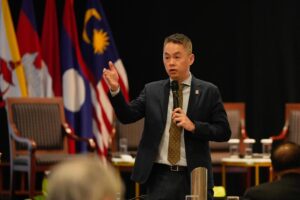
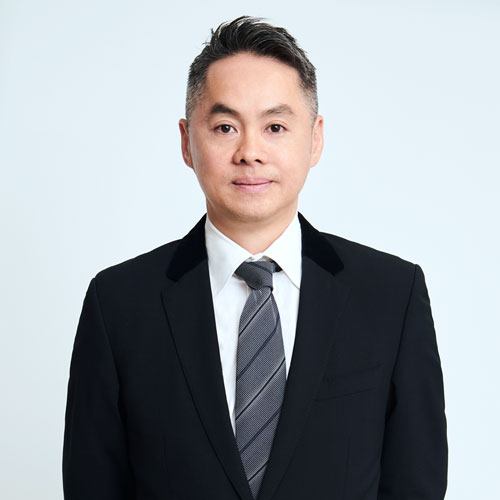
I am honoured to deliver these remarks as the Representative of Malaysia to the ASEAN Intergovernmental Commission on Human Rights (AICHR) and former Chair of the Commission.
We are now witnessing intensifying geopolitical tensions, protracted conflicts, shifting economic alignments and a breakdown of international law and the global order. The impacts are being felt in profound and unpredictable ways. In our region, they have translated into real and immediate human rights challenges, felt acutely by those in marginalised and vulnerable situations. Lives and livelihoods have been disrupted. Inequalities have deepened. Access to basic and essential needs and services such as food, water, sanitation, education and healthcare, among others, has been made more difficult. Distrust in institutions and governments has increased dramatically. Further, inclusive and sustainable development has been made harder to achieve.
The human right to development is an inalienable human right which includes the four facets of rights — political, economic, social, and cultural — and applies as both an individual and a collective right. Every person and the peoples of ASEAN are entitled to participate in, contribute to, enjoy, and benefit equitably and sustainably from political, economic, social, and cultural development. This right is further guided by the principles of self-determination, intersectionality, intergenerational equity, fair distribution and international cooperation.
This right reminds us that Southeast Asia still bears the imprint of historical injustices from war and colonialism, and that patterns of resource extraction, externally imposed economic structures, and unequal global rules continue to play a part in our present-day vulnerabilities.
A holistic understanding of development for ASEAN, grounded in the right to development and the right to peace, therefore requires a lens and a willingness to reimagine strategies beyond extractive global models. This includes enabling self-directed, ASEAN-owned development rather than replicating externally designed pathways. In today’s context, non-repetition must mean establishing rules and standards across trade, finance, environment, and data that do not reproduce extractive dynamics and that actively include smallholders, Indigenous Peoples, migrants, persons with disabilities, and peoples and groups in marginalised and vulnerable situations.
In 2025 under Malaysia’s chairship of ASEAN and AICHR, important strides were made in advancing the right to development and the right to peace. AICHR engaged with key actors and stakeholders to promote and protect these rights. These engagements considered critical issues including business and human rights, gender mainstreaming, environmental sustainability, climate change, and conflict. These areas continue to directly shape our peoples’ ability to participate in, contribute to, enjoy, and benefit equitably and sustainably from, development.
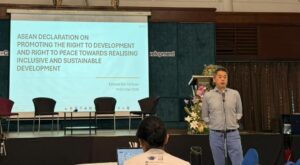
The landmark adoption of the ASEAN Declaration on Promoting the Right to Development and the Right to Peace Towards Realising Inclusive and Sustainable Development brings a clear and principled ASEAN voice, reflecting the immediate concerns of the Global South. Consistent with international human rights principles and reaffirming all civil and political rights alongside economic, social, and cultural rights, the Declaration reinforces the right to development and the right to peace as interdependent. Without peace, development cannot be sustained. Without development, peace cannot be secured. Together, they form the foundations upon which human dignity, security, and prosperity are to be built.
AICHR is now translating the normative commitments of the Declaration into practical actions. We aim to build effective pathways and platforms for dialogue, and respond more holistically to cases that impact the right to development and the right to peace.
Regional mechanisms are therefore not passive observers, but are active agents of change, capable of shaping development pathways that are more equitable, inclusive, and sustainable. The complexity of today’s challenges demands that we work in collaboration and cooperation with other bodies, including the United Nations, to implement our whole-of-ASEAN approach, bringing together political, economic, and socio-cultural rights to ensure that no one is left behind.
We must deepen collaboration among regional mechanisms, enhance coherence across our institutions, and move decisively and proactively from dialogue to implementation. While it is imperative that we align our efforts with regional priorities and global commitments, we must also ensure that our work remains anchored in the lived realities of our people. The right to development is ultimately about people. Their dignity. Their agency. Their ability to shape their own futures.
I wish you a fruitful and productive discussion today. Thank you.
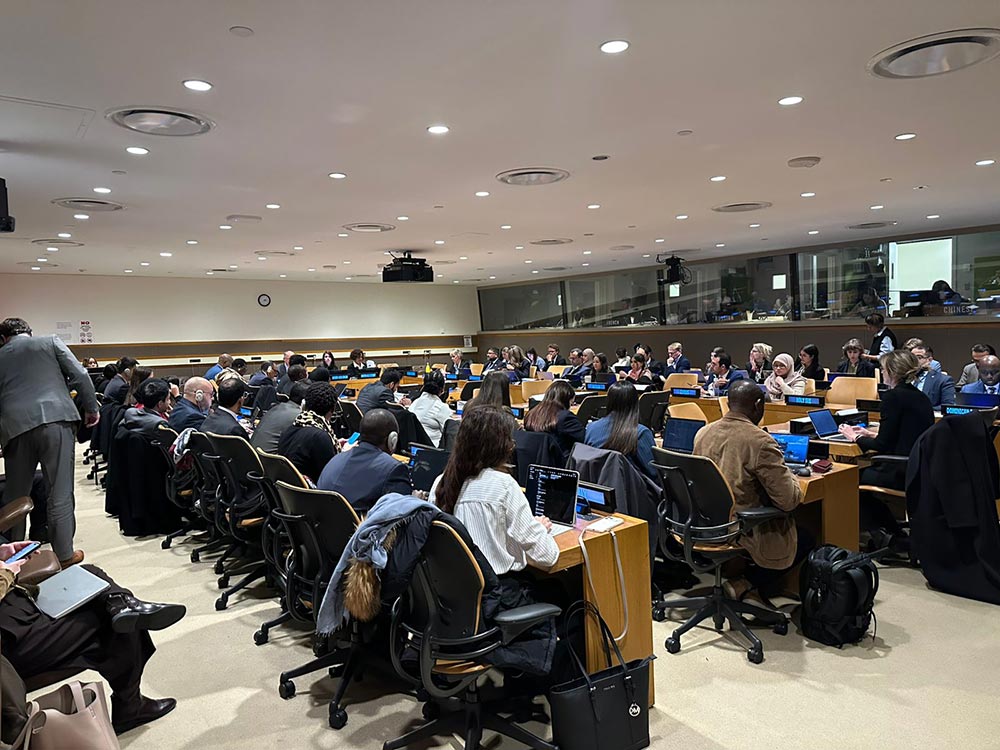
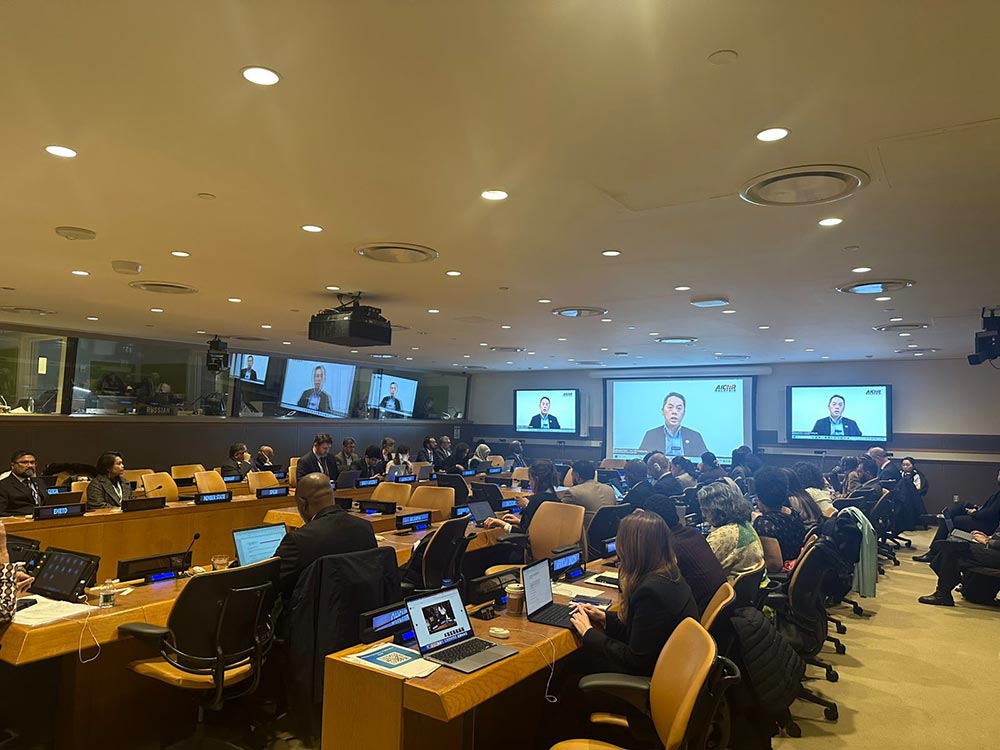
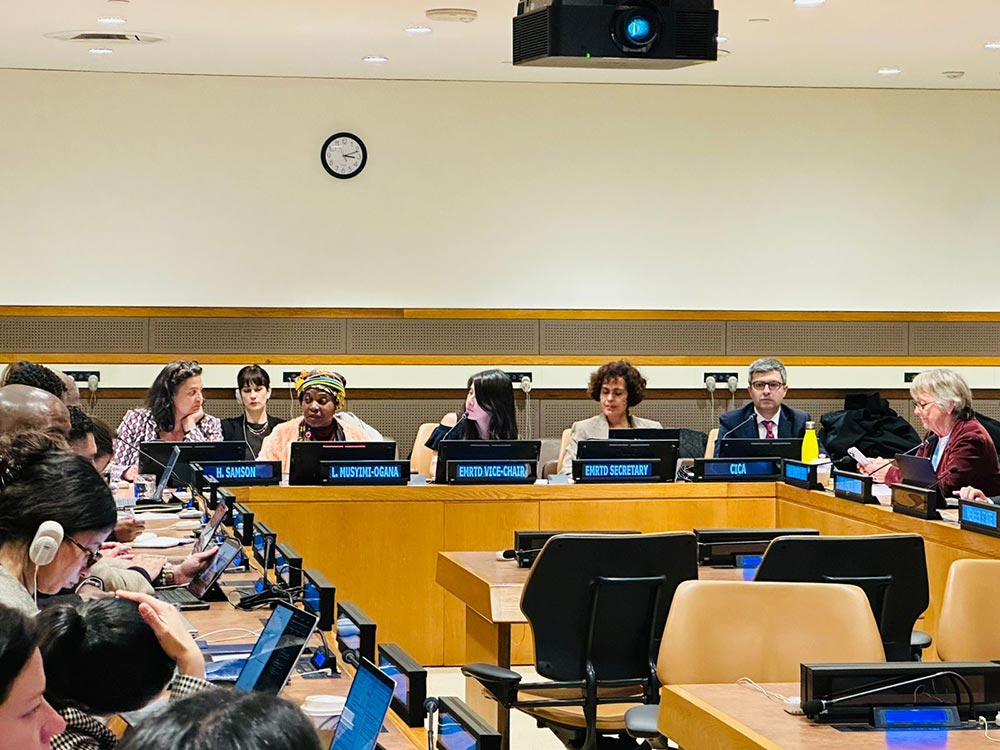
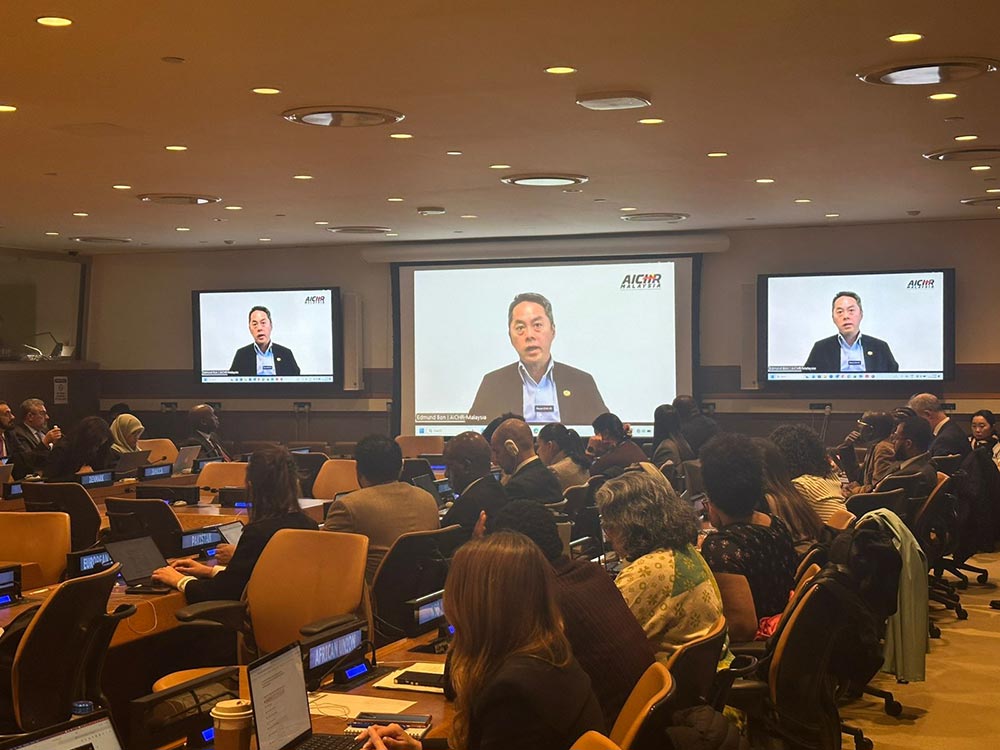
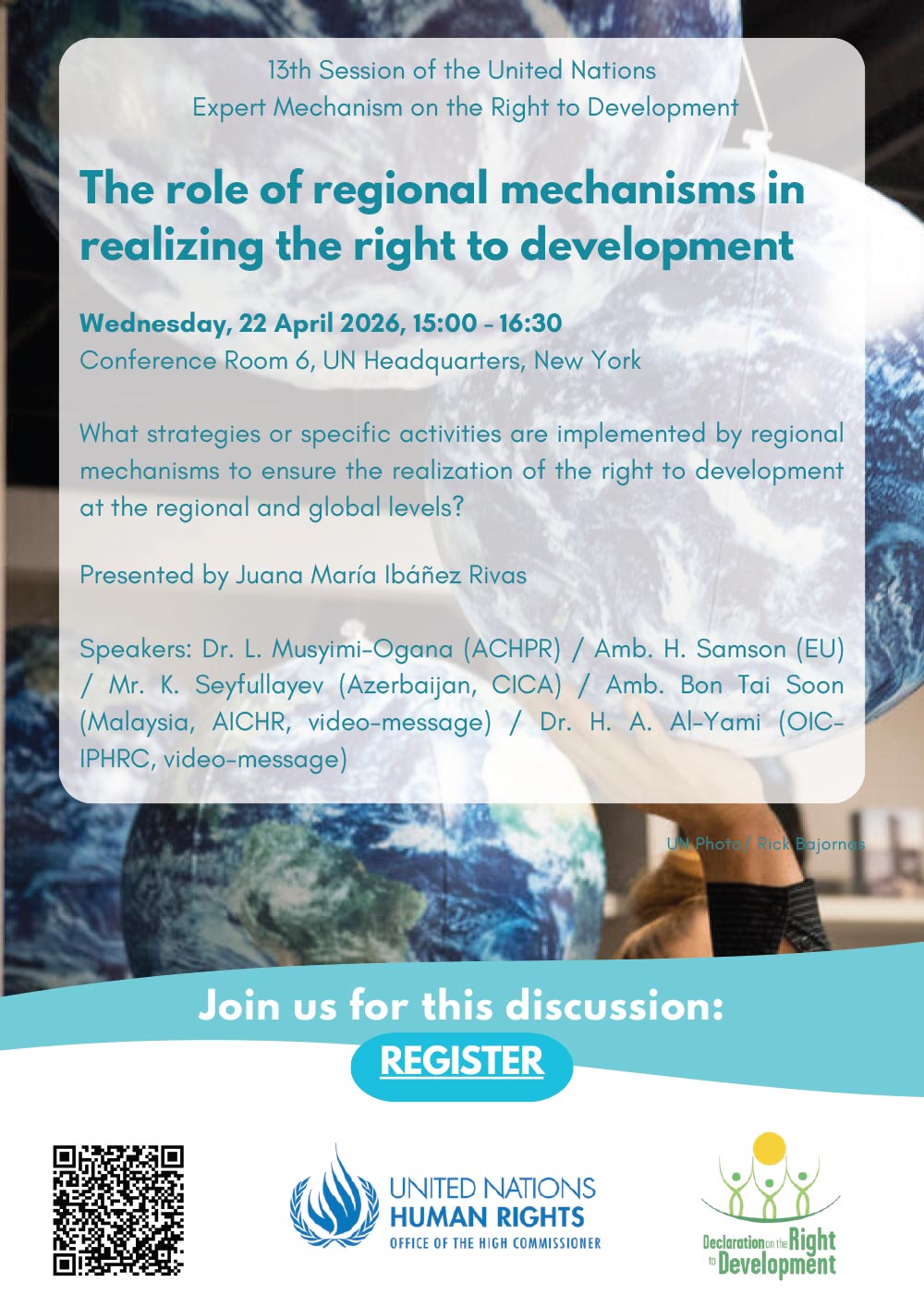
A video recording of Edmund Bon’s remarks was screened on 22 April 2026 at the 13th session of the Expert Mechanism on the Right to Development (‘EMRTD’) that took place from 21 to 23 April 2026 in New York, USA. The video recording of the remarks is available here; and the video recording of the 3rd meeting of the 13th session is available here, where the remarks begin at 37:10.