
Agenda Item 1: Taking stock of developments in cooperation between the United Nations and regional human rights organisations since 2022 and identifying areas for enhanced cooperation.
Chair, Excellencies, and colleagues.
Thank you for extending the invitation to the ASEAN Intergovernmental Commission on Human Rights (AICHR). As the ASEAN Chair, Malaysia chairs the Commission this year, and I am pleased to share some thoughts on the topic at hand.
Regional human rights mechanisms bring human rights from the global to the local, while contributing to the realisation of human rights through region-focused instruments. The basic texts of each regional system can be read to reaffirm the universal norms, but the direction of travel is no longer only top-down from United Nations (UN) treaty bodies to states. Increasingly, we see a bottom-up dynamic — regional bodies interpreting regional instruments in ways that enrich and advance international human rights standards. This dynamism has put regional systems at the forefront of norm development. Regional systems also provide a crucial layer of protection of human rights and fundamental freedoms alongside domestic laws and institutions.
AICHR has engaged with and received support from different UN agencies and programmes (IOM, International Organization for Migration; UNDP, United Nations Development Programme; UNICEF, United Nations Children’s Fund; ESCAP, United Nations Economic and Social Commission for Asia and the Pacific; and OHCHR, Office of the United Nations High Commissioner for Human Rights) in the past three years, 2023 to 2025. Together we have worked on very practical issues: referral systems for survivors of gender-based violence and victims of trafficking in persons within ASEAN; ensuring decent work for migrant fishers; preventing torture; safeguarding the right to freedom of peaceful assembly; advancing the rights of the child; and promoting the rights to development, peace, and education. We have also deepened cooperation on environmental rights and responsible business conduct in the context of migration.
A milestone in this cooperation was the 1st AICHR-UN Dialogue on Human Rights, held in Geneva from 27 to 29 September 2023. That dialogue marked significant progress in strengthening ASEAN-UN cooperation. It improved mutual understanding of mandates, working methods, and challenges across our respective mechanisms. It identified concrete areas for joint work and explored ways to establish a standing channel of communication between AICHR and UN human rights mechanisms. Building on that success, preparations are underway for the second dialogue this year.
Engagements with the UN human rights treaty bodies and the Special Procedures have intensified. Special Rapporteurs with different thematic mandates participated in regional human rights dialogues and consultations organised and facilitated by AICHR. On 11 June 2025, AICHR responded to a joint communication from four Special Procedures mandate-holders concerning the proposed ASEAN Declaration on the Right to a Safe, Clean, Healthy, and Sustainable Environment. While AICHR welcomes and encourages engagement with the UN Special Procedures, such engagements should be aimed at fostering mutual understanding and voluntary exchange of views.
These experiences reinforce a central point: the normative leadership of the UN human rights system, through the OHCHR, treaty bodies, and the Special Procedures, remains indispensable. But ASEAN and other regional bodies are not passive recipients. We are active partners in interpreting, operationalising, and, where appropriate, innovating on human rights norms so they deliver tangible improvements on the ground.
AICHR also appreciates the OHCHR fellowship programme on building capacity for secretariats of regional human rights mechanisms, which enabled AICHR to send its staff in 2022 and 2023. We look forward to strengthening our cooperation and benefiting from the wealth of substantive expertise and knowledge, including the database managed by OHCHR on the Universal Human Rights Index, publications, online resources, thematic reports, and recommendations from the UN human rights system.
Finally, allow me to offer two recommendations aimed at enhancing the credibility and practicality of our collective efforts.
First, we encourage the UN human rights system, through the OHCHR, to maintain a systematic and comprehensive engagement with all regional human rights mechanisms. Regular, structured exchanges rather than ad hoc interactions can sharpen recommendations, ensure they are grounded in regional contexts, and support member states in meeting their international obligations and commitments.
Second, we encourage initiatives that strengthen the capacity of regional mechanisms and processes to share good practices and cooperate on transnational and transboundary human rights challenges. Many of our most pressing issues — migration, climate impacts, digital rights, and corporate accountability — do not stop at national borders. Cross-regional learning, joint trainings, and referral and data-sharing frameworks can accelerate real-world improvements.
Let me emphasise the importance of enhanced coordination for effective information sharing and consultation across mechanisms and at all levels. Closer coordination with the UN human rights system on standard-setting, reporting, and monitoring can reduce duplication, clarify expectations, and, most importantly, close the gap between principle and practice.
Thank you.
Agenda Item 2: Advancing the right to a clean, healthy and sustainable environment.
Chair, Excellencies, and colleagues.
ASEAN recognised the right to a safe, clean, and sustainable environment as an element of an adequate standard of living as early as 2012. Building on Article 28(f) of the ASEAN Human Rights Declaration (2012), AICHR has pursued the integration of a rights-based approach into environmental governance since 2014. In 2022, AICHR initiated the drafting of an environmental human rights framework; this work has now matured into a concrete instrument.
This year, under ASEAN’s inclusivity and sustainability agenda, AICHR concluded negotiations on the ASEAN Declaration on the Right to a Safe, Clean, Healthy and Sustainable Environment. The proposed declaration advances a forward-looking interpretation of Article 28(f) and articulates a regional commitment to universally recognised environmental rights.
The declaration is particularly significant from a Global South perspective. It seeks to centre justice and equity by aligning substantive rights with procedural rights, including access to information, public participation, and access to justice with the enabling civic space necessary for their exercise: freedoms of opinion, expression, and association; protection of human rights defenders; and inclusion of persons in vulnerable and marginalised situations, notably local and indigenous communities.
The declaration also points to States as duty-bearers, having obligations to respect, protect, and fulfil the rights of the people and communities, particularly those who have been historically vulnerable and marginalised. It aspires for a rights model grounded in participation, transparency, accountability, and effective access to justice, while embedding gender-responsive and intergenerational justice. Given that these concepts remain heavily contested internationally — and continue to be so within ASEAN — the declaration appropriately references them in ways suited to regional diversity.
Reaching consensus across a diverse region is demanding; a pragmatic pathway is a building-block approach that aligns with ASEAN’s incrementalism when addressing contested human rights norms.
Unfortunately also, the discourse on climate change and environmental degradation continues to be shaped and dominated by actors in the Global North. States in the Global South, including those in ASEAN, endure disproportionate and sometimes excessive burdens, including negative impacts from rising sea levels, extractive activities, biodiversity destruction, and pollution. Our region faces severe environmental threats from extreme heat, intensifying storms, coastal erosion, and ecosystem decline despite contributing far less to cumulative greenhouse-gas emissions. Some of these challenges are magnified by the limited institutional capacities and fiscal resources available to meet the needs of our people, compared to those of wealthier nations. Centuries of colonial resource extraction and consumption, exploitative trade regimes, and ongoing waste exportation have further deepened structural inequalities between the North and South.
Looking ahead, the 47th ASEAN Summit in October 2025 is expected to adopt the declaration. If so, it would constitute the second ASEAN human rights instrument drafted by AICHR since the AHRD, marking a substantive milestone and offering an ASEAN-led, ASEAN-owned contribution to environmental rights in the Global South.
AICHR’s Five-Year Work Plan for 2026 to 2030, read with the new ASEAN 2045: Our Shared Future, priorities addressing regional cross-cutting challenges in the near future, including environmental rights and climate action; business and human rights; human rights and new technologies; misinformation and disinformation; and human rights in situations of conflict. The upcoming declaration will importantly enable ASEAN organs and sectoral bodies, member states, civil society, and private actors to develop action lines and good practices that can incorporate a human rights-based approach in these emerging thematic areas.
Here, I wish to emphasise the prevention mandate of regional human rights mechanisms. Beyond promotion and protection, regional mechanisms can prevent violations and respond promptly to emerging crises. The ASEAN declaration may be used to support advocacy efforts for victim-centred approaches to climate-related harms, including referral mechanisms and reparations frameworks.
Taken together, the measures by ASEAN led by AICHR advance a Global South model of environmental rights protection that is coherent, equitable, and effective.
Thank you.
Agenda Item 5: The role of regional human rights mechanisms in ensuring a just and equitable transition to sustainable economies and societies.
Chair, Excellencies, and colleagues.
I take this opportunity to briefly update this workshop on how AICHR’s ongoing efforts advance inclusive and sustainable development across ASEAN.
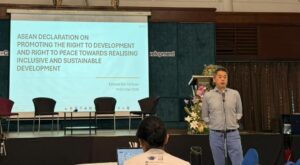
At the start of this year, Malaysia proposed consolidating two priorities — the right to development and the right to peace — into a single human rights instrument that affirms ASEAN’s commitment to inclusive and sustainable development through a human rights-based lens. I am pleased to share that, at our meeting, which concluded on 26 September 2025, we have now finalised the proposed ASEAN Declaration on Promoting the Right to Development and the Right to Peace Towards Realising Inclusive and Sustainable Development.
The declaration establishes the rights to development and peace as the common thread for regional consensus and a unifying language for regional cooperation, grounded in our existing instruments and principles. Through this initiative, ASEAN member states share a common purpose across different national contexts and development stages, advancing them through an ASEAN-led, ASEAN-owned, whole-of-ASEAN approach.
Importantly, we aim to foster a culture of peace and prevention, and to position the peoples of ASEAN as agents and beneficiaries of development, rather than passive recipients. Participation, equality, and non-discrimination must also be embedded into development decisions.
Anchoring the design in an ASEAN instrument strengthens the normative foundation and bridges our climate, economic, and human rights agendas to accelerate the implementation of the Sustainable Development Goals (SDGs) for a people-centred, sustainable, resilient, and prosperous future.
To realise the ASEAN 2045 vision, it is essential to align our green strategic measures with priority SDGs and clearly chart the pathways to reach the goals. Achieving a just and equitable transition will depend on coordinated efforts in several areas: green financing; strengthening climate resilience through protecting livelihoods, food systems, and health with targeted adaptation, social safety nets, and early-warning systems; advancing energy transition by scaling renewables, enhancing grids and efficiency, and ensuring decent work and skills development; and embracing digital transformation.
Looking ahead, AICHR hopes that this declaration will strengthen regional human rights protection. Achieving this goal requires fostering an environment that enables civil society to actively participate. International and regional human rights mechanisms serve as vital catalysts and safeguards, becoming most effective when driven by bottom-up approaches. Only by creating space for civil society engagement and emphasising grassroots involvement can human rights protection systems truly be effective.
Finally, we must not forget to address new-generation and emerging challenges, such as rapid technological change, misuse of artificial intelligence, environmental degradation, and armed conflict, which necessitate regional collaboration in key areas, including business and human rights, climate action, the protection of those who work to promote and protect human rights, and support for communities in vulnerable situations.
Thank you.
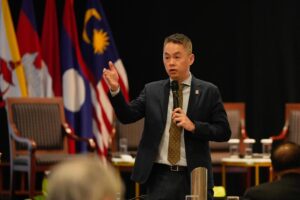
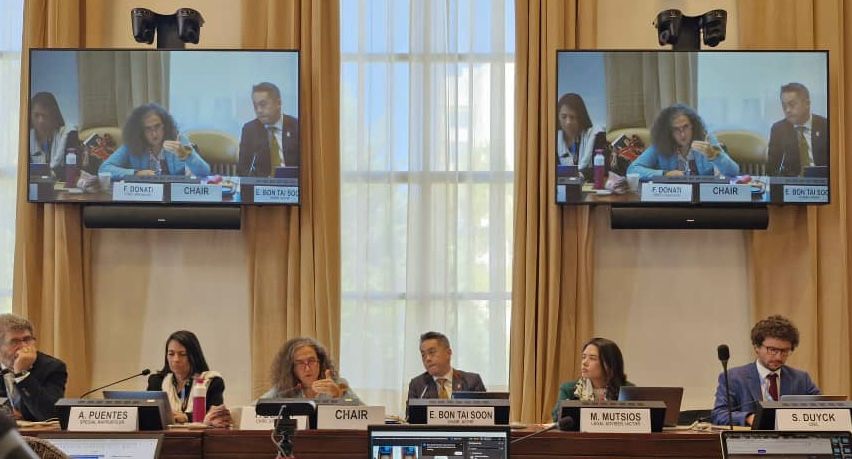
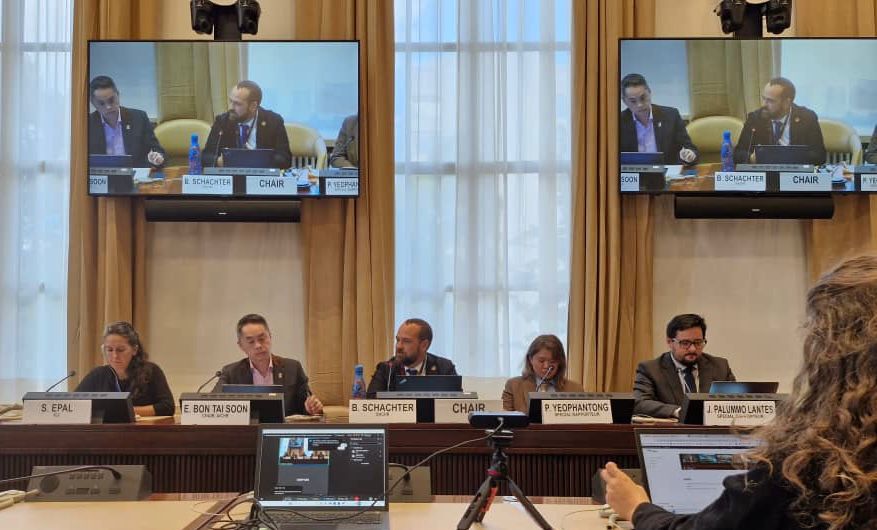
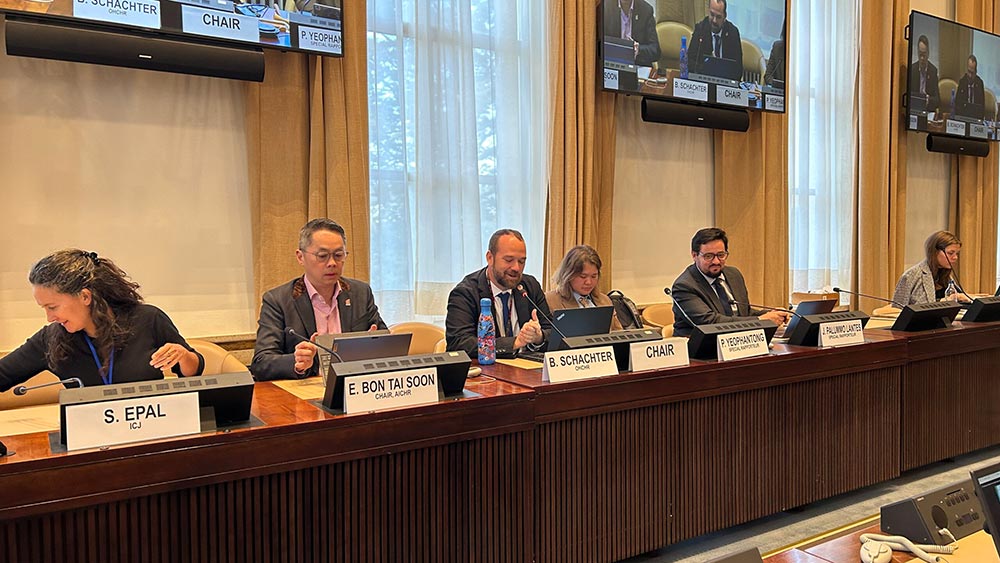
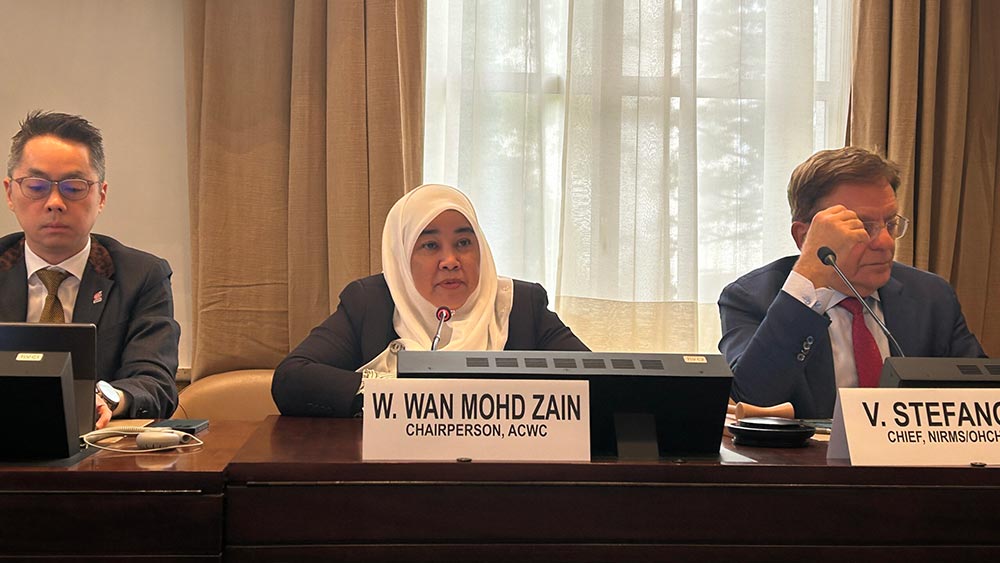
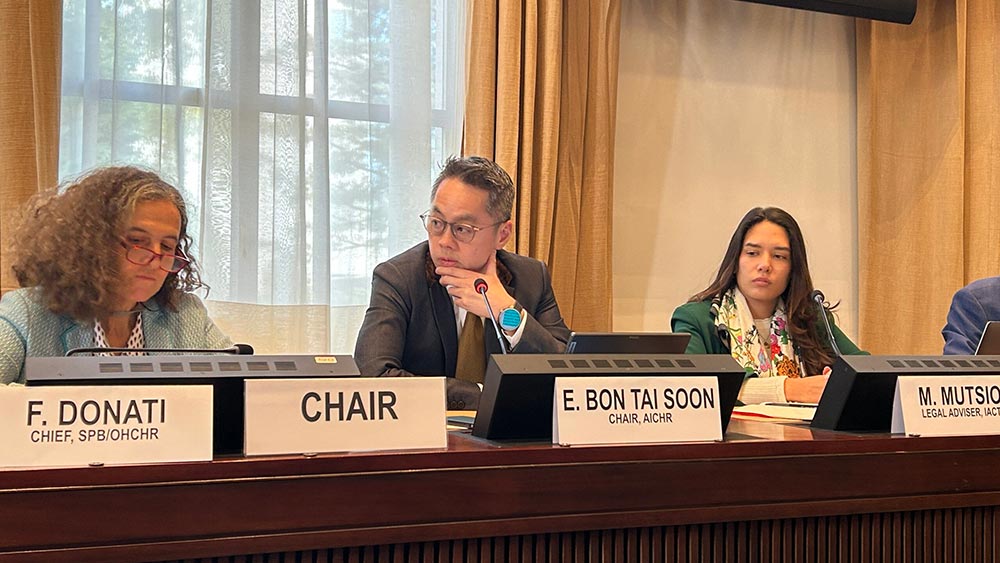
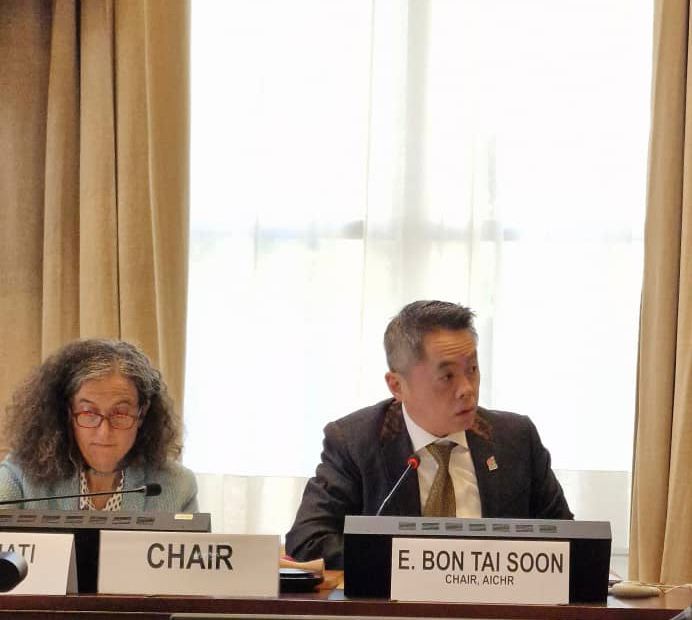
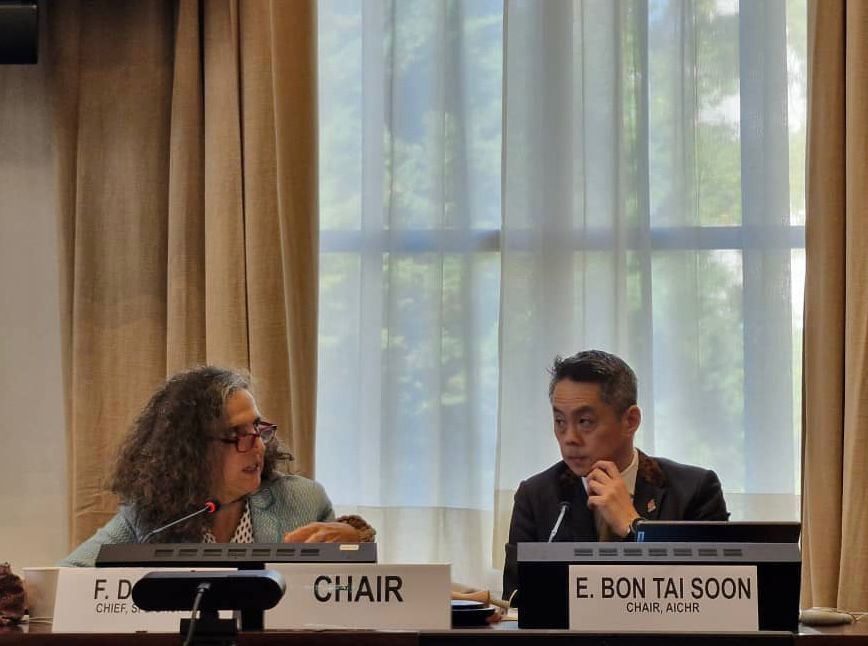
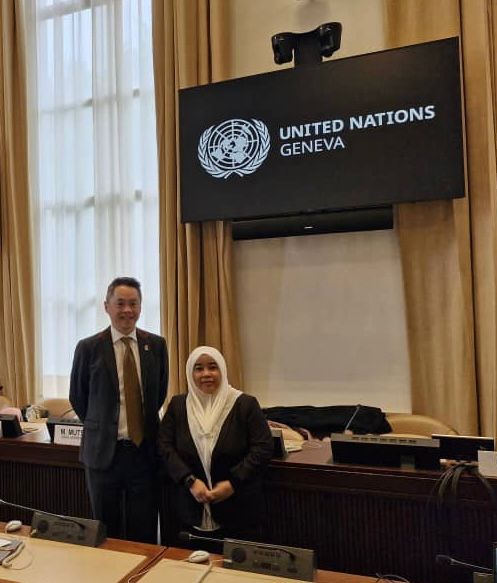
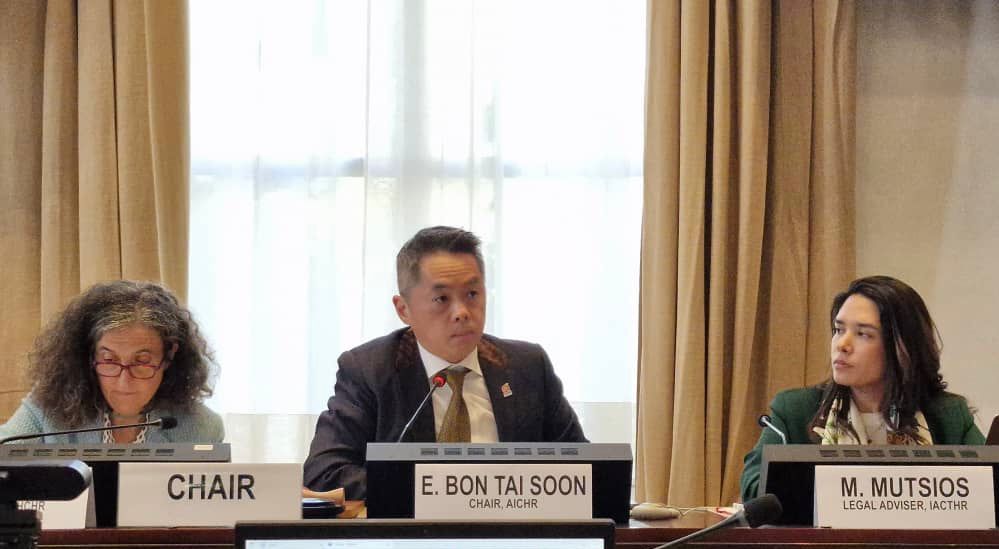
The speaking notes above were prepared for interventions by Edmund Bon at three panels at the OHCHR Workshop on Regional Human Rights Organisations: The Right to a Clean, Healthy, and Sustainable Environment, held on 29 and 30 September 2025 at the Palais des Nations in Geneva, Switzerland.
Watch the videos of the workshop sessions here, here, here, and here.