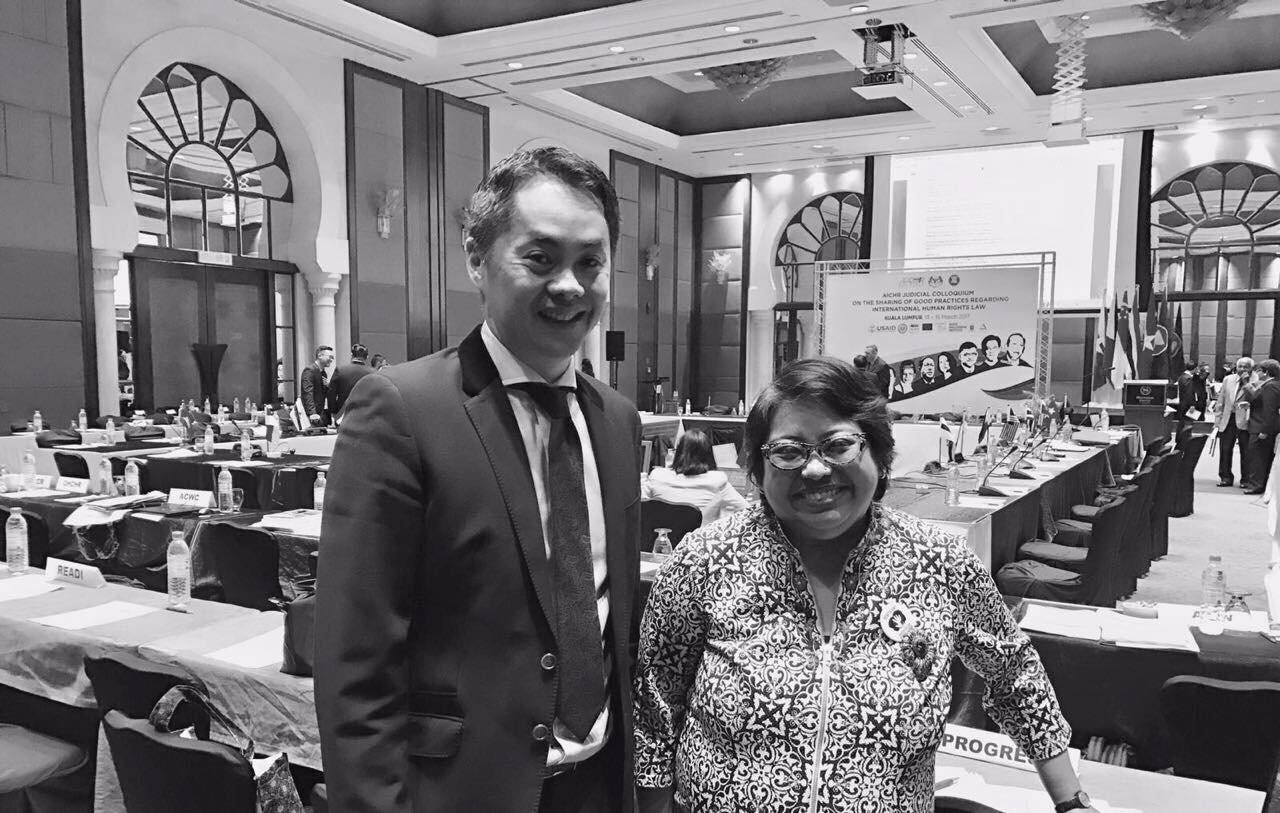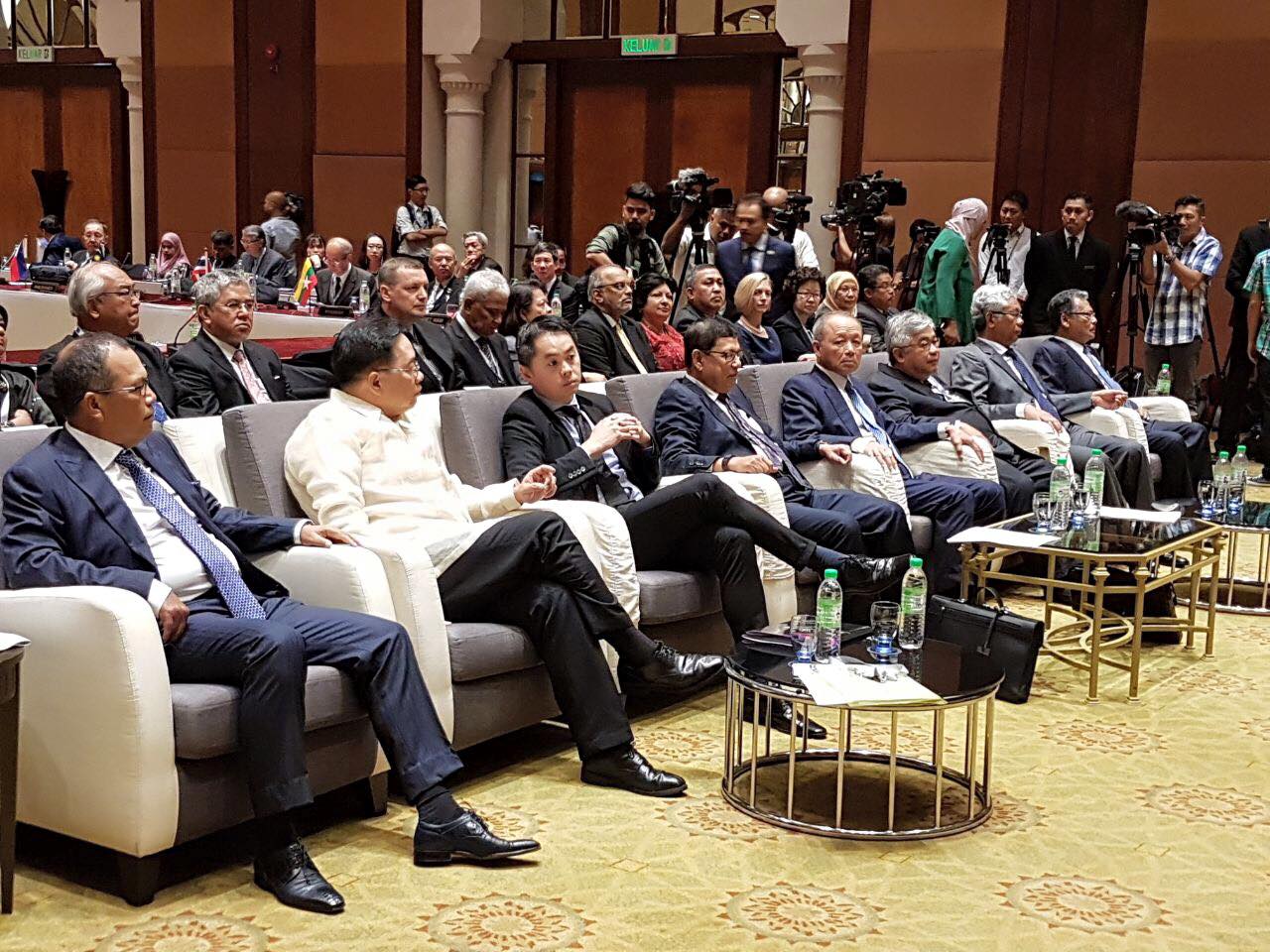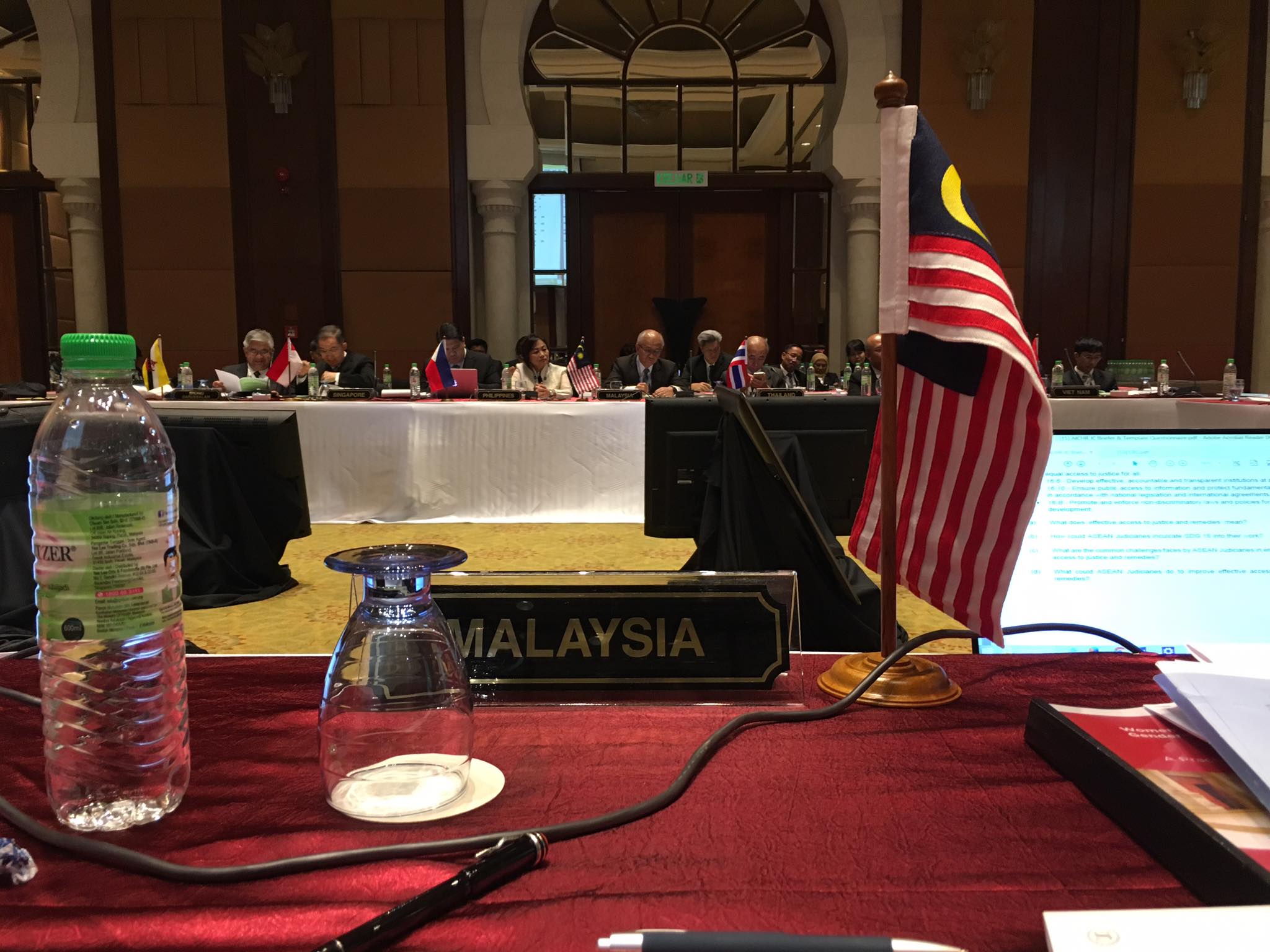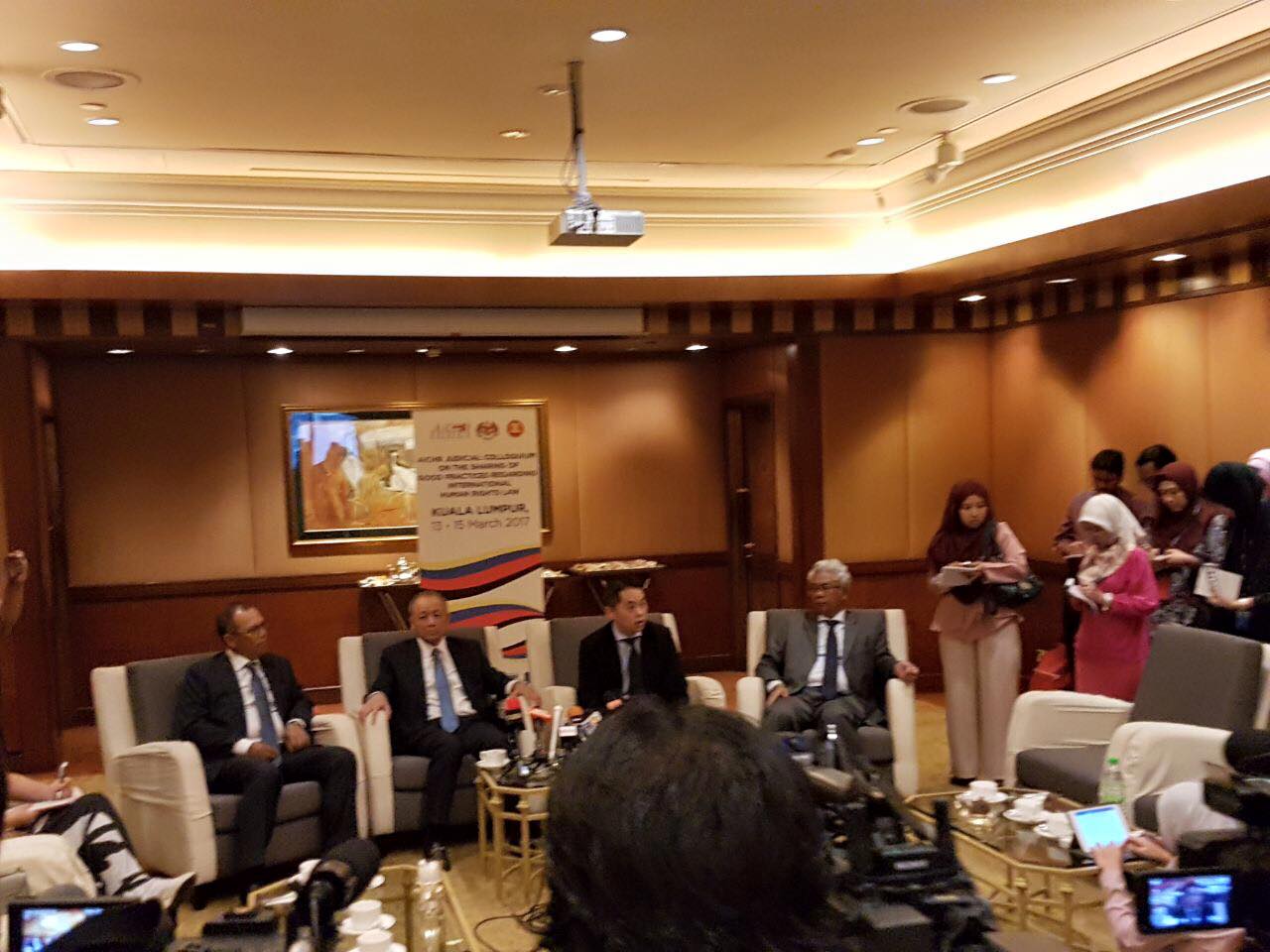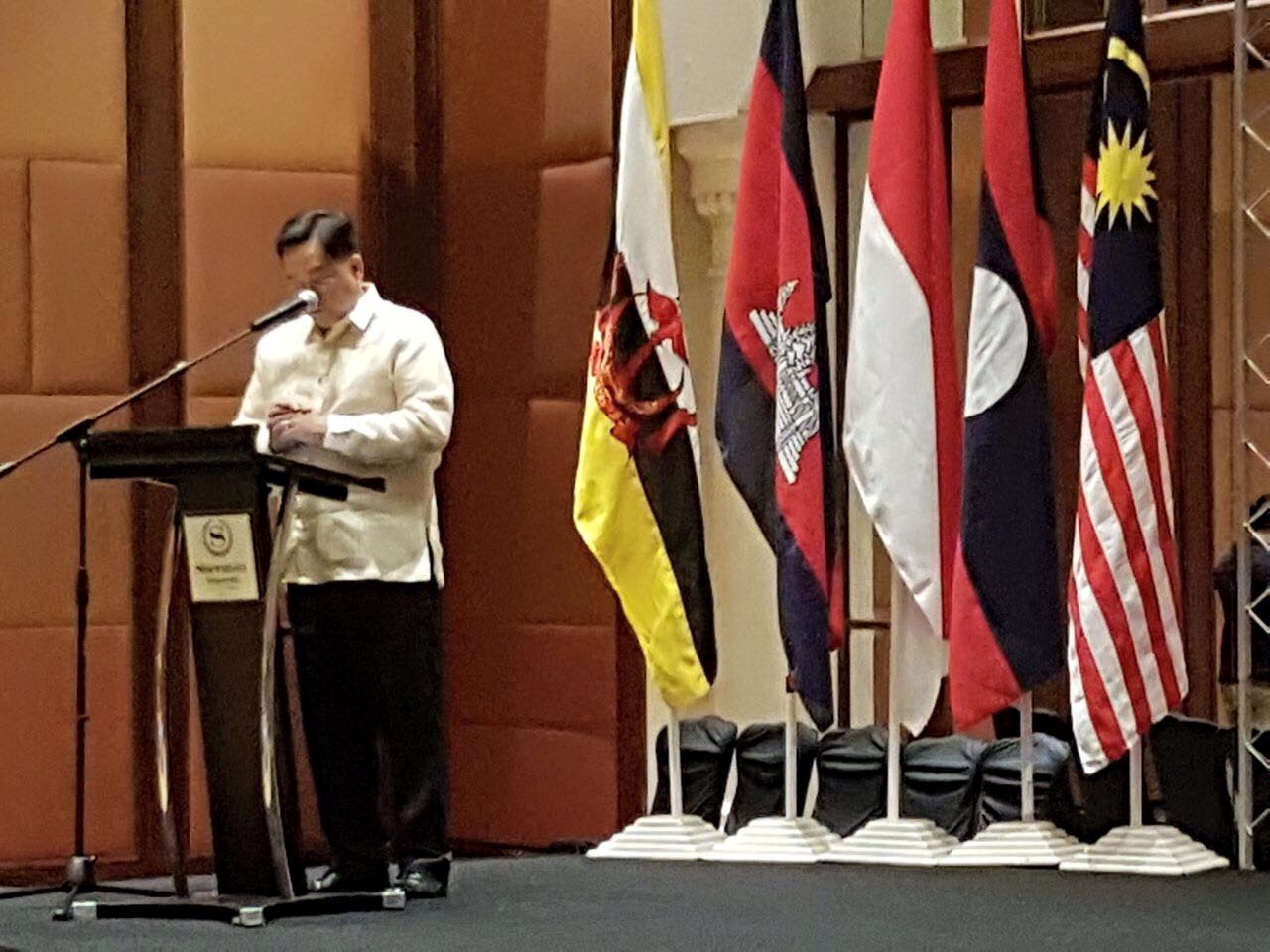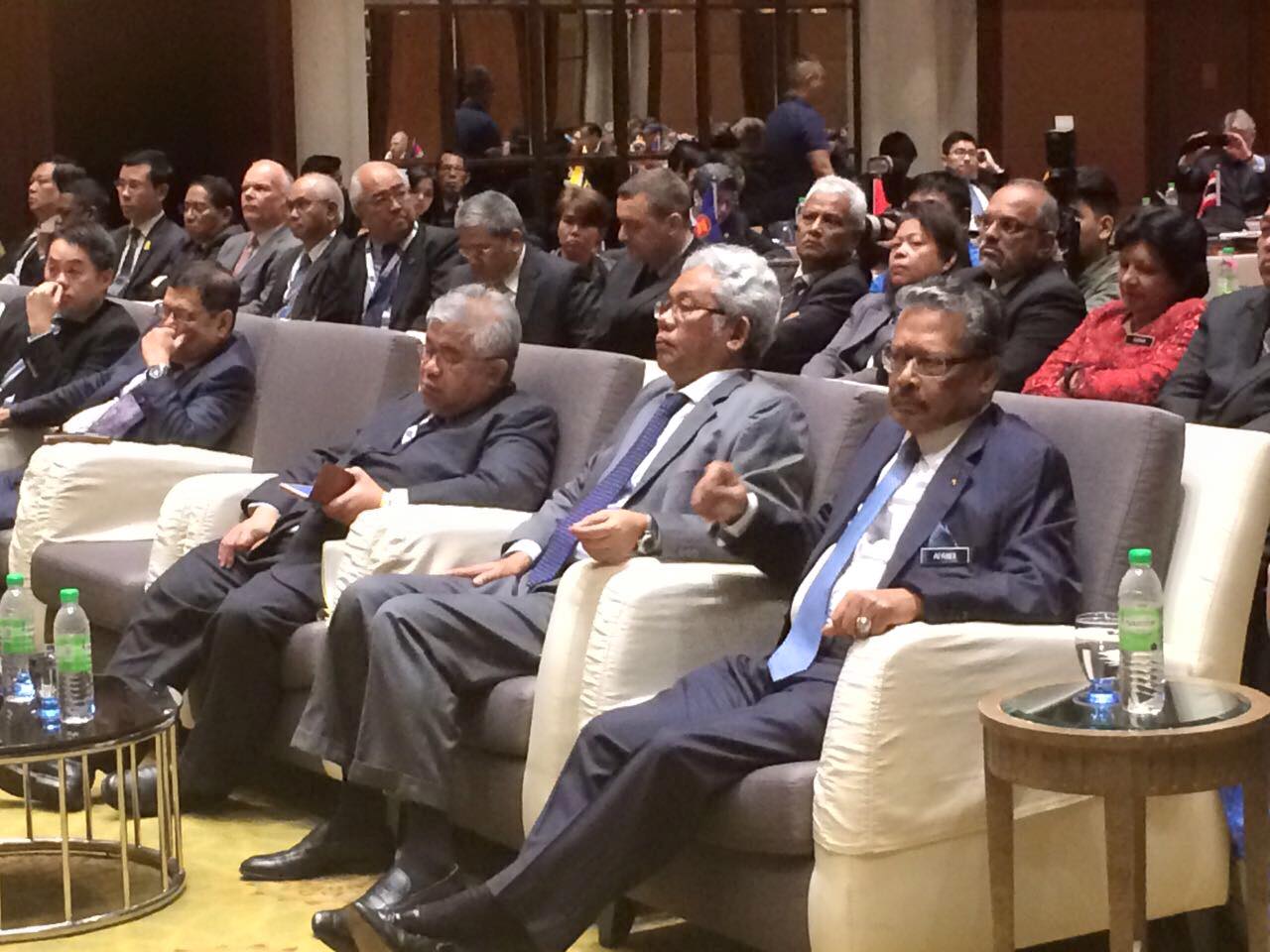

The Right Honourable Tun Arifin bin Zakaria, Chief Justice of Malaysia
The Right Honourable Dato Seri Paduka Haji Kifrawi bin Dato Paduka Haji Kifli, Chief Justice of the Supreme Court of Brunei Darussalam
The Right Honourable Tan Sri Dato’ Seri Md Raus bin Sharif, President of the Court of Appeal, Malaysia
The Right Honourable Tan Sri Dato’ Seri Zulkefli bin Ahmad Makinudin, Chief Judge of Malaya, Malaysia
The Honourable Tan Sri Dato’ Sri Haji Mohamed Apandi bin Ali, the Attorney General of Malaysia
His Excellency Dato’ Ramlan Ibrahim, Secretary General, Ministry of Foreign Affairs of Malaysia
His Excellency Leo M. Herrera-Lim, Chairperson of AICHR & Representative of the Philippines to AICHR
Excellencies and Judges
Distinguished Guests
Ladies and Gentlemen
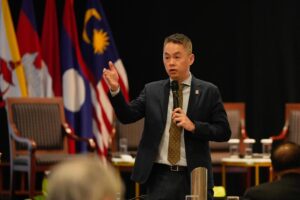
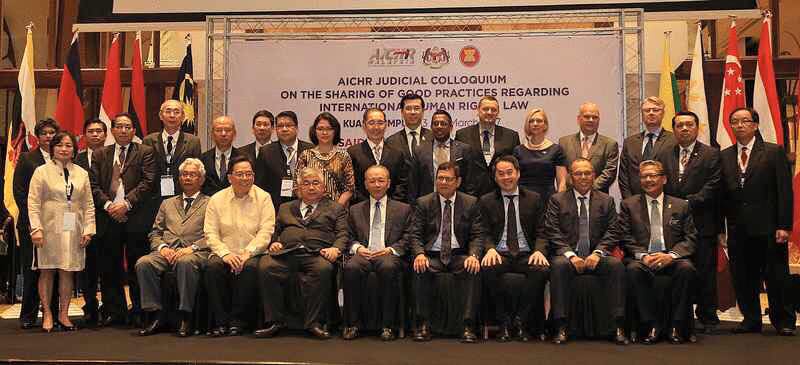
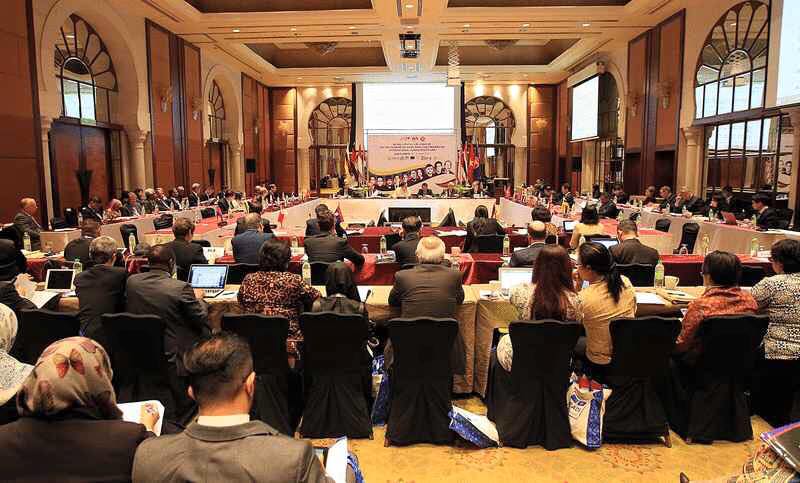
1. On behalf of the ASEAN Intergovernmental Commission on Human Rights (AICHR), I warmly welcome all of you to the inaugural ‘AICHR Judicial Colloquium on the Sharing of Good Practices Regarding International Human Rights Law’. The proponents of this Colloquium are AICHR Lao PDR, AICHR Thailand and AICHR Malaysia and our respective Ministries of Foreign Affairs. I thank my learned colleagues, His Excellency Phoukhong Sisoulath, Representative of Lao PDR to AICHR and His Excellency Seree Nonthasoot, Representative of Thailand to AICHR, and the Ministry of Foreign Affairs of Lao PDR, Thailand and Malaysia for supporting this joint initiative.
2. I extend my sincere appreciation to The Right Honourable Tun Arifin bin Zakaria, our Chief Justice, and the Malaysian Judiciary, for working with us and collaborating on this Colloquium. I am also grateful to the Judiciaries of ASEAN Member States.
3. I wish to congratulate the Council of ASEAN Chief Justices (CACJ) for having been recently included as an entity associated with ASEAN under Annex 2 of the ASEAN Charter. This development is welcomed. AICHR Malaysia stands ready to support and collaborate with the CACJ when called on, and we look forward to exciting and positive developments in the field of ASEAN’s legal jurisprudence and infrastructure.
4. I have condensed my remarks into four main points.
I. The role of the ASEAN Intergovernmental Commission on Human Rights (AICHR)
5. AICHR turns 8 years old on the 23rd of October 2017. We continue to evolve our institutional and structural capacity to better promote and protect human rights for the peoples in the region. There are now 16 civil society organisations that have been granted consultative status with AICHR, and we have supported their participation in this Colloquium.
6. It is time for AICHR to step up its efforts to advance its protection mandate. Such measures may include receiving communications and seeking information regarding possible violations of the ASEAN Human Rights Declaration (AHRD), and to express its opinion on the same. The logic is simple: it is better to know more than not to know or to know less. ASEAN will then be better equipped to nip problems in the bud before they escalate to full-blown crises that may jeopardise the peace of the region. The protection of the rights of our peoples is our paramount consideration.
7. AICHR’s mandate to encourage ASEAN Member States to ratify international human rights treaties is equally important. For this to work, ASEAN Member States must see this as capacity-building in learning about any gaps that need to be filled. We should approach it positively. Additionally, the domestication of international human rights norms must gather speed.
8. Viewed in this light, AICHR’s Representatives must be bold, and hold fast to our terms of work to be independent yet consultative.
II. The Application of International and Regional Human Rights Instruments in ASEAN
9. This Colloquium is premised on commonalities. ASEAN Member States have each signed the AHRD, and ratified the Convention on the Elimination of All Forms of Discrimination Against Women (CEDAW), the Convention on the Rights of the Child (CRC) and the Convention on the Rights of Persons with Disabilities (CRPD). There is a shared legal standard that unites us in the region. Many key rights in CEDAW, CRC and CRPD are echoed in the AHRD. At its core is the recognition by ASEAN Member States that human rights are universal, indivisible, inter-dependent and inter-related.
10. In spite of some limitations, the implementation of international and regional human rights laws have made a great impact to the lives of millions of people around the world. They have revolutionalised the norms, laws, values and practices of States. They have clarified the relationships, both between States and their citizens, and as between citizens. State obligations have also evolved, and the application of rights aimed at addressing the contemporary needs and issues faced by citizens has widened.
11. For example, in the advocacy to end impunity for crimes against humanity, and acts of torture and genocide, the responsibility to respect and protect the rights of everyone regardless of their status or nationality also applies to non-State actors such as corporations. Consistent with customary international law, a civilised State not only has to respect and safeguard the rights of those within their territories, but also to be accountable to other States and the wider international community in respect of their human rights record. The content of human rights law remains relatively the same but its interpretation has now expanded considerably. Therein lies the important role of the Judiciary in ensuring justice.
12. On this note, the jurisprudence undergirding human rights instruments may assist judges by providing guidance or as an aid to interpretation. Further, the ratification of international human rights conventions creates a ‘legitimate expectation’ that could be enforced by the courts. The expectation on the part of the citizen is that the State will act in conformity with the ratified conventions, and not in deviation of them. The Australian High Court’s decision in Minister of State for Immigration & Ethnic Affairs v Ah Hin Teoh is instructive on this point. Ah Hin Teoh also suggests that where a statute or legislation is ambiguous, the courts should favour the interpretation which accords with the State’s obligations under the ratified convention. This is because Parliament, on the face of it, must intend to give effect to the State’s obligations under international law. The conventions and related jurisprudence therefore aid the interpretation of domestic law.
13. The Malaysian High Court in Noorfadilla bt Ahmad Saikin v Chayed bin Basirun & Ors held that Executive action could not violate the principles of non-discrimination under CEDAW. The Court used CEDAW to guide its interpretation whether the act of refusing to employ a teacher because she was pregnant was violative of gender equality. Given that Article 8 of the Malaysian Constitution was amended to bar discrimination on the ground of gender, the Court found that the Government had acted in error.
14. The rights of indigenous peoples to native customary lands were upheld in Kerajaan Negeri Selangor & Ors v Sagong bin Tasi & Ors and Superintendent of Land & Surveys Miri Division & Anor v Madeli bin Salleh; while Sivarasa Rasiah v Badan Peguam Malaysia & Anor and Public Prosecutor v Azmi Sharom affirmed the ‘proportionality test’ in determining whether a law made by Parliament or action taken by the Executive is consistent with fundamental liberties enshrined in the Malaysian Constitution. This test is not new. In Europe and Africa, judges use the proportionality test to determine whether legislative or executive restrictions of human rights are valid. Limitations to rights cannot be arbitrary and excessive, and cannot render illusory or ineffective the rights in question. I am heartened that our Judiciary has adopted this test in the Malaysian context for it gives clarity in guiding the decisions of Parliament and actions of the Executive.
15. Most recently, the Federal Court in the landmark decision of Mohd Ridzwan bin Abdul Razak v Asmah binti Hj Mohd Nor recognised and developed the tort of sexual harassment through the common law. Although this case concerned a private law dispute between two colleagues, it is worth noting that CEDAW calls on State Parties to take all appropriate measures to eliminate discrimination against women by any person, organisation or enterprise. The Judiciary’s decision in this case is in line with both the spirit and intent of CEDAW. While ASEAN has witnessed a more enlightened citizenry ready to claim what they perceive to be theirs, I look forward to more examples of judicial acuity and responsiveness to the ever-evolving needs of society.
16. The AHRD was adopted with the aim of establishing a framework for human rights cooperation. It proclaims ASEAN’s intention to do everything within its power to protect vulnerable and marginalised groups. ASEAN Judiciaries should consider these groups as ‘special groups’ within the context of their cases. The AHRD may be used as a guide to interpreting domestic laws, and the courts may wish to refer to the AHRD to increase domestic jurisprudence and acceptance of human rights norms in the region.
17. I also hope that ASEAN Member States that have ratified the CEDAW, CRC and CRPD with reservations will continue to examine the possibility of withdrawing their reservations in the near future.
III. The Rule of Law and Human Rights
18. What is the ‘rule of law’? How is the rule of law envisioned in the national frameworks of ASEAN Member States? It is certain that the rule of law is more than governing according to written law. It is more than holding that no one is above the law. It is more than disallowing the arbitrary use of laws, or as a means of legitimising wide-ranging, intrusive powers.
19. The United Nations Secretary-General had in 2004 defined the rule of law as follows:
The principle of governance in which all persons, institutions and entities, public and private, including the State itself, are accountable to laws that are publicly promulgated, equally enforced and independently adjudicated, and which are consistent with international human rights norms and standards. It requires, as well, measures to ensure adherence to the principles of supremacy of law, equality before the law, accountability to the law, fairness in the application of the law, separation of powers, participation in decision-making, legal certainty, avoidance of arbitrariness and procedural and legal transparency.
20. Human rights are upheld through the rule of law, and strengthened when duty-bearers are held to account in accordance with international human rights standards. A comprehensive and consistent approach to the protection of human rights is largely premised on the principles of partnership and cohesion. While the primary responsibility to protect human rights rests on each ASEAN Member State, an independent Judiciary plays an important role in interpreting and applying laws in a manner that is consistent with rights principles. Breaches of the rule of law undermine both the principle of equality before the law and the consensual social acceptance of the rule of law.
21. Another important feature of the rule of law is access to justice. Barriers to access to justice have been well-documented: delays; prohibitive costs; lack of available and affordable legal representation; abuse of authority and powers; limitations in existing remedies provided either by law or in practice; gender stereotyping and bias; and inadequacies in protecting women, children, the poor and other disadvantaged peoples, including those with disabilities and low levels of literacy. Recalling my own experience as a lawyer, I have spent nights camped outside police lock-ups trying to get access to a detainee, and have heard interesting stories from those we defend about their treatment by detaining authorities.
22. In the past few years, the challenges to the rule of law have increased. We are faced with the stark reality that ASEAN’s law enforcement systems, in spite of Member States’ good intentions, still require further strengthening. The first challenge of change falls to us – practitioners in the rule of law in the justice system – to find ways to collaborate as a collective on joint efforts to enhance effective access to justice.
IV. ASEAN Judicial Cooperation on Human Rights in realising the ASEAN Community
23. My final point. The adoption of the ASEAN Charter has expedited regional integration through the implementation of numerous economic, political-security and socio-cultural community initiatives. ASEAN will see a significant increase in the movement of persons, goods and services across borders. Policy objectives and rules formulated at the regional level have multiplied, and the ASEAN legal framework is becoming increasingly complex. ASEAN Judiciaries play a key role in preparing the domestic legal and judicial sectors for the requirements of this framework.
24. Inevitably, human rights challenges that may impact the lives of more than 650 million ASEAN peoples would arise. Judicial cooperation has become more necessary in the implementation of the norms set out in the AHRD. The action we take today will define ASEAN tomorrow. For those living in poverty, we bring hope. For those living without healthcare, we must find ways to bring medical treatment.
25. I would like to highlight the plight of children. In the course of my work around ASEAN, I have noticed that issues of unaccompanied and separated minors, child migrants and stateless children frequently appear. What are the judicial guarantees that ought to be in place to treat them in accordance with human rights and humanitarian norms? What are ways to ensure that the legal infrastructure of ASEAN Member States upholds the best interests of the child when dealing with unaccompanied and separated minors in irregular migration situations? What are alternatives to detention especially when considering the psychological impact on child migrants? Is there a regional solution that would address ASEAN Member States’ concerns; and yet ensure respect for judicial guarantees and access to humanitarian services? These children suffer from multiple vulnerabilities that cut across all sectors of human rights: civil and political, economic and social. Add the fact that the child may be an indigenous girl living with a disability; and she faces even further structural and cultural discrimination.
26. It is noteworthy that collaboration among ASEAN Judiciaries is progressing. I understand that there is very encouraging movement at the level of the CACJ, formerly known as the ASEAN Chief Justices’ Meeting (ACJM), in matters of education and training, court excellence and ASEAN integration. Further, the Judiciaries of the Philippines, Thailand, Indonesia and Timor-Leste are currently looking into implementing the Bangkok General Guidance for Judges on Applying a Gender Perspective in Southeast Asia developed in collaboration with UN Women and the International Commission of Jurists (ICJ).
27. It is also often said that conferences should not be venues to air empty platitudes, but as platforms for action. I have full confidence that this Colloquium will be forward-looking. AICHR’s Terms of Reference open a host of opportunities to establish institutional links among ASEAN bodies to mainstream human rights under the AHRD. Perhaps by establishing an inter-sectoral expert or working group on human rights and the Judiciary, or a regional resource centre to provide technical expertise and assistance to policymakers, judges and lawyers. Or perhaps by publishing guidance notes or comments on the interpretation and application of the AHRD, and making recommendations to enhance rights protection.
28. In conclusion, I trust that I have shown how the four main themes of this important Colloquium are intertwined, and I urge you to continue the good work already started. I am certain that this Colloquium and the ones after this will make it possible for ASEAN Member States to effectively work together to uphold the rights of peoples in the region. It is our responsibility. I would also encourage civil society institutions to assist ASEAN law enforcement and judicial mechanisms in this venture.
29. Before I end, I would like to express my deep admiration and gratitude to my AICHR Malaysia team from the ASEAN-Malaysia National Secretariat at Ministry of Foreign Affairs. They have worked extremely hard to realise this Colloquium. I also thank our partners – the Human Rights Commission of Malaysia (SUHAKAM), ASEAN-U.S. PROGRESS, EU READI-Human Rights Facility (EU READI), Heinrich Boll Stiftung (HBS), the Swedish International Development Cooperation Agency (SIDA) and the Raoul Wallenberg Institute of Human Rights and Humanitarian Law (RWI) – for supporting this meeting.
I wish you a fruitful and productive time ahead. Thank you.
Dated this 13th day of March 2017
Edmund Bon Tai Soon
Representative of Malaysia to AICHR
The original post can be accessed on the AICHR Malaysia Facebook Page, archived here.