
Dato’ Astanah Abdul Aziz, Deputy Secretary-General of ASEAN for the ASEAN Political-Security Community (APSC),
Dato’ Zahid Rastam, Deputy Director-General, High-Level Task Force, ASEAN-Malaysia National Secretariat (AMNS), Ministry of Foreign Affairs Malaysia,
Georgina Ann Hernandez Yang, AICHR Chair and Representative of the Philippines to AICHR,
I Gusti Agung Wesaka Puja, Executive Director, ASEAN Institute for Peace and Reconciliation (ASEAN-IPR),
Simon Fellows, Deputy High Commissioner, Australian High Commission in Malaysia,
Dr. Annie R. Bird, Research Coordinator, Auschwitz Institute for the Prevention of Genocide and Mass Atrocities (AIPG),
Dr. Sarah Teitt, Director, Asia-Pacific Centre for the Responsibility to Protect (APR2P), University of Queensland,
AICHR Representatives, delegates from ASEAN Member States, ASEAN Organs, Sectoral Bodies and Entities, civil society organisations, experts, partners, and friends,
Selamat pagi, and welcome to Kuala Lumpur.
When we first conceived these peace pathways workshops during Malaysia’s chairship in 2025, we wanted to bring a human rights-based approach to conflict prevention and peacebuilding. Our aim was to explore a relatively simple but important question: How can a human rights perspective contribute to the way ASEAN understands and approaches peace, conflict prevention, conflict management, and peacebuilding?
We recognised that, while ASEAN has contributed to peace in the region, there have undeniably been conflicts that require our attention. What we wanted to bring to this work was a specific focus on groups in vulnerable and marginalised situations. Protecting their rights and welfare is part of our mandate at AICHR, and it is also our emphasis in situations of conflict.
We then wanted to link peace and development, a link that is particularly relevant to our region. Hence the idea of what is now known as the ASEAN Declaration on Promoting the Right to Development and the Right to Peace Towards Realising Inclusive and Sustainable Development (ADDP). The ADDP was one of Malaysia’s priorities. It was adopted by the ASEAN leaders at the 47th ASEAN Summit in October 2025, and this workshop is part of a series of actions to follow up on the ADDP.
By then we had sought the expertise of the ASEAN Institute for Peace and Reconciliation (ASEAN-IPR), to which we are deeply indebted. As ASEAN’s institution for research and capacity-building on peace, conflict management and reconciliation, ASEAN-IPR brings knowledge of peace processes and a regional network of experts. AICHR brings a human rights perspective that identifies who is most at risk, and why, when tensions rise.
Against this backdrop, AICHR, led by Malaysia with Indonesia and Thailand as co-proponents, and in collaboration with ASEAN-IPR, set out to create a dedicated platform to explore the intersection between human rights and conflict.
Over the course of six workshops, we brought together representatives from across ASEAN’s three pillars, ASEAN sectoral bodies, national human rights institutions, academia, civil society, and regional and international partners. The workshops provided a safe and constructive space for dialogue on issues that are often complex and, at times, sensitive. We wanted to normalise deliberations on these difficult and often emotional matters that surround situations of conflict.
At the same time, the workshops made clear that there is no single pathway to peace. Conflicts are dynamic and require different entry points, tools, and actors. Not all conflicts are bad. Responses need to be flexible, context-specific, and inclusive, and human rights-based peace efforts may need to extend beyond diplomacy and mediation to include humanitarian assistance, protection, essential services, and support for affected communities.
Six workshops later, with contributions from you and from a small informal technical working group of experts from the region, we developed the proposed ASEAN Peace Pathways Framework (PPF) presented here. We first coursed the draft within AICHR for comments and now share it with all of you for further input. This has been a long process, but your contributions have been immense. I am also mindful of the criticism that ASEAN does not consult widely or sufficiently or regularly enough. We have therefore been insistent on keeping this consultation open and constructive, including through these workshops.
The ASEAN PPF compiles good practices and experiences from across ASEAN and consolidates existing mechanisms so that they can be used. It does not impose new standards or create new mechanisms. Its aim is to improve coordination, coherence, and operationalisation.
Today, I am proud to say that Malaysia is joined by Cambodia, Indonesia, the Philippines, Thailand, and Timor-Leste as co-proponents. This workshop, the seventh chapter of AICHR’s peace pathways initiative, also continues our strong, reliable and positive partnership with ASEAN-IPR.
This workshop will validate the proposed ASEAN PPF, gather your input, and develop the Framework further, including on early prevention and response using human rights indicators and on conducting human rights-based conflict analysis.
AICHR has taken a common position and approach to advance human rights and peace. In the Commission’s Note on Advancing Human Rights and Peace of 21 September 2026, we set out the need to apply a human rights-based lens to conflict: to identify emerging risks and vulnerabilities, improve understanding, and reveal patterns. The Note also emphasises the integration of human rights perspectives into conflict prevention, conflict management, and peacebuilding, while highlighting the importance of stronger coordination, continuity, institutional learning, and cross-pillar cooperation among existing ASEAN bodies and sectoral mechanisms.
It is important for us to continue looking at peace together, through trust-building and confidence-building, and looking at how we can support ASEAN, and how ASEAN can support peace-led initiatives, through our different mandates. ASEAN-IPR has a very strong mandate on peace and reconciliation. AICHR focuses a lot on groups in vulnerable and marginalised situations, and that is where our input into peace is important, because that is where our protection mandate for groups in vulnerable and marginalised situations comes to the fore. When ASEAN-IPR’s expertise in research, capacity-building and conflict resolution is combined with AICHR’s human rights lens, ASEAN gains a fuller picture of where risks lie and whose safety is at stake. That is why ASEAN-IPR and AICHR are perfect partners.
AICHR was established within ASEAN’s diplomatic space and is tasked with human rights diplomacy. That space has its constraints, but it also has its strengths, and within the ASEAN Way and its principles there is still room for flexibility and entrepreneurship. I call this “diplopraxis”. It is not merely theory, nor high-level macro statements. It is work at the working level: using ASEAN’s own practices, through AICHR as an institution, to transform the human rights landscape in the region. It is purposive, and it builds on the existing layers of diplomatic practice. I will say more about it during the workshop.
My hope is that the ASEAN PPF will, in time, become second nature, almost reflexive and automatic, and part of the ASEAN psyche.
It is in this context that our discussions today and tomorrow are particularly important. I hope that they will go beyond identifying challenges, and that we can draw on the considerable experience and expertise in this room to identify practical opportunities for stronger coordination, better information-sharing, greater continuity, and more effective human rights-based approaches to prevention and response.
I take this opportunity to thank the AICHR Representatives of Cambodia, Indonesia, the Philippines, Thailand, and Timor-Leste, our co-proponents, and ASEAN-IPR for its partnership and support.
Much appreciation goes to the unseen hands behind the organisation and running of this programme: the team led by Malaysia’s AICHR Assistants — Toh Nyon Nyin, Valen Khor, and Umavathni Vathanaganthan — and the officials of the Ministry of Foreign Affairs Malaysia, led by Sukhminder Singh Olikh, for their invaluable support.
This programme is led by AICHR and ASEAN Member States and funded through the ASEAN AICHR Fund. We have also benefitted from the support of the Auschwitz Institute for the Prevention of Genocide and Mass Atrocities (AIPG), the Australian Government through the Australian Human Rights Commission (AHRC), and the Asia-Pacific Centre for the Responsibility to Protect (APR2P).
Most importantly, I thank all of you for taking the time to participate in this process — despite the haze around us. The value of these workshops has always been in the diversity of perspectives brought into the room, and in our ability to learn from one another.
I look forward to constructive and substantive deliberations over the next two days, and to your views on how we can continue to strengthen ASEAN’s approaches to peace and conflict prevention.
Terima kasih.
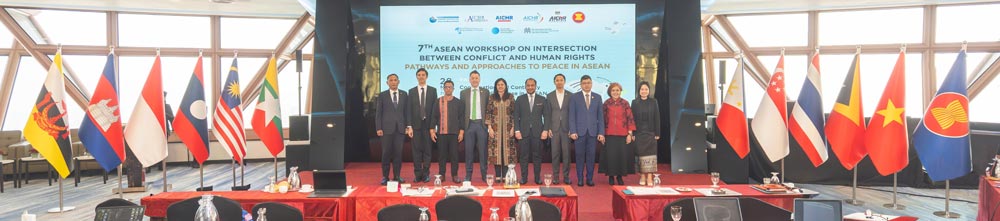
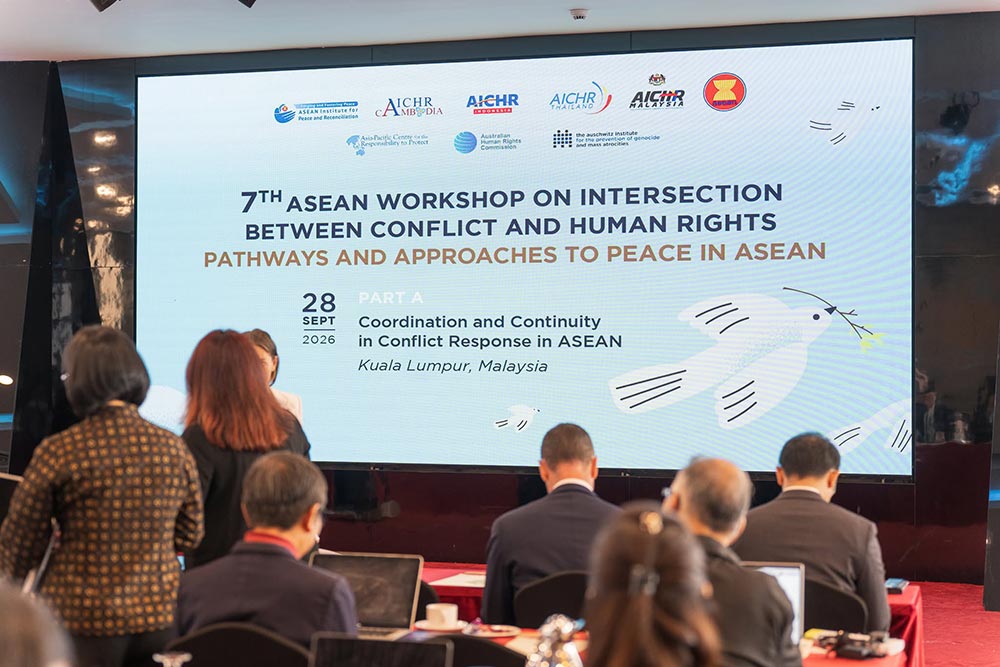
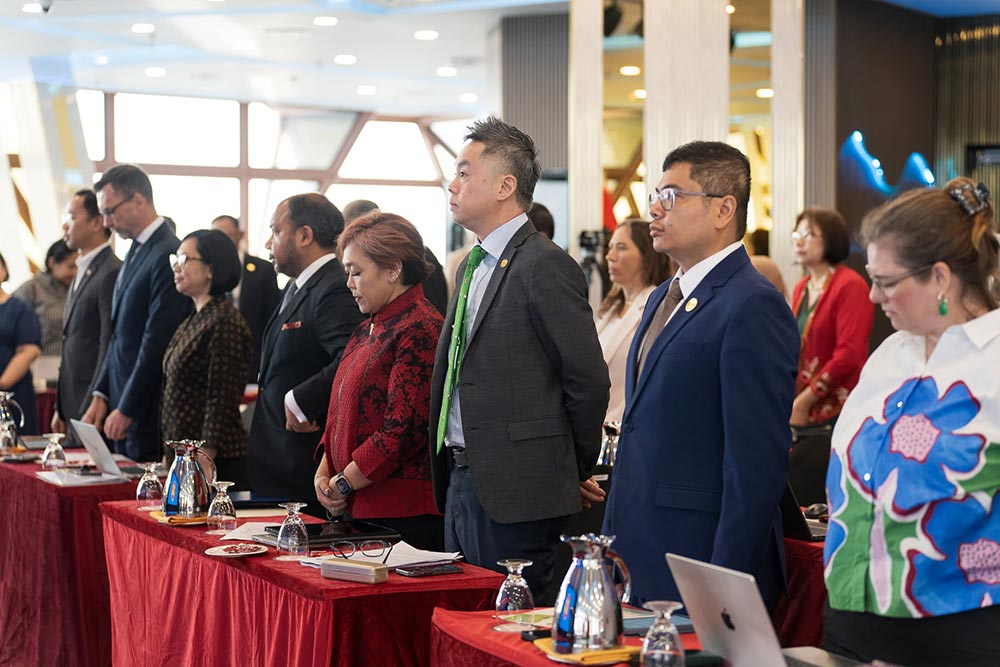
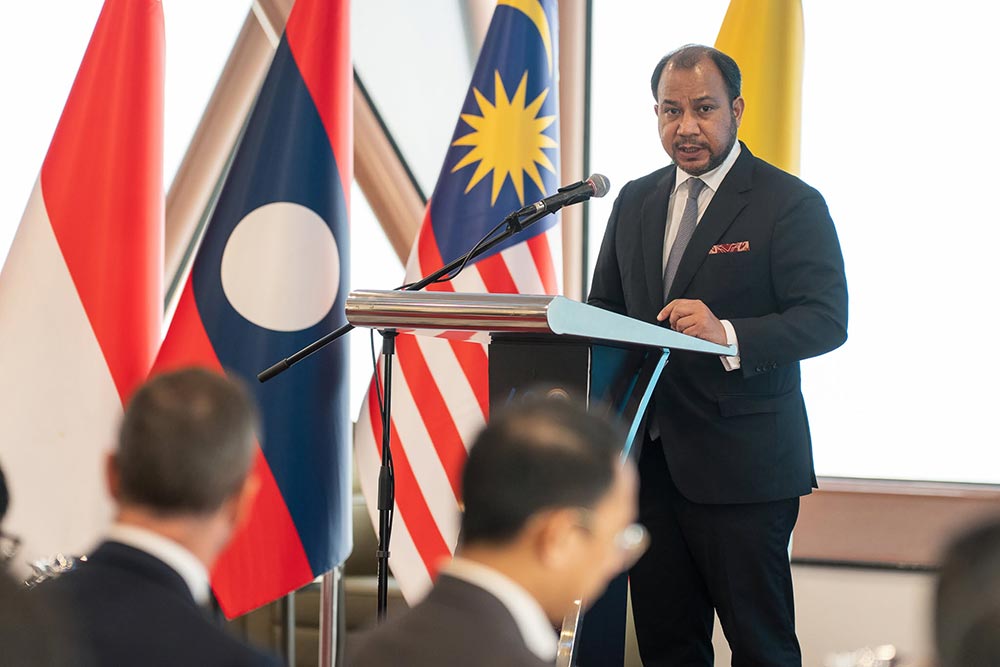
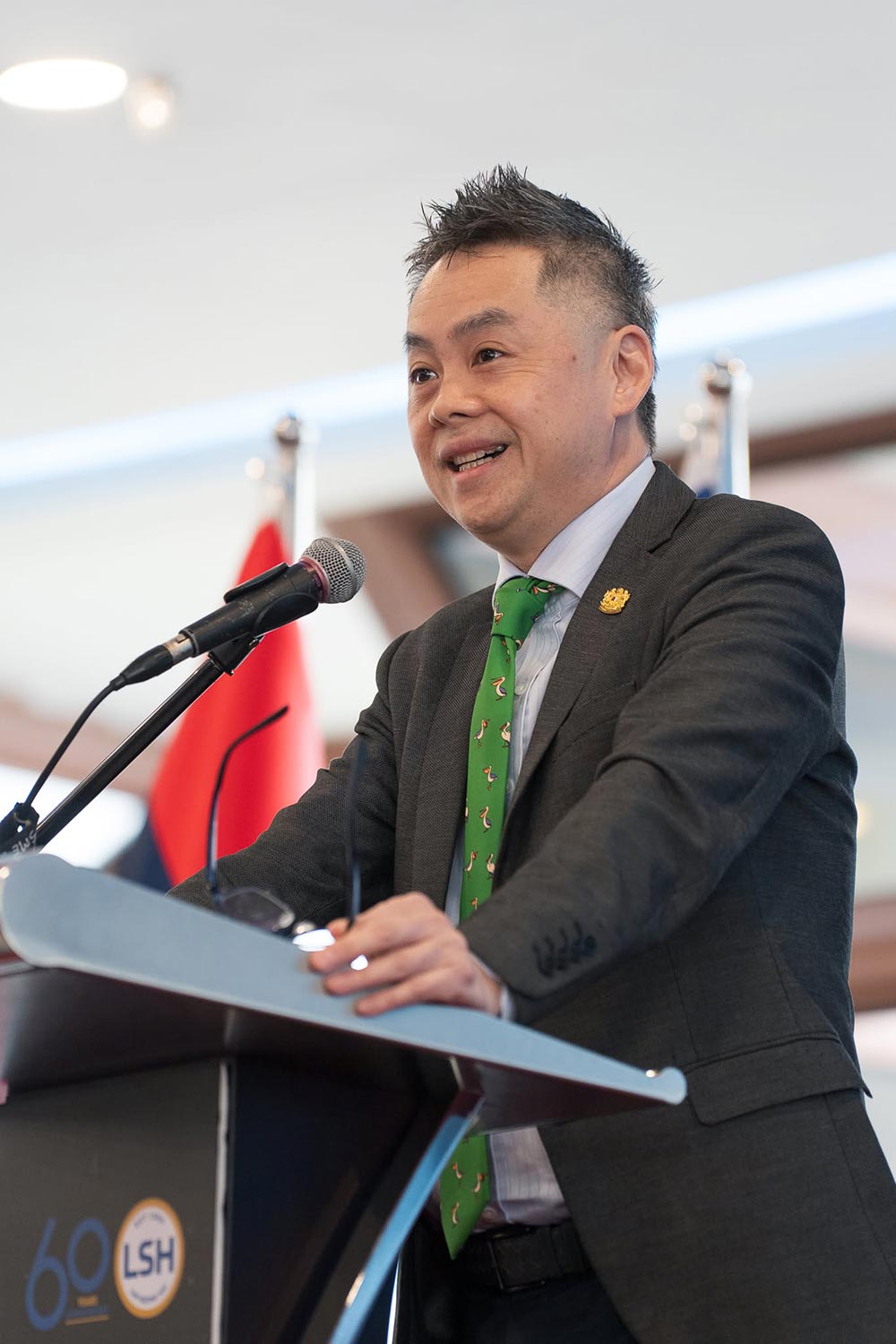
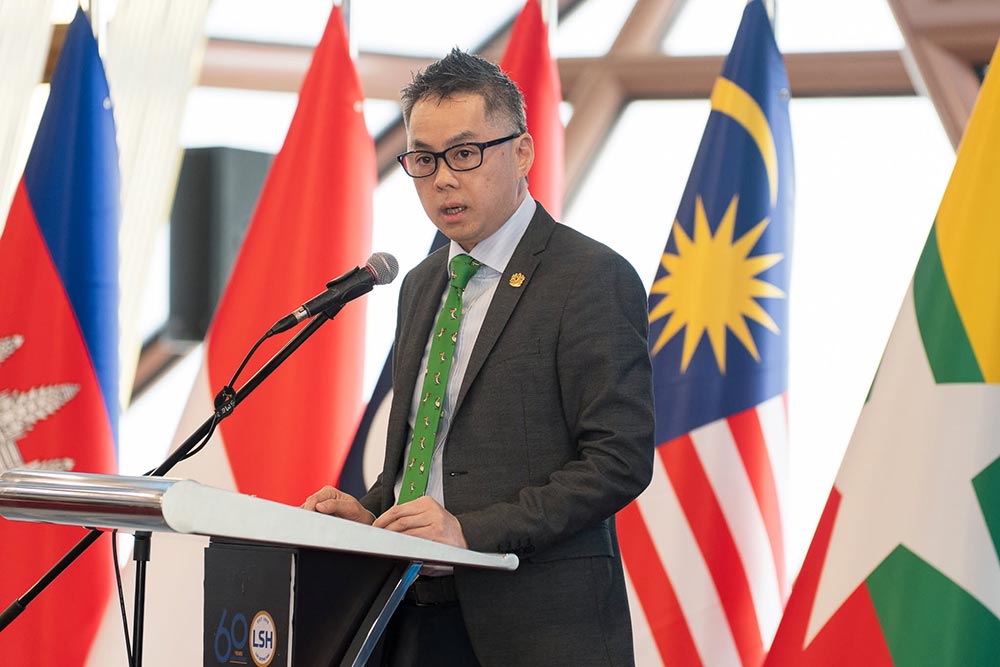
The speaking notes above were prepared for the welcome remarks delivered by Edmund Bon on 28 September 2026 at the AICHR 7th ASEAN Workshop on the Intersection Between Conflict and Human Rights: Pathways and Approaches to Peace in ASEAN (Part A — Coordination and continuity in conflict response in ASEAN; and Part B — Early prevention and response through human rights-based approaches), held on 28 and 29 September 2026 in Kuala Lumpur, Malaysia.