
Friends and colleagues, good afternoon.
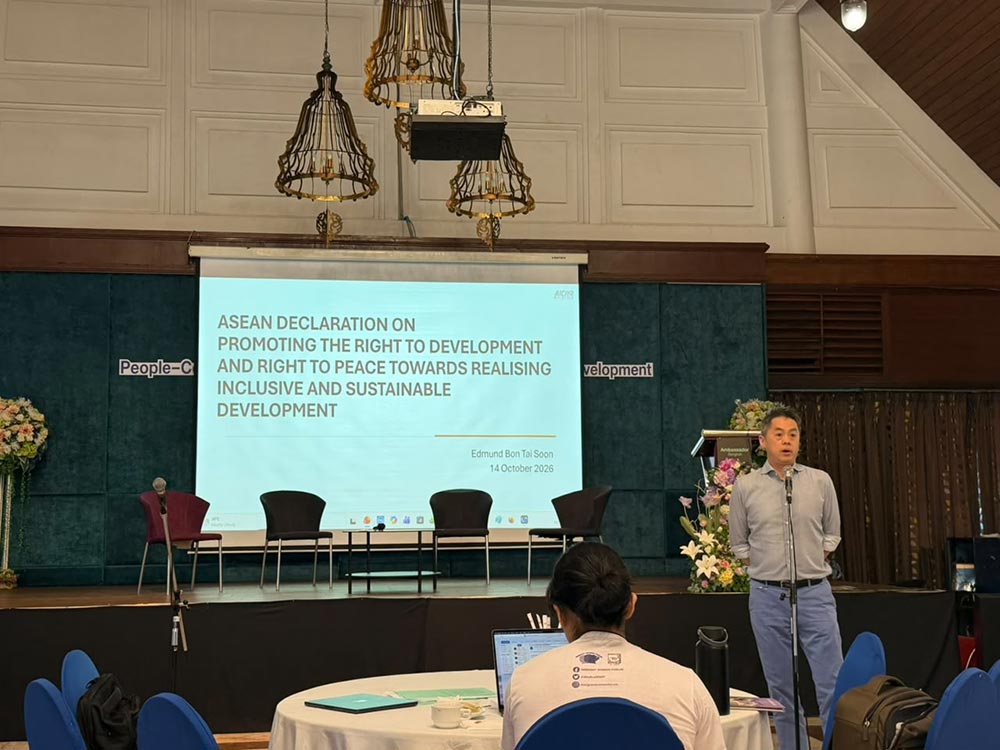
Thank you to Migrant Forum in Asia (MFA) for inviting me to share about the ASEAN Declaration on Promoting the Right to Development and the Right to Peace Towards Realising Inclusive and Sustainable Development (ADDP).
The ADDP builds on Articles 35 to 38 of the AHRD, which guarantee the right to development and the right to peace. Every person and the peoples of ASEAN are the central subjects of development, and they should be active agents in, as well as beneficiaries of, the development process.
The ADDP puts the person back at the centre. Development is measured by what happens to people, not only to economies. Development is more than just a wage. Second, the right to development covers economic, social, cultural and political development. A worker who earns a wage but cannot organise, change employers, or speak up about the policies that shape their life is not developing. Third, migration often signals that a right has been denied at home. When people leave because there are no decent jobs, no services, or no climate-secure livelihoods, origin countries have not met their duty to improve the well-being of their whole population. Sending workers abroad cannot replace that duty. Migration should be a choice, not the only way out. Finally, responsibility does not stop at one border. The right to development carries a duty on states to cooperate internationally, and that duty is shared by countries of origin and destination alike.
The ADDP is an advocacy tool. Rights are indivisible, so development cannot be traded against civil and labour rights. Wage theft, passport confiscation, and employer-tied visas cannot be excused as “the cost of development”. Article 5 commits ASEAN to remove barriers to equitable access to essential services such as healthcare, housing, law enforcement, and employment, and to eliminate all forms of discrimination. That speaks directly to migrants who are shut out of safety nets or blamed in xenophobic narratives.
Article 6 promises to leave no one behind, including those in vulnerable situations. Article 8 asks businesses to do more through responsible business conduct and by mitigating the adverse impacts of their operations, which for migrant workers means fair recruitment and supply chains free of forced labour. When migrants generate growth but are left with debt, and abandoned in crises, the benefits of development have not been fairly shared.
Above all, the ADDP treats participation as protection. Free, active and meaningful participation means migrants organising, joining unions, and sitting at the policy table.
What does the ADDP ask of States? Measure migration policy by what it does for people, their rights, skills, agency and well-being, and not by remittance volumes. Guarantee protection and evacuation in crises, and recover wages owed, with origin and destination states sharing accountability.
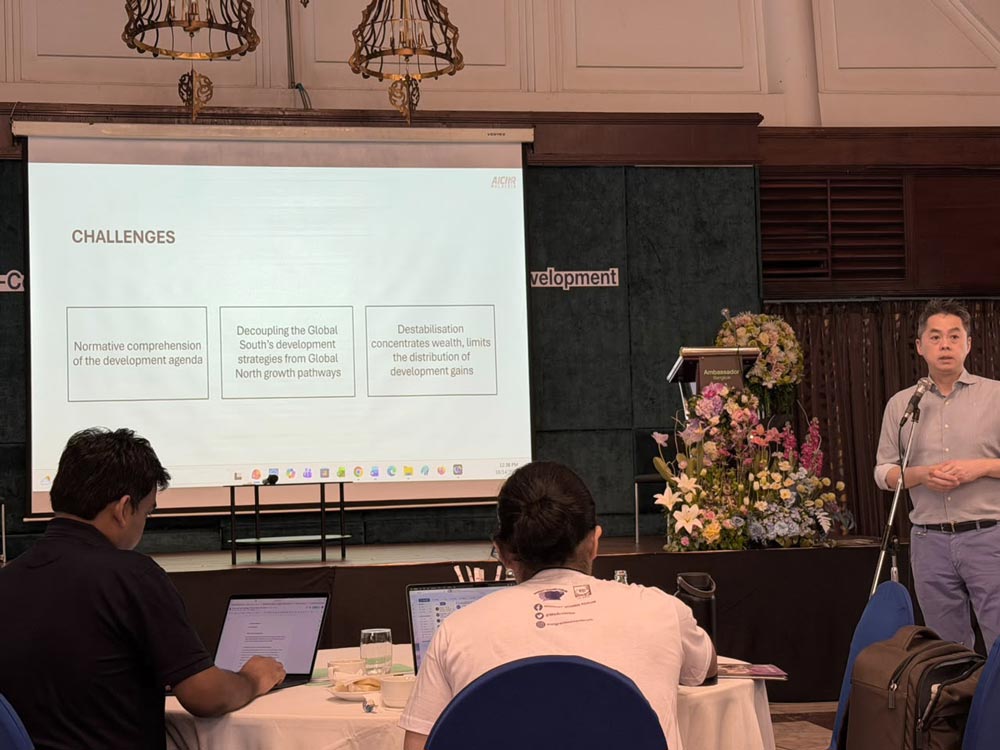
Where are we now? Article 10 tasks AICHR and relevant ASEAN organs and bodies to follow up on the Declaration. AICHR has formed a working committee to gather feedback on possible actions to the ADDP, and we seek your views. AICHR also held a programme in Dili, Timor-Leste, on 20 and 21 August 2026: the 4th ASEAN Consultation on the Human Right to Development to Enhance and Strengthen the ASEAN Community and its Implementation, which provided us with new ideas to effectively realise the ADDP.
Several recommendations that speak directly to migrant workers include an ASEAN framework for the meaningful participation of people in vulnerable situations; ASEAN guidelines on business and human rights, and for handling grievances; a regional study of how businesses remedy forced labour risks in supply chains, with procedures for workers and their representatives to raise concerns with ASEAN bodies; and training programmes on responsible recruitment. These are still proposals, and they will only be as strong as the voices that shape them.
That is where we seek your input to help shape ASEAN’s trajectory in advancing the protection of migrant workers’ rights. There is much that can be done.
You can document barriers faced, with data that shows who is being left behind. You can push for reforms to national laws and policies, engage businesses on human rights due diligence, and support community-level dialogues. Nobody understands the distance between policy and real life better than migrant workers and the people who stand with them.
Let us translate the ADDP into real action that those who need human rights most can feel.
Thank you.
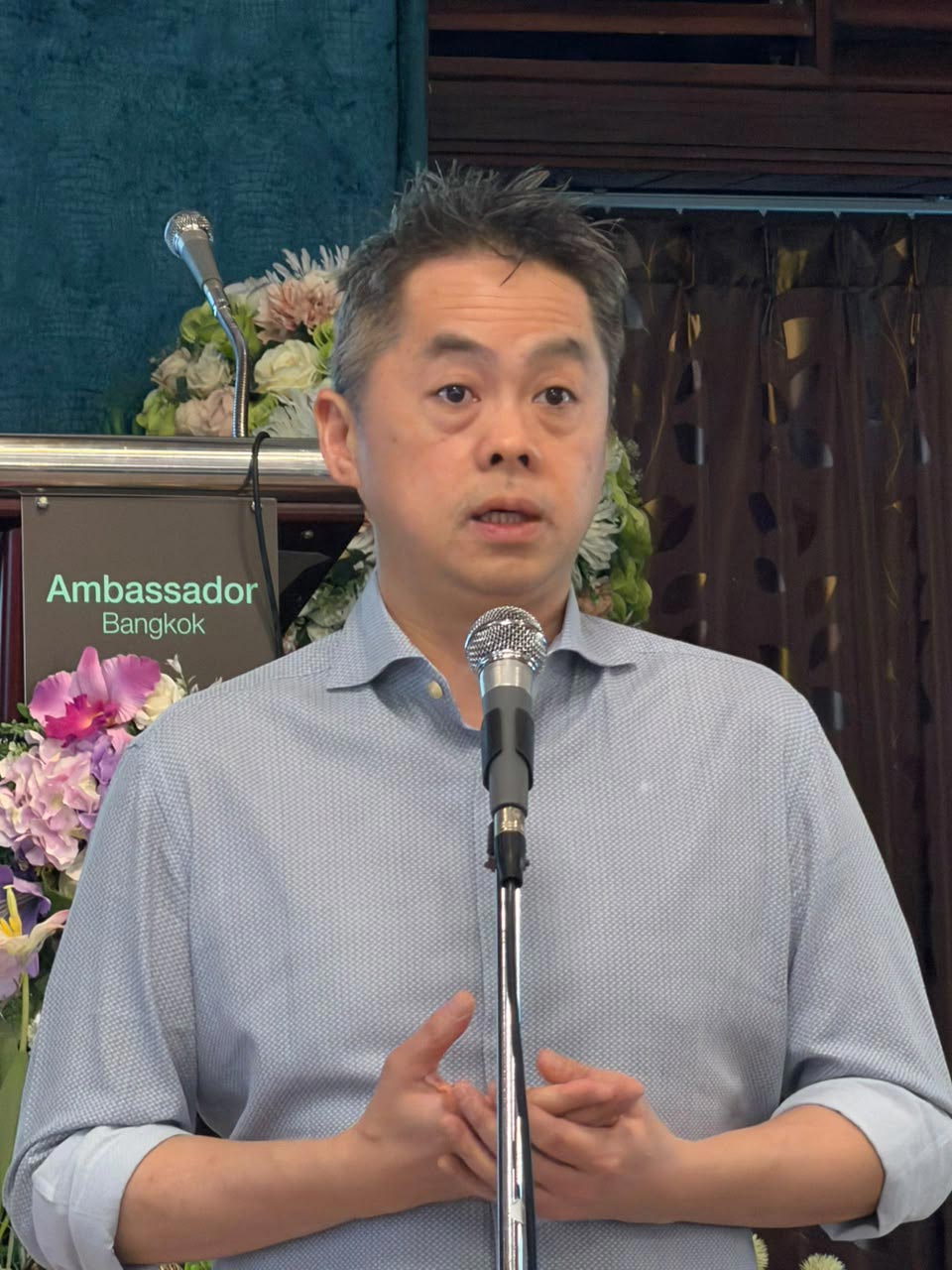
The speaking notes above were prepared for the presentation delivered by Edmund Bon at the session titled “From Declaration to Action: Building Concrete Pathways for the Right to Development” on 14 October 2026 at the Migrant Forum in Asia Regional Conference on Migration: People-Centered Approach to Migration, Human Rights, and Development held from 12 to 14 October 2026 in Bangkok, Thailand.