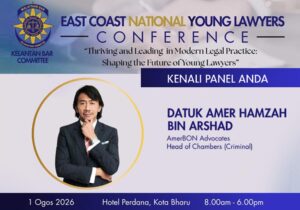

The recent acquittal of Datin Seri Rosmah Mansor (Rosmah) marks a pivotal moment in the ongoing discourse surrounding justice and legal representation in Malaysia. As one of her defence lawyers, I witnessed firsthand the complexities of her case and the implications of the court’s decision on public perception and legal standards. This ruling not only restores her dignity but also emphasises the importance of a fair trial in protecting the rights of individuals against the weight of public opinion.
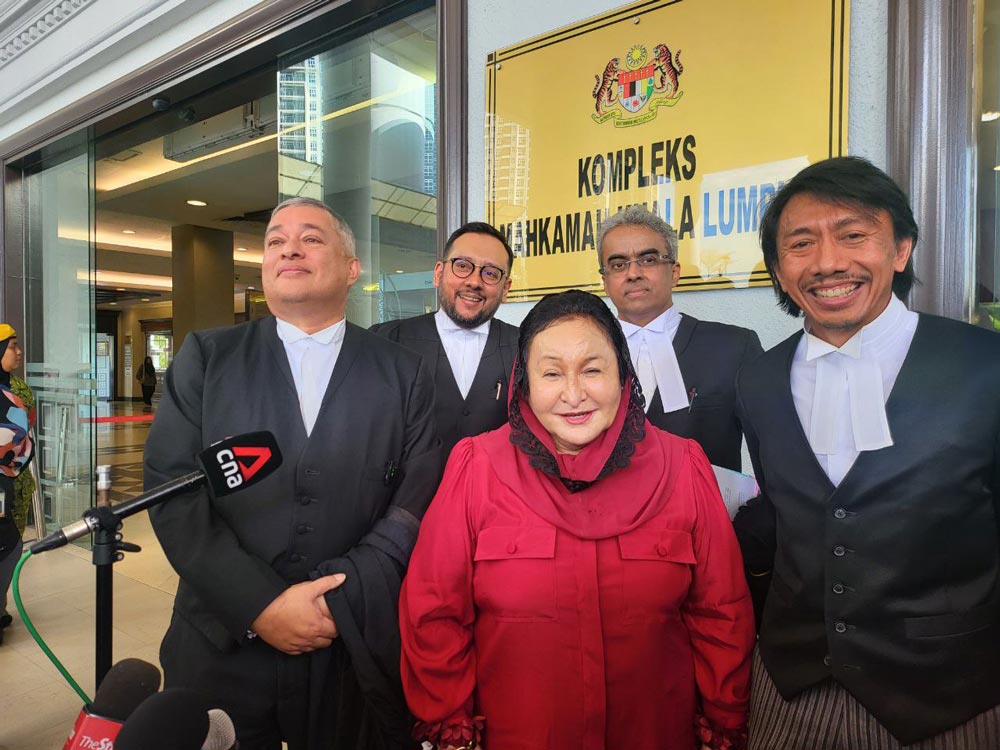
Any criminal charge must meet the essential requirements set by law. A charge serves as a formal notification to the accused, outlining the allegation and forming the basis for the trial. If a charge is found to have significant flaws at the outset, the accused has the right to challenge it in court. This was precisely the action taken by Rosmah through her legal team, who filed an application questioning the legality and propriety of the 17 money laundering charges brought against her.
Duplicative charges
Charges must not be duplicative and must ex facie expressly set out the essential particulars of the offence as recognised in law.
In Rosmah’s case, her legal team argued several key points:
- Duplication of charges: The tax evasion allegations spanned multiple financial years, leading to multiple charges for essentially the same conduct.
- Lack of unlawful activity for money laundering: Money laundering requires a predicate offence —typically an unlawful activity from which proceeds are generated. Without these proceeds, money laundering cannot occur.
- Charges 1–12: These charges claimed that Rosmah engaged in money laundering by depositing sums of money into her bank account. However, the charges failed to explain how this act of depositing money could constitute money laundering.
- Charges 13–17: These charges were based on Rosmah’s alleged failure to file her tax returns. However, failing to file tax returns does not automatically generate unlawful proceeds. Money laundering requires identifiable proceeds of unlawful activity, but no such proceeds were shown in this case.
In essence, the mere failure to file tax returns did not in itself create an unlawful activity or proceeds that could be traced back to money laundering. Without a predicate offence, there are no proceeds to launder.
The acquittal
The High Court carefully examined the arguments presented by Rosmah’s legal team and concluded that the charges lacked sufficient legal grounding. As a result, the court determined that the charges against her were not substantiated by the necessary legal criteria.
This case underscores the importance of ensuring that criminal charges are clear, well-founded, and supported by concrete evidence.
Editor’s Note: The full judgment by High Court Judge Tuan Muniandy A/L Kannyapan can be viewed here.
Amer Hamzah Arshad is the Head of Chambers (Criminal) of AmerBON, Advocates, a legal firm based in Kuala Lumpur, Malaysia. He specialises in criminal law practice and is primarily focused on defence work and appeals at the High Court of Malaya, the Court of Appeal, and Federal Court of Malaysia. Amer has been involved in several landmark criminal trials and appeals, which were widely covered by media and highlighted in law journals. He has vast experience in the white collar and commercial crime cases (including corruption, criminal breach of trust, cheating, anti-money laundering, and market manipulation) and also capital punishment cases.
The original version of this article was published by New Malaysia Herald, archived here.