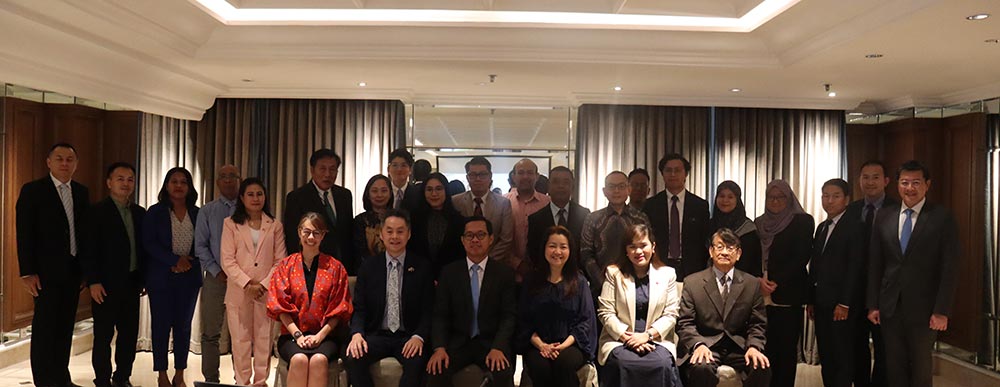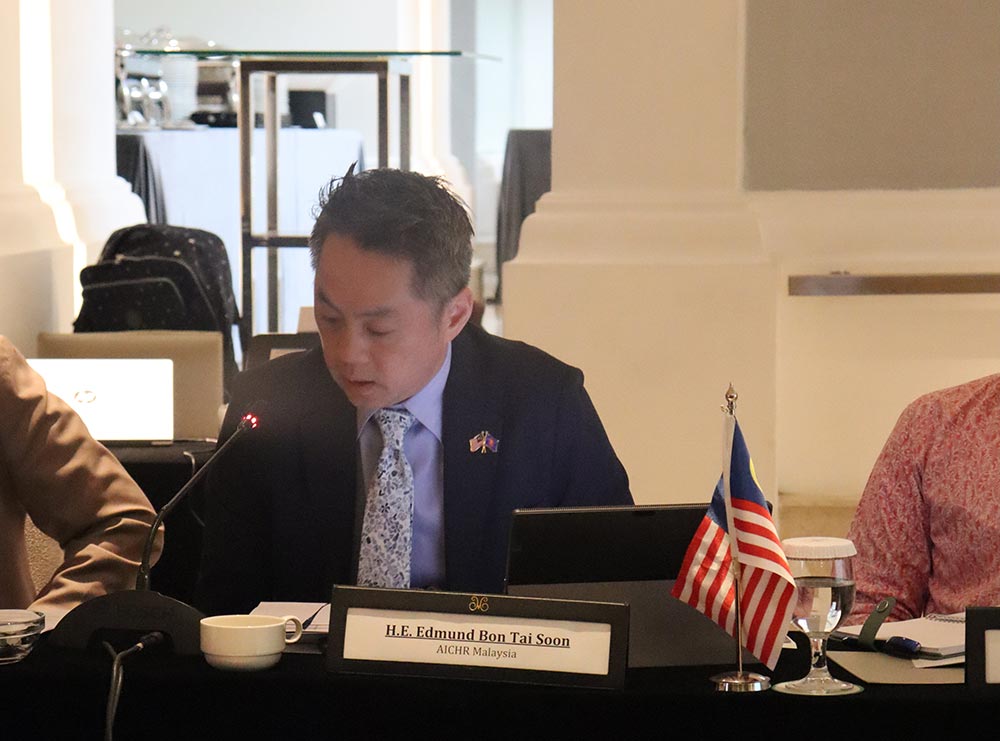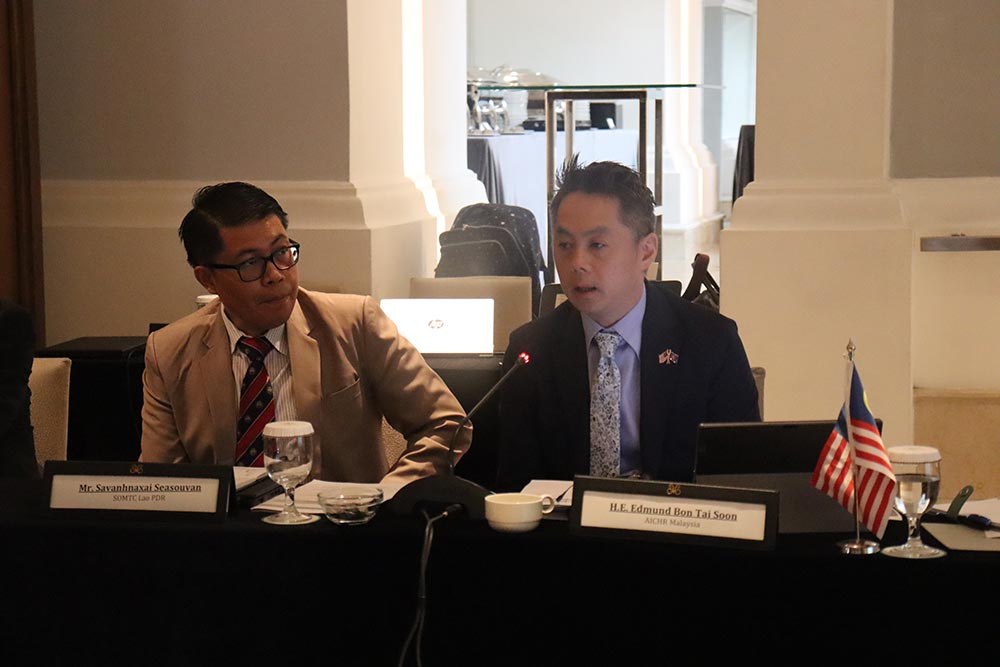

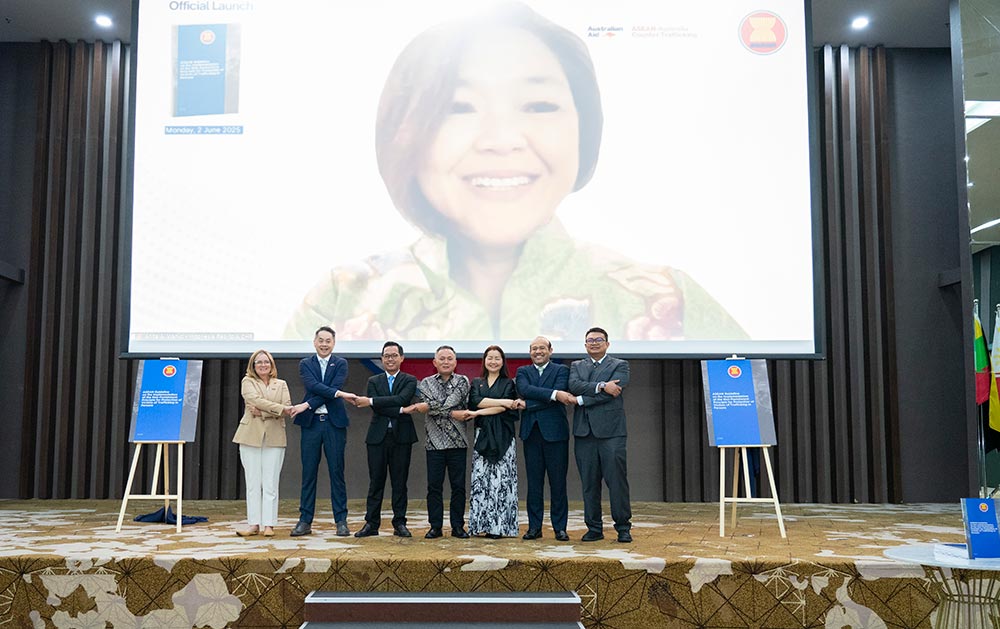
The ASEAN Intergovernmental Commission on Human Rights (AICHR) and ASEAN Senior Officials Meeting on Transnational Crime (SOMTC) have a long-standing relationship dating back to as early as 2013. Both bodies have been working tirelessly to protect the rights of trafficked victims and survivors.
However, during my first term as Malaysia’s AICHR Representative in 2016, I understood that there was some hesitation between members of the bodies about meeting regularly and working together on a substantive outcome document. Anecdotal evidence suggested that SOMTC was concerned AICHR was going to wave the finger at them on human rights violations, while AICHR was wary of SOMTC’s strong law enforcement-security oriented approach which seemed to exclude a human rights perspective. Over time, these misperceptions were addressed through continued engagement in various ad hoc consultations and activities.
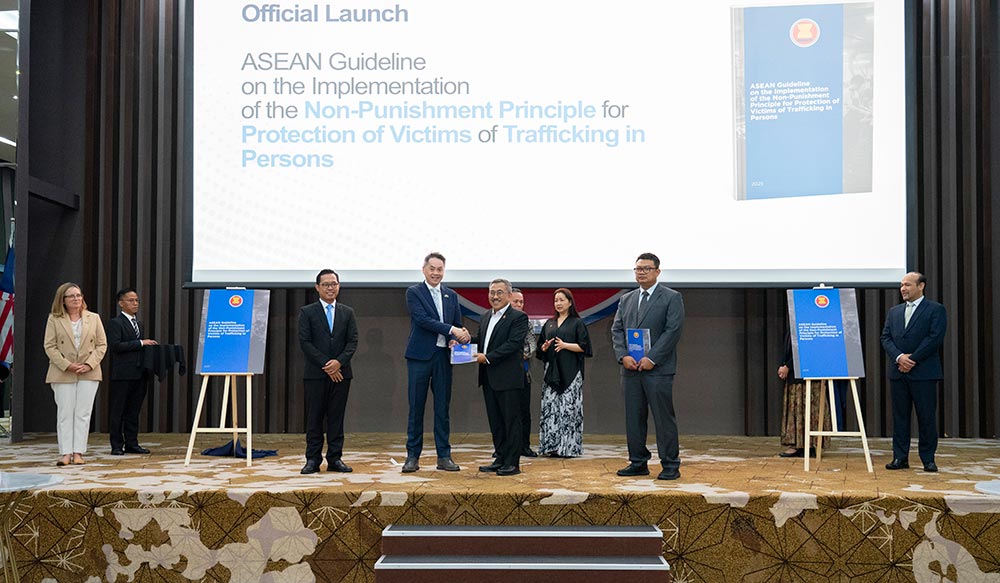
The first full AICHR-SOMTC interface was officially recorded in 2023 hosted by AICHR. This ASEAN Guideline on the Implementation of the Non-Punishment Principle for Protection of Victims of Trafficking in Persons is the result of the discussions that transpired in the meeting and the continued engagement between AICHR and SOMTC thereafter. It builds on a relationship that has developed over a decade and showcases effective cross-sectoral and cross-pillar collaboration. If implemented as intended, the Guideline represents a vital human rights-based protection measure for victims and survivors. The Guideline demonstrates that law enforcement and human rights can go together, and that a rights-based approach can be adopted within the security sector.
Once again, let us put our hands together to recognise and appreciate the contributions of past and present members of AICHR and SOMTC, ASEAN sectoral bodies, experts and civil society organisations in finalising and launching this Guideline. Also, the support of the Australian government funded ASEAN-Australia Counter Trafficking (ASEAN-ACT) programme has been instrumental in the success of this initiative.
As we know, combatting human trafficking requires a multi-dimensional approach encompassing prevention, protection, prosecution, and policymaking. After adopting the Guideline, the real challenge now lies ahead: ensuring that this ASEAN Guideline is implemented horizontally — across member states — and vertically by member states within their countries.
Importantly, the newly adopted ASEAN Community Vision 2045 “Resilient, Innovative, Dynamic, and People-Centred ASEAN” endorsed through the Kuala Lumpur Declaration on ASEAN 2045: Our Shared Future on 26 May 2025, urges ASEAN to strengthen its institutions and refresh its processes to become more resilient, innovative, agile, responsive, and future-ready in facing both global and regional challenges.
Implementation of the Guideline numbers 14 and 15 are particularly significant, as they call for the establishment of monitoring and reporting mechanisms to track the use of the non-punishment principle. The key question then is how to regularise the practice of monitoring and reporting, and to platform or institutionalise the mechanism? I leave you with that question in our deliberations on the next steps ahead.
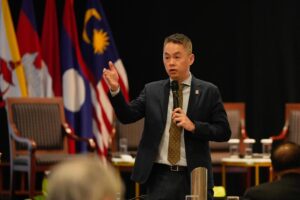
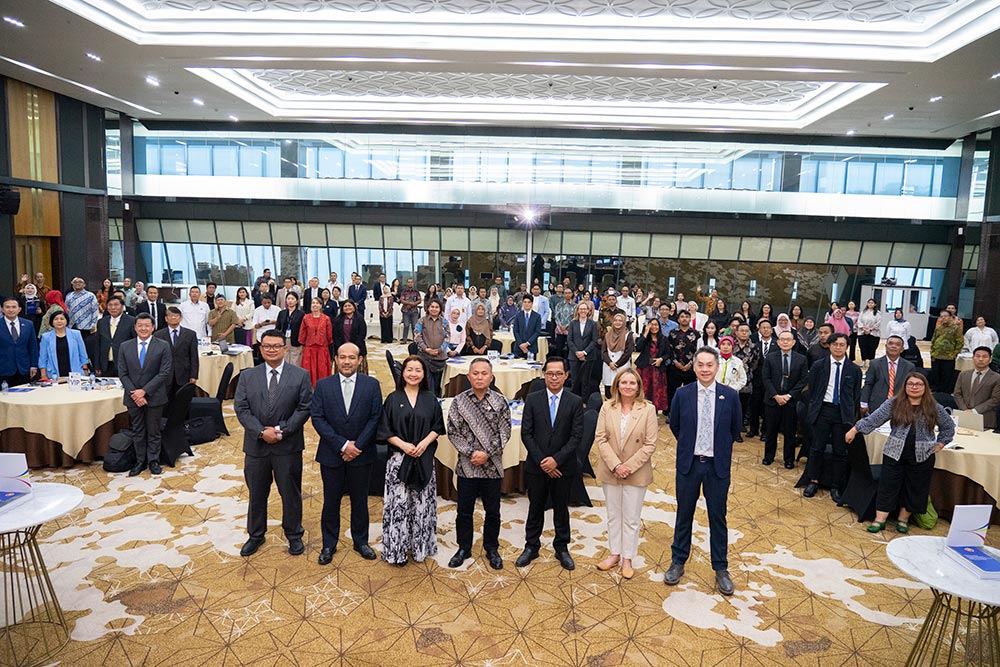
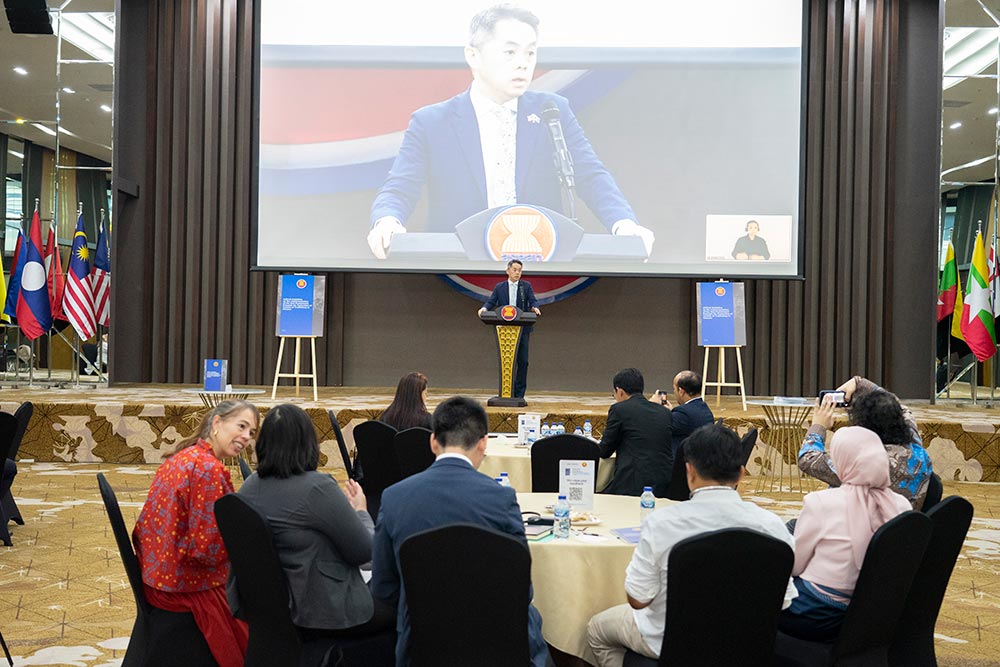
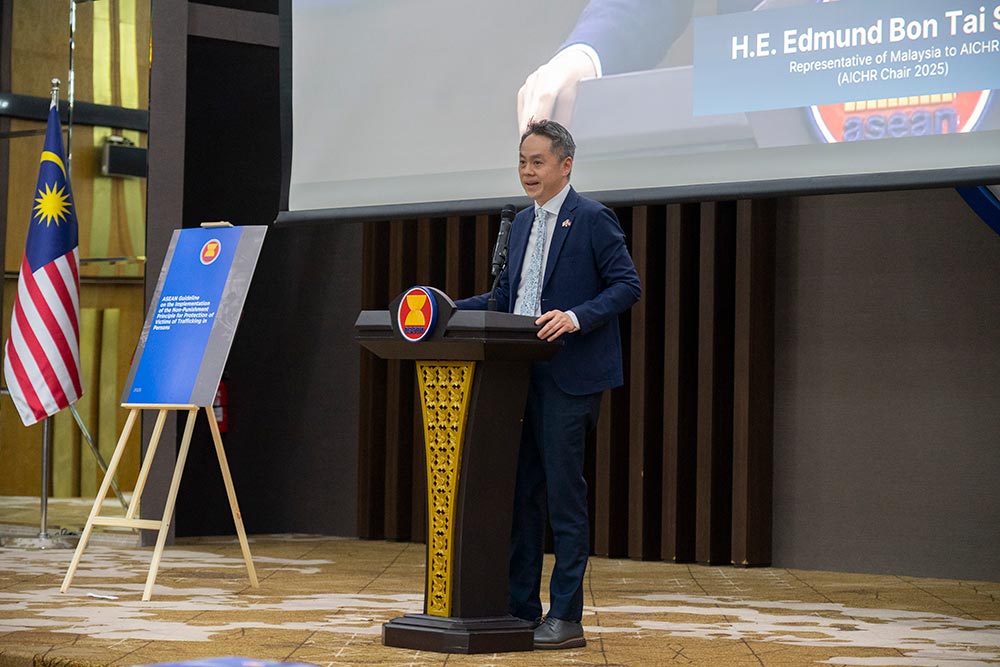
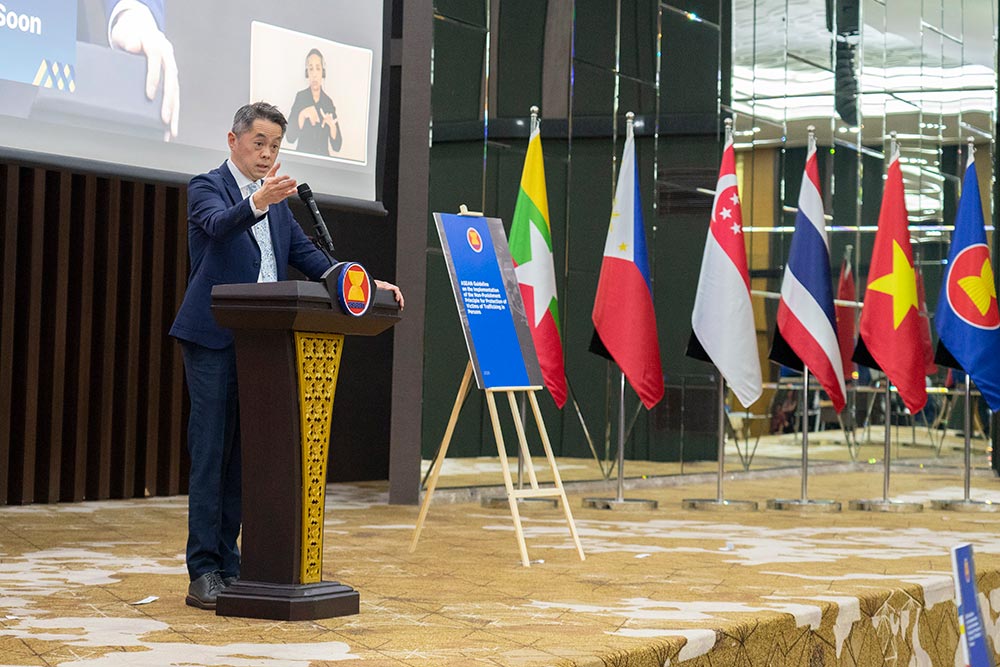
The speaking notes above were prepared for the closing remarks delivered on 2 June 2025 at the launch of the ASEAN Guideline on the Implementation of the Non-Punishment Principle for Protection of Victims of Trafficking in Persons, and the SOMTC and AICHR Consultation Meeting on the Implementation of the ASEAN Guideline on the Implementation of the Non-Punishment Principle for Protection of Victims of Trafficking in Persons, held on 2 and 3 June 2025 in Jakarta, Indonesia. Listen to Edmund Bon’s closing remarks (starting at 2:37:05) in the video on the launch here.