
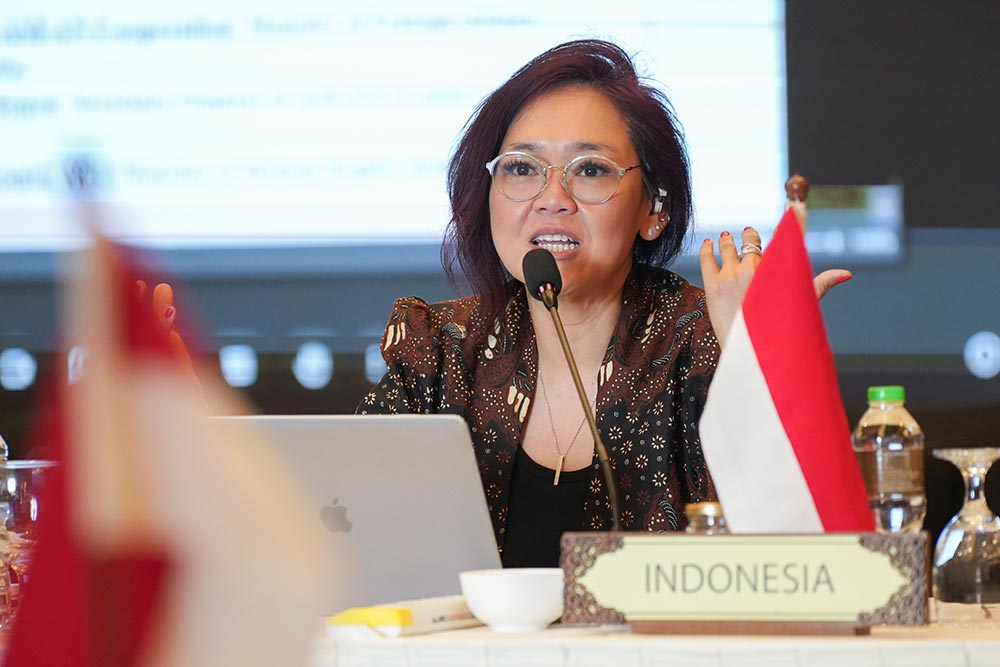
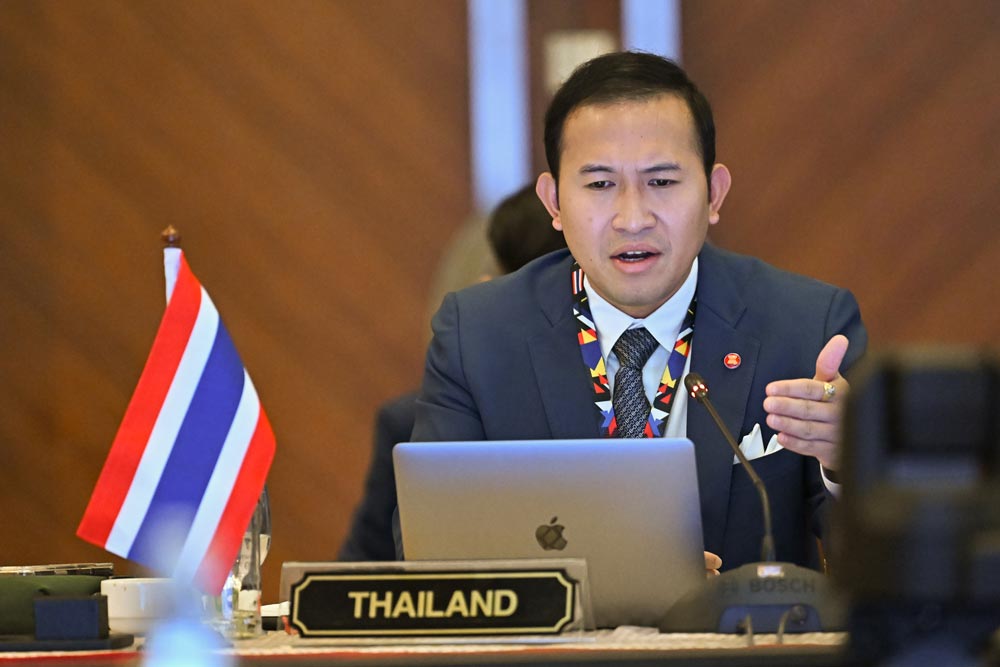
Human rights representatives* of the ASEAN Intergovernmental Commission on Human Rights (AICHR) call for expedited ASEAN action to empower persons with disabilities to participate in, contribute to, enjoy and benefit equitably and sustainably from economic, social, cultural, and political development in the region.
Today, 3 December 2025, we join the international community in commemorating the International Day of Persons with Disabilities. We honour those who have stood up for the rights of persons with disabilities, including those who have placed themselves in harm’s way to defend these rights and those who continue to do so. We stand in solidarity with you and in support of your work.
The theme of this year’s commemoration focuses on fostering disability-inclusive societies to advance social progress. It underscores the importance of social development objectives that address persistent challenges faced by persons with disabilities. These include poverty, discrimination in education and employment, including lower wages and overrepresentation in the informal sector, and social protection systems that are uneven in coverage and often inadequate in view of additional disability-related costs, particularly for those in the informal sector. Many persons with disabilities also continue to experience the denial of their dignity, autonomy, and agency within care and support systems.
The three core pillars of social development, namely poverty eradication, the promotion of full and productive employment and decent work for all, and social integration, are interrelated and mutually reinforcing. They require an enabling environment to be achieved simultaneously and sustainably.
All ASEAN Member States (AMS) have ratified the United Nations Convention on the Rights of Persons with Disabilities (CRPD). The ASEAN Enabling Masterplan 2025: Mainstreaming the Rights of Persons with Disabilities (EMP) has driven significant progress in aligning national laws, policies, and measures with international human rights standards, and in operationalising these standards domestically.
However, gaps in implementation remain. Protection mechanisms must be strengthened; coordination and monitoring among ASEAN’s pillars and sectors must be improved; and responses must be better tailored to the specific needs and rights of persons with different disabilities, recognising that there is no “one size fits all” approach.
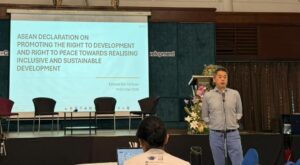
We reaffirm the renewed commitments of AMS in the recently adopted ASEAN Declaration on Promoting the Right to Development and the Right to Peace Towards Realising Inclusive and Sustainable Development. The Declaration affirms that every person and all peoples in ASEAN have the right to participate in, contribute to, enjoy and benefit equitably and sustainably from economic, social, cultural, and political development. It emphasises inclusivity and sustainability as essential to realising the right to development in all its dimensions – economic, social, cultural, political, and environmental. The peoples of ASEAN, including persons with disabilities, are recognised as central actors in development, both as agents and beneficiaries. AMS commit to removing barriers to inclusive and sustainable development, including obstacles to equitable access to essential services such as education, healthcare, food, housing, transport, digital technology, law enforcement, and employment, and to ensuring fair income distribution. AMS also pledge to eliminate discrimination and address inequalities to ensure that all individuals can participate meaningfully in ASEAN’s development.
The inclusion of persons with disabilities as both agents and beneficiaries of social development is indispensable. Disability inclusion is imperative in all aspects of economic, social, cultural, political, and environmental life.
For the next phase of the EMP, we call on ASEAN to sustain momentum by renewing and refreshing the EMP for the next five years, consistent with ASEAN 2045: Our Shared Future. In particular, we recommend that ASEAN:
- Enhance regional high-level platforms to report on progress in implementing the EMP and CRPD, ensure consistent monitoring, enhance data collection, and facilitate greater engagement with civil society.
- Increase its pool of disability and human rights experts to inform evidence-based policymaking.
- Create intersectoral expert working groups, improve referral modalities, and adopt case-study approaches to deepen learning and inform policy and practice.
- Develop a rapid-response knowledge-sharing and coordination protocol for emergencies and crises, with technical and sectoral ASEAN experts on standby to provide advisory and technical guidance services, briefings, and confidential consultations to support AMS as required.
- Establish, through a coordinator focal point, a dedicated channel or pathway for people and communities in vulnerable and marginalised situations, including persons with disabilities, to access ASEAN and AMS bodies for access to justice and remedies.
- Publish an annual ASEAN Human Rights Report to document ASEAN’s achievements, progress, and ongoing challenges on the issues of persons with disabilities.
- Address the specific needs and rights of persons with different disabilities in a targeted and nuanced manner.
We will continue to support the strengthening of regional mechanisms to advance the well-being, dignity and freedoms of the peoples of ASEAN.
Happy International Day of Persons with Disabilities! Let us continue the struggle together every day!
* H.E. Edmund Bon Tai Soon is the Representative of Malaysia to AICHR and Chair of AICHR (2025), H.E. Anita Ashvini Wahid is the Representative of Indonesia to AICHR, and H.E. Dr. Bhanubhatra Jittiang is the Representative of Thailand to AICHR.