By Farah Solhi | The Malaysian Reserve
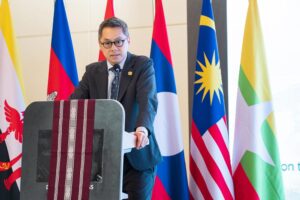
The roads to achieve legally binding treaties on human rights for ASEAN may not be straightforward, but the ASEAN Intergovernmental Commission on Human Rights (AICHR) remains steadfast in developing building blocks for such agreements.
AICHR chairman Edmund Bon Tai Soon said the commission is currently developing two declarations, namely the ASEAN Declaration of the Right to a Safe, Clean, Healthy and Sustainable Environment and the Declaration on Promoting the Right to Development and Peace, Towards Realising Inclusive and Sustainable Development. The former is 90% finalised.
The key principles for the two declarations are built on protecting and empowering vulnerable and indigenous groups, as well as women, youth and children.
The work towards finalising the environmental declaration has been underway for the past two years.
“Initially, the idea was to have a legally binding treaty that would create international law or obligations.
“The negotiation process took some time as there were tensions and pushbacks from some countries that did not agree with the idea because their local laws did not align with international standards,” Bon told The Malaysian Reserve (TMR) during the recent 58th ASEAN Foreign Ministers’ Meeting (58th AMM) in Kuala Lumpur.
Following this, he said, AICHR members agreed to develop declarations instead, as these could provide direction for ASEAN.
Tools for Advocacy
Despite not being empowered with legal power for court endorsement, Bon said the declarations could still support arguments in court complaints, as they offer as basis for moral scrutiny by individuals or non-governmental organisations (NGOs) in cases involving human rights issues.
“These declarations could serve as tools for advocacy. Finalising them would be a historic and progressive step. Our last declaration, the ASEAN Human Rights Declaration (AHRD), was adopted in 2012.
“The environmental declaration appears to be on track for finalisation as it received strong support from all foreign ministers,” he added.
Bon shared that the commission is hopeful the declarations would be adopted at the upcoming 47th ASEAN Summit this October, before Malaysia hands over the chairmanship to the Philippines.
While the environmental declaration focuses more on supporting freedom of information and expression, as well as public participation and access to justice and remedies, the development declaration is centred on the rights to political, economic and social development.

The latter also places greater emphasis on eliminating discrimination and removing barriers and obstacles faced by vulnerable groups, including women, children, while promoting tools and mechanisms to help empower them.
“The Commission is still in discussions to finalise the terms of this declaration. We have gone through several rounds of consultations, including with sectoral bodies and we will reconvene in the coming weeks for further discussions.
“I hope this declaration can be finalised by the end of July,” Bon added.
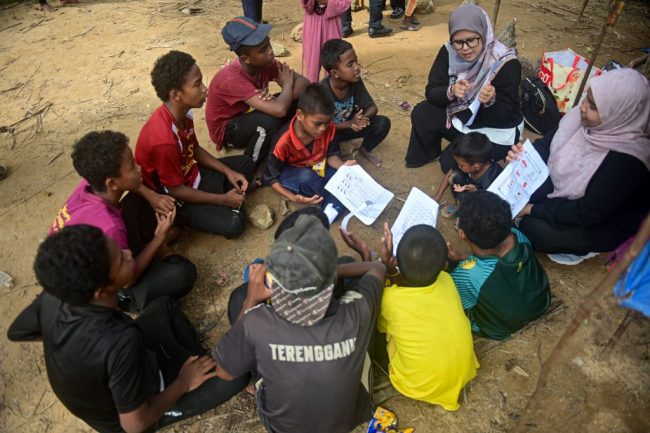
Through the development declaration, the Commission aspires to be more inclusive of vulnerable, marginalised and indigenous groups, as well as rural communities living in conflict areas.
The goal is to ensure they are empowered to participate more actively in decision-making processes and to eliminate barriers related to education, transportation and public health, among other essential services.
These two declarations, Bon said, are unique in that they place the obligation to adhere to the adopted terms on both government and public sectors.
He noted that one of the main challenges is the need to amend existing laws, which is often a slow process.
“But I’m not making excuses for it. These declarations could be used to nudge the government in the right direction, hopefully,” he said, adding that the Commission is working tirelessly to ensure progress continues.
Should these documents be adopted, Bon said, they will provide human rights guidance to complement AHRD, following an ASEAN-led, ASEAN-owned and whole-of-ASEAN approach.
AICHR’s Take on Situations in Myanmar, Palestine
The escalating tensions and ongoing conflicts in Myanmar and Palestine never left unmentioned during the 58th AMM sessions, Bon stressed.
He said these situations serve as a stark reminder of the need to respect human rights and international law while taking proactive steps to address them.
“We have been discussing Myanmar and Palestine at every meeting, especially Malaysia, which I have raised countless times.
“For Myanmar, what we are currently doing is call for human rights diplomacy. Given the limitations, the best thing we can do is call out the issues while maintaining close communication with the Special Envoy of the ASEAN Chair on Myanmar (Tan Sri Othman Hashim),” he said.
AICHR launched its Thematic Study on the Right to Peace on July 1, marking a significant milestone in ASEAN’s progress towards implementing the right to peace as a fundamental human right.
On July 2, the Commission commenced its six-part AICHR Regional Training Programme on Human Rights titled “Workshops on the Intersection Between Conflict and Human Rights: Pathway and Approaches to Peace in ASEAN”.
This programme would provide a platform for participants to share their experiences and map conflict dynamics at local, national and regional levels.
However, regarding Palestine, Bon said it may be challenging for ASEAN to take more proactive steps beyond calling out the atrocities committed by Israel, as there is no united stance within the bloc and the issue is beyond their mandate.
“I have raised the situations in Gaza, Ukraine and Myanmar during the recent meeting with ASEAN Foreign Ministers. However, it’s challenging to do more than advocate, as some ASEAN countries are pro-Israel, so the bloc is not united.
“What some of at the Commission are trying to do is focus on the atrocities through continuous advocacy, calling out the abuses as we have done in various statements issued by different member states,” he said.
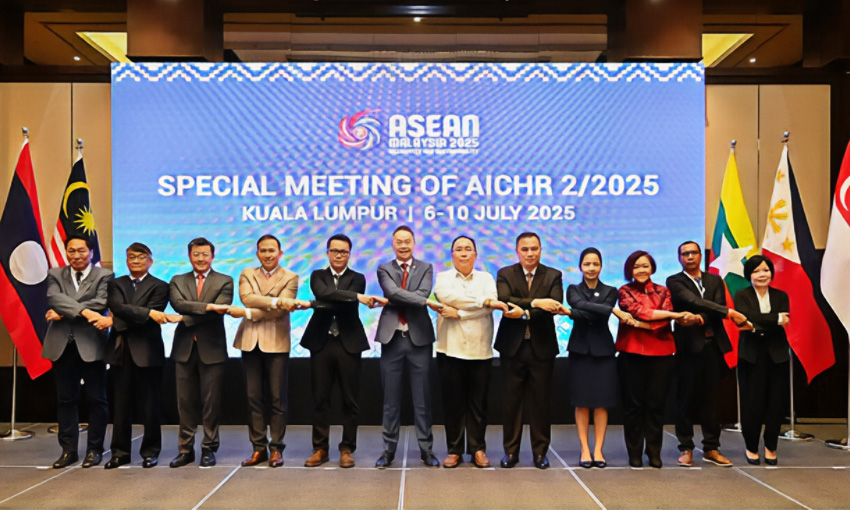
On July 8, AICHR held a meeting with ASEAN foreign ministers, chaired by Malaysia’s Foreign Affairs Minister Datuk Seri Mohamad Hassan, to discuss key regional human rights issues.
The meeting was part of the 58th AMM held at Kuala Lumpur Convention Centre from July 8-11.
During the meeting, Bon said five reflections were raised to highlight the direction of AICHR, including enhancing its capacity, reinforcing modalities and strengthening institutional framework to ensure the Commission remains relevant, credible and effective.
This includes inviting the foreign ministers to consider empowering the Commission to examine relevant human rights matters and common approaches to peace in ASEAN.
These reflections, Bon said, are part of the Commission’s effort to support the forward-looking ASEAN 2045: Our Shared Future vision adopted at the recent 46th ASEAN Summit.
“In this light, it is imperative that ASEAN considers how AICHR can play its part in supporting ASEAN Community-building,” he said.
Given that 2025 marks 13 years since the AHRD was adopted, it will be an opportune time for ASEAN to declare and commemorate ASEAN Human Rights Day on Nov 18 every year, Bon added.
“This is to document ASEAN’s achievements and progress on human rights. An ASEAN Human Rights Report can also be published for public dissemination and awareness.
“AICHR has many strengths; it is well-placed to meaningfully contribute to ASEAN if there is a genuine and sincere belief in human rights. I remain optimistic that AICHR can — as it should — be a beacon of hope and principled leadership,” Bon said.
Established in 2009, AICHR was formed with the aim to promote and protect human rights and fundamental freedoms of ASEAN people as well as to uphold the right of the people of ASEAN to live in peace, dignity and prosperity.
Established in 2009, AICHR was formed with the aim of promoting and protecting the human rights and fundamental freedoms of the people of ASEAN. It also seeks to uphold their inherent right to live in peace, dignity and prosperity across the region.
AICHR was further established to promote human rights within the unique regional context of South-East Asia — taking into account national and regional particularities, and showing mutual respect for the diverse historical, cultural and religious backgrounds of ASEAN member states.
It also emphasises the importance of maintaining a balance between rights and responsibilities, recognising that the advancement of human rights must go hand in hand with respect for the principles of sovereignty, non-interference and regional harmony.
This article first appeared in The Malaysian Reserve weekly print edition.