
By Chelsea Lee Jia Shi | The Edge Malaysia
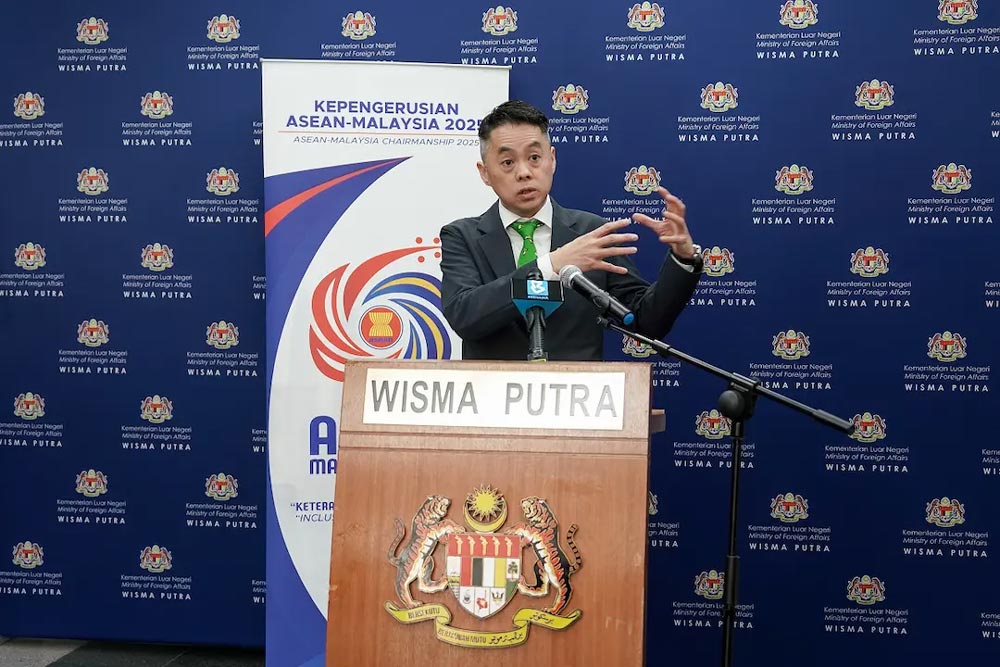
The ASEAN Intergovernmental Commission on Human Rights (AICHR) has shared three main priorities to address the issue on human rights as Malaysia takes on the chairmanship of ASEAN this year.
At the inaugural Malaysian Human Rights and Environmental Rights Dialogue held in Wisma Putra on Thursday, Malaysia’s representative to the AICHR Edmund Bon Tai Soon addressed the rampant violation of human rights in Southeast Asia, and said Malaysia cannot support the continuation of the atrocities being committed around the world.
Malaysia’s turn in chairing ASEAN this year will provide the opportunity to advance human rights, and Bon expressed his hope that the introduction of the three main human rights priorities will drive Malaysia to be more actively engaged in human rights protection.
“I believe that Malaysia taking on this leadership role provides an unparalleled opportunity to address the pressing human rights challenges facing ASEAN,” said Bon.
“Not only can we advance all human rights issues that matter to the people, but we can also elevate our regional human rights commission to be one that is more robust, creative, inclusive, adaptable, action-oriented and capable of addressing the dynamic challenges of the region.”
The first and most crucial priority of the AIHCR is the right to development, which is a human right for the people of ASEAN to enjoy and participate in economic, social, cultural and political development.
This promotes Articles 35 and 36 from the ASEAN Human Rights Declaration, which aligns with Malaysia’s chosen theme of “sustainability and inclusivity.”
“This priority encompasses the intersection of business and human rights in one part, and you can also look at it in terms of ESG, corporate sustainability reporting, and inclusive growth and sustainable development,” said Bon.
The second human rights priority for Malaysia is to address climate change by working on and advancing the proposed “ASEAN Declaration on the Right to a Safe, Clean, Healthy and Sustainable Environment.”
Lastly, the third priority will address regional human-induced disasters and conflicts in the region through the lens of human rights accountability, reconciliation and peace.
“I envisage extensive consultations with very legitimate authorities and businesses on how ASEAN can move the needle on these matters, so that the current, among other reasons, the current ESG environmental, social and governance framework and landscape will hasten to meet its intended goals, and not be merely a ticking box exercise,” said Bon.
Datuk Seri Mohd Hishamudin Md Yunus, chairman of the Human Rights Commission of Malaysia (SUHAKAM), inaugurated the event by emphasising the second priority in particular, and said that issues of environmental rights and human rights are intertwined.
He noted that the adverse impacts of climate change will worsen inequalities by disproportionately impacting vulnerable groups, and reiterated that it is crucial to increase public participation and awareness on the topic for a whole-of-society approach.
“SUHAKAM believes that by having the tight to a clean environment as an explicitly protected right in the Federal Constitution, victims adversely affected by climate change would be empowered to seek justice and uphold their rights to secure healthy living conditions,” said Mohd Hishamudin.
“It would also ensure that the government and other stakeholders are held accountable for maintaining a clean and safe environment.”
Punita Silvarajoo, deputy director general in policy and development at the Legal Affairs Division of the Prime Minister’s Department (BHEUU), added in her welcoming speech that the importance of the environment as a human right will be vital theme in the development a national action plan for business and human rights.
The plan seeks to ensure that businesses of all kinds implement human rights due diligence in their operations while providing effective remedies to address harm caused by adverse human rights impacts.
“We should encourage businesses to conduct responsible business practices through sustainable consumption and production as an example among others. It is also important to ensure that there is effective access to remedies, especially for victims of business-related abuses,” she said.