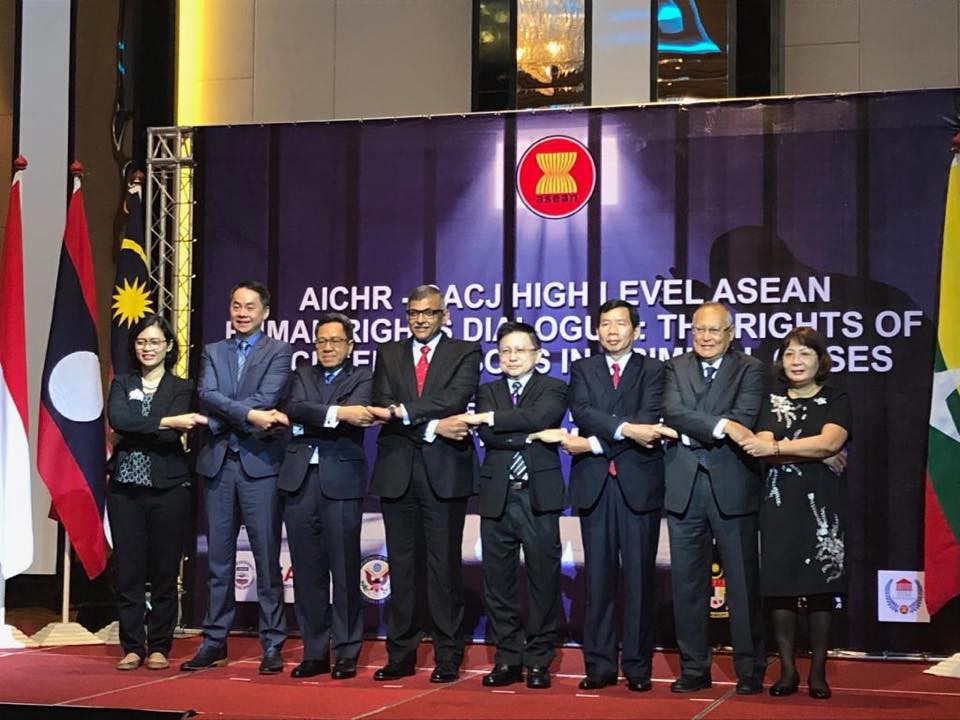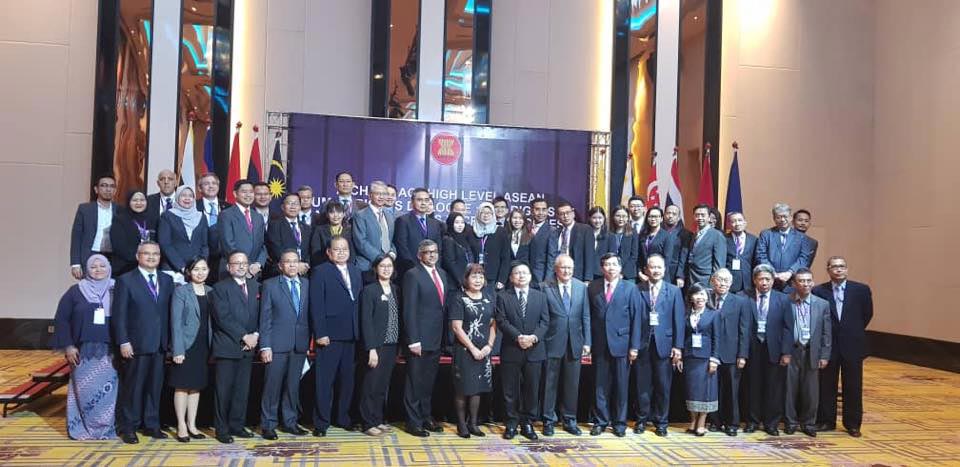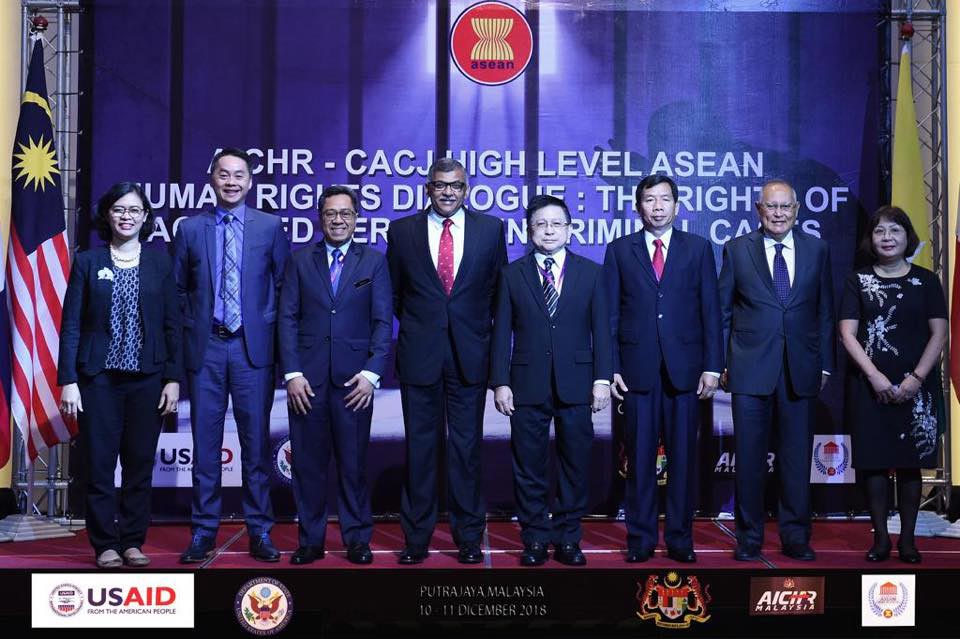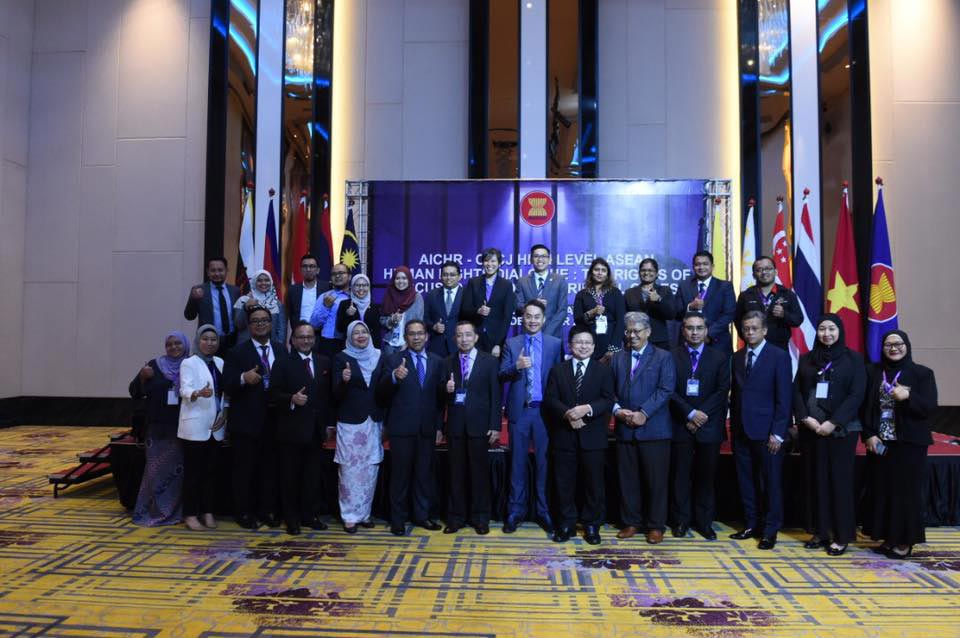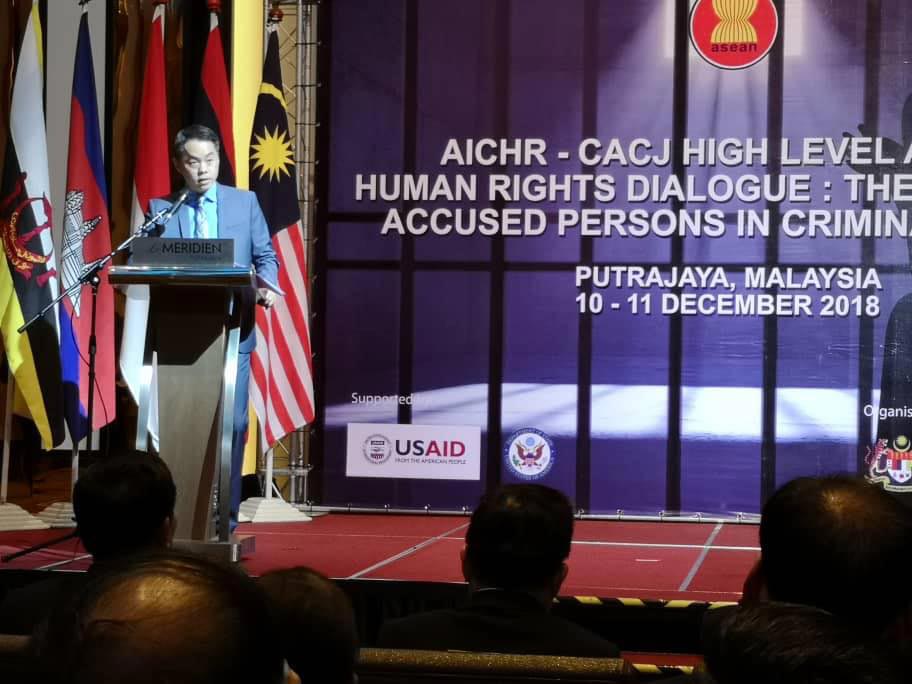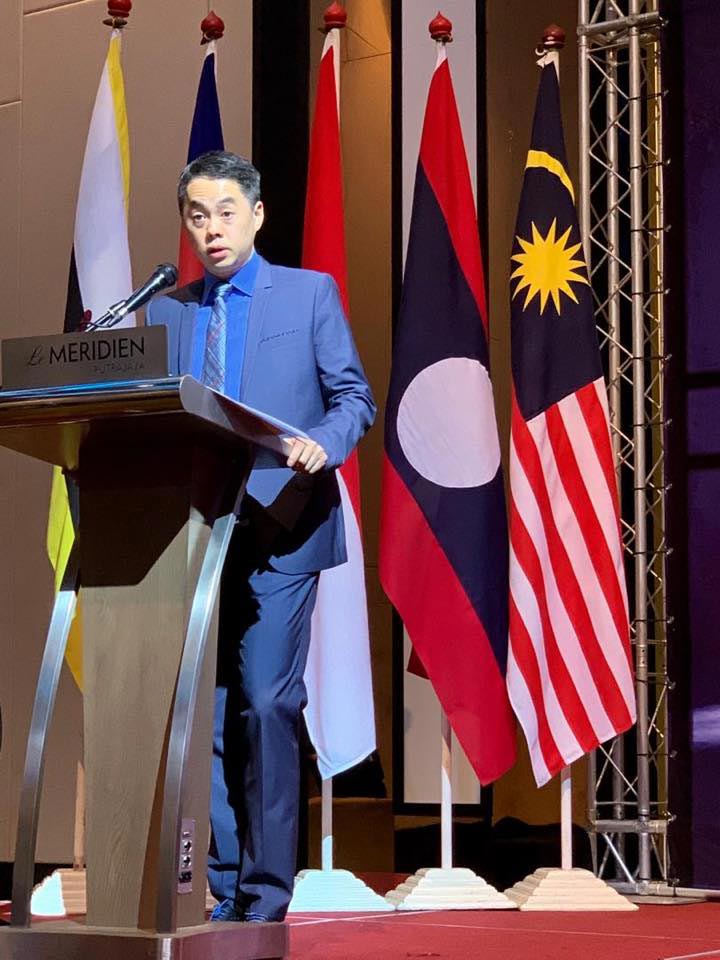

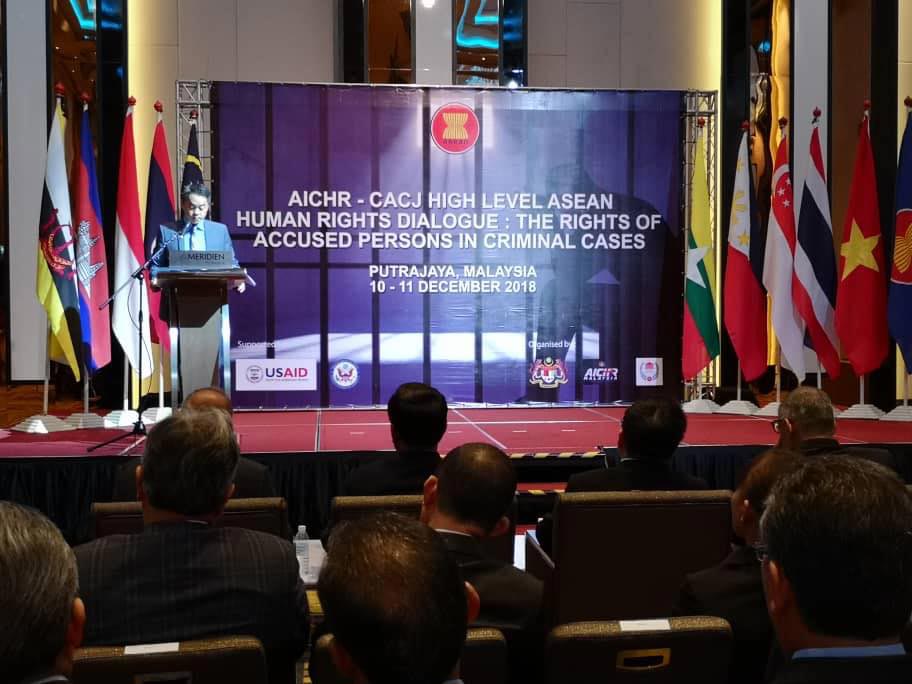
The Right Honourable Tan Sri Datuk Seri Panglima Richard Malanjum, Chief Justice of Malaysia
The Right Honourable The Chief Justice Sundaresh Menon, Chair of the Council of ASEAN Chief Justices (CACJ) and Chief Justice of Singapore
The Right Honourable Justice Khamphane Sithidampha, Chief Justice of Lao PDR
His Excellency Dato’ Ahmad Rozian Abd Ghani, Director General of the ASEAN-Malaysia National Secretariat (AMNS)
His Excellency Barry Desker, Chair of the ASEAN Intergovernmental Commission on Human Rights (AICHR) & Representative of Singapore to AICHR
Honourable Judges from the ASEAN Member States
My learned colleagues, the Representatives of AICHR
Excellencies
Ladies and Gentlemen
Distinguished Guests
Good Morning
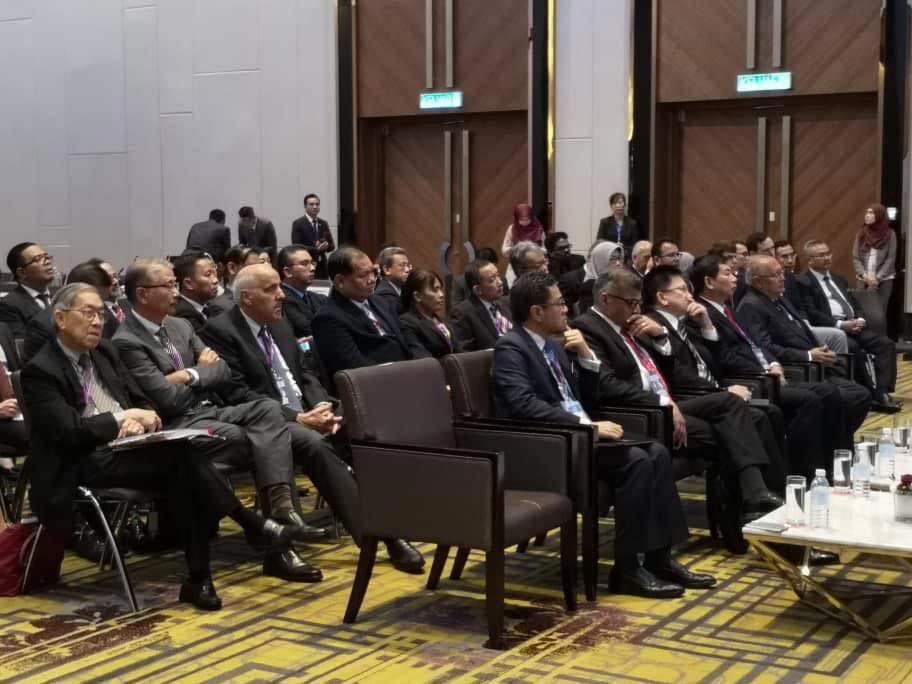
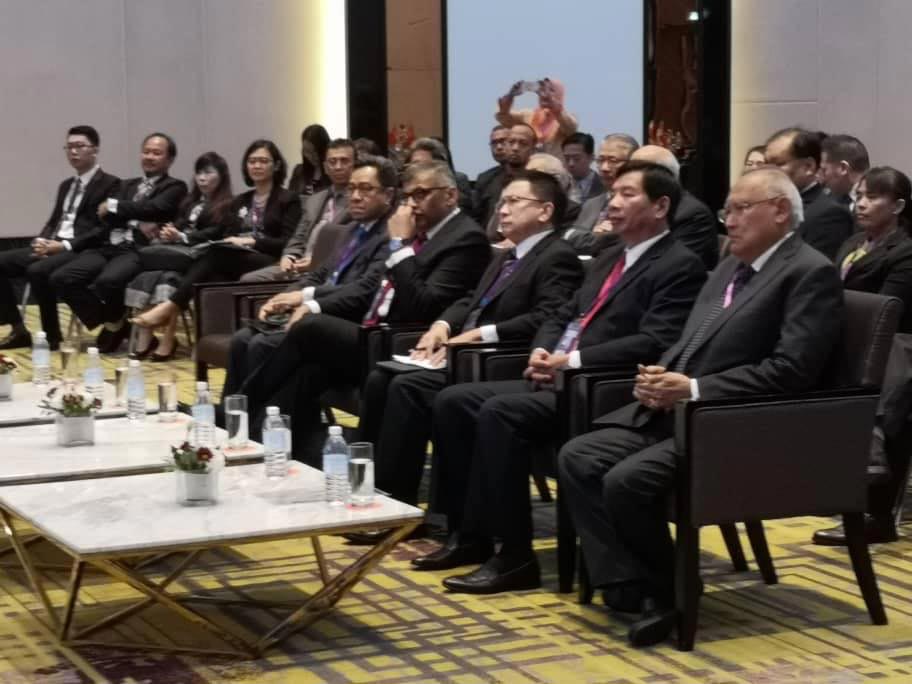
1. On behalf of Malaysia, I warmly welcome all of you to the AICHR-CACJ High Level ASEAN Human Rights Dialogue: The Rights of Accused Persons in Criminal Cases. This is the first time that the AICHR and the CACJ are co-hosting a programme such as this. It is the second time that the AICHR is engaging with the region’s Judiciaries after Malaysia hosted the very successful AICHR Judicial Colloquium on the Sharing of Good Practices Regarding Human Rights Law in March 2017.
2. I record my sincere appreciation to the Chairpersons of the AICHR and the CACJ, and my Chief Justice, for garnering the necessary support and navigating the requirements for this Dialogue to become a reality.
3. I condense my remarks into three main points.
Mandate of the AICHR
4. The AICHR was established in 2009, and the ASEAN Human Rights Declaration (AHRD) was adopted in 2012. The AICHR is ASEAN’s overarching human rights body, and our work is pivoted on the AHRD. We continue to strengthen our institutional and structural capacity to better promote and protect human rights for the region’s peoples.
5. As a Charter body, our Terms of Reference (TOR) mandates us:
- to develop strategies for the promotion and protection of human rights and fundamental freedoms to complement the building of the ASEAN Community;
- to promote capacity building for the effective implementation of international human rights treaty obligations undertaken by ASEAN Member States;
- to engage in dialogue and consultation with other ASEAN bodies and entities associated with ASEAN, including civil society organisations and other stakeholders; and,
- to develop common approaches and positions on human rights matters of interest to ASEAN.
6. In accordance with the ASEAN principle of centrality, and the customary practices of cooperation and consensus-building, the AICHR has for 9 years now enhanced regional cooperation among ASEAN sectoral bodies with a view to complementing national and international efforts on the promotion and protection of human rights. It is within this broad perspective that the AICHR co-hosts the Dialogue today.
7. It is worth reminding ourselves that the AICHR’s first collaborative venture with the region’s Judges during the convening of the 2017 Judicial Colloquium threw up numerous recommendations. Among others, they were:
- to conduct capacity building programmes such as trainings and workshops with the view to providing technical support, developing common approaches and positions, and sharing of good practices;
- to compile a regional reference guide in respect of the AHRD, and other human rights treaties to which the ASEAN Member States have acceded to; and;
- to organise consultations and dialogue within the framework of ASEAN with other bodies such as the ASEAN Law Ministers Meeting (ALAWMM) and ASEAN Senior Law Officials Meeting (ASLOM); and entities associated with ASEAN such as the CACJ, the ASEAN Law Association (ALA) and civil society organisations.
8. I am confident that these recommendations will continue to feature as part of the AICHR’s programming and we welcome any constructive feedback from ASEAN’s organs and entities on the way forward.
Rights of Accused Persons in Criminal Cases
Excellencies
Ladies and Gentlemen
9. Some statistics: In November and December 2017, the Malaysian courts — from the Magistrates’ courts to the Federal Court — registered 151,997 and 141,846 criminal cases respectively. January 2018 saw 170,933 cases registered while in October 2018, 184,035 cases were registered. These figures are for Malaysia only. I am sure that for our region with 9 other countries, the figures are manifold.
10. With the high number of criminal cases that are processed on a daily basis, it cannot be gainsaid that the rights of an accused person in a criminal case are fundamental to ensuring that he or she receives a fair trial.
11. Certain fair trial rights are expressly enshrined in the AHRD. For example, Article 20 of the AHRD states that every person charged with a criminal offence shall be presumed innocent until proved guilty according to law in a fair and public trial, by a competent, independent and impartial tribunal, at which the accused is guaranteed the right to defence. Article 5 guarantees that every person has the right to an effective and enforceable remedy, to be determined by a court or other competent authorities, for acts violating the rights granted to that person by the constitution or by law.
12. While there are varying facets of fair trial rights, international human rights law has included several other aspects as part of an accused person’s rights. These are the right to a public hearing, the right to a speedy trial, the right to discovery of the prosecution’s evidence, the right to cross-examine witnesses, the right against self-incrimination, the right to legal aid, the right to counsel, and the right to effective remedies and adequate redress. Certain safeguards regarding the admissibility, use and relevance of evidence including the reception of fresh evidence may also be mentioned.
13. This Dialogue will attempt to explore the different practices of ASEAN Member States in realising some, if not all, of these fair trial rights. It would be interesting to map the legal provisions that pertain, and to document a regional baseline on the matter. If I may be so bold to suggest: Perhaps even to publish the baseline document on the CACJ’s ASEAN Judiciaries Portal (AJP) that is set to become Southeast Asia’s leading legal resource database.
14. In spite of the diverse legal and cultural frameworks of the ASEAN Member States, every Judiciary has to hear and adjudicate on criminal cases. The normative content of an accused person’s fair trial rights may be understood differently by each Member State; just as the concepts of ‘the rule of law’ and ‘access to justice’ may differ in practice from one country to another. But it would be difficult to deny that a person’s fair trial rights are recognised under more liberal interpretations of the concepts of ‘the rule of law’ and ‘access to justice’. Recognising that the primary responsibility to protect human rights rests on each ASEAN Member State, an independent Judiciary plays an important role to interpret and apply laws in a manner that is fair, just and consistent with human rights principles. But the jury is still out on what is ‘fair, just and consistent with human rights principles’.
15. I am glad that the AICHR and the CACJ have co-organised a platform through this Dialogue to exchange views on the matter and find ways, where possible, to address gaps that may exist. Our joint effort today can only do good for this prospering region.
Sustainable Development Goal 16 (SDG 16)
Excellencies
Ladies and Gentlemen
16. Finally, I would be remiss not to mention SDG 16 which is to promote just, peaceful and inclusive societies. Two of the targets of SDG 16 is first, to promote the rule of law at the national and international levels and ensure equal access to justice for all; and second, to develop effective, accountable and transparent institutions at all levels.
17. Access to justice is a fundamental driver to ensure the achievement of the other SDGs. In fact, it is a driver through which other rights are realised. The international community negotiated and agreed that access to justice is so basic that it had to be incorporated as part of the global sustainable development agenda.
18. Access to justice, when and if granted, will enable ordinary citizens to communicate with States to enforce their rights and to make States accountable. For example, SDG 5 on gender equality and women empowerment may be better achieved when women are able to seek effective and just remedies when invoking their right to freedom from discrimination and violence. In this context, not only must the claimants know about their rights, they must be able to access the system to claim the same.
19. The intersections between SDG 16 and fair trial rights have not been fully explored. It is a subject that would be worth our consideration at this Dialogue; and thereafter to be further analysed. I suspect that assisting ASEAN Member States to accelerate their progress to achieve SDG 16 would be a potential project that could be undertaken.
Call for Sustained Collaboration
20. The AHRD was adopted to establish a framework for human rights cooperation. It proclaims ASEAN’s intention to do everything within its power to protect the vulnerable and marginalised segments of our society. Although it is not a legally-binding document, the AHRD is persuasive and may be used a guide. The AHRD complements the Universal Declaration of Human Rights 1948. The ASEAN Leaders have always recognised that the AHRD is going to be a ‘living document’ for ASEAN bodies to appreciate and to take into account in their respective sectors.
21. As we jointly explore the possible pathways and outcomes of this Dialogue, I have full confidence that we will be able to give meaning and life to the words of the AHRD, and be forward-looking. The AICHR and the CACJ are well-placed to look into possible areas for regional cooperation and collaboration to effectively uphold the rights of the peoples in the region.
22. In conclusion, I hope that the three main issues I have highlighted will be sufficient for us to kick-start the Dialogue. I am certain that this Dialogue and the ones after this will improve the lives of many in the region. We are in positions where we have been entrusted with this difficult responsibility.
23. Before I end, I would like to express my deep admiration and gratitude to the AICHR Malaysia team, led by my indomitable Assistant, Nurul Aliaa Md Nor Azman, from the AMNS at the Ministry of Foreign Affairs. They have worked extremely hard to actualise the hosting of this Dialogue. I would also like to thank the United States Agency for International Development (USAID) for supporting this meeting.
I wish you a fruitful and productive time ahead. Thank you.
Dated this 11th day of December 2018
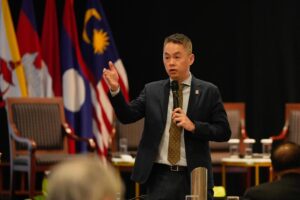
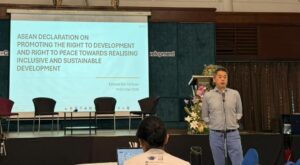
Edmund Bon Tai Soon
Representative of Malaysia to AICHR
The original post can be accessed on the AICHR Malaysia Facebook page, archived here.