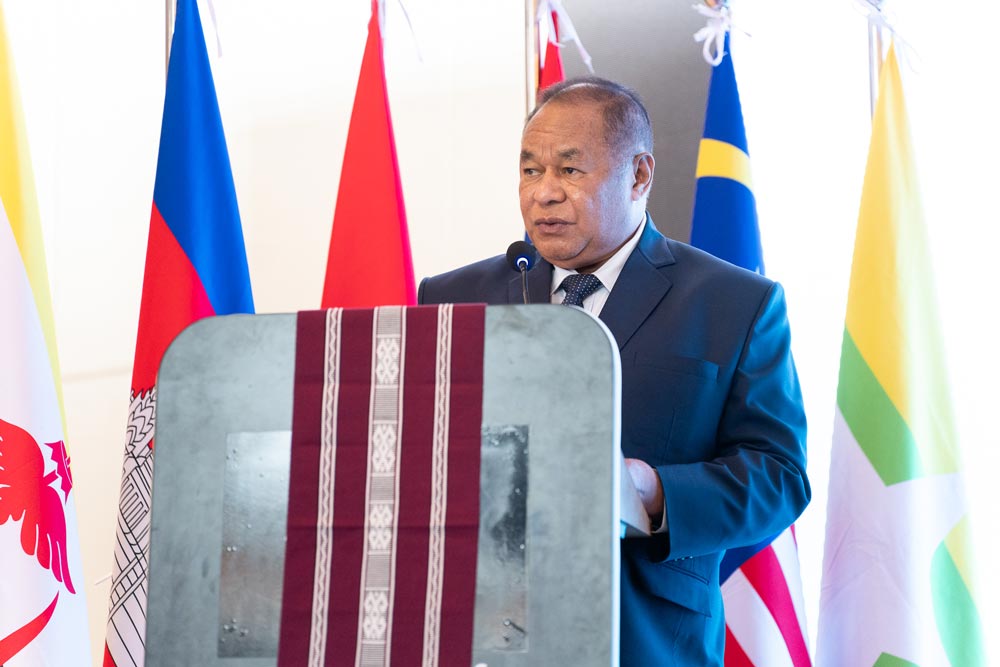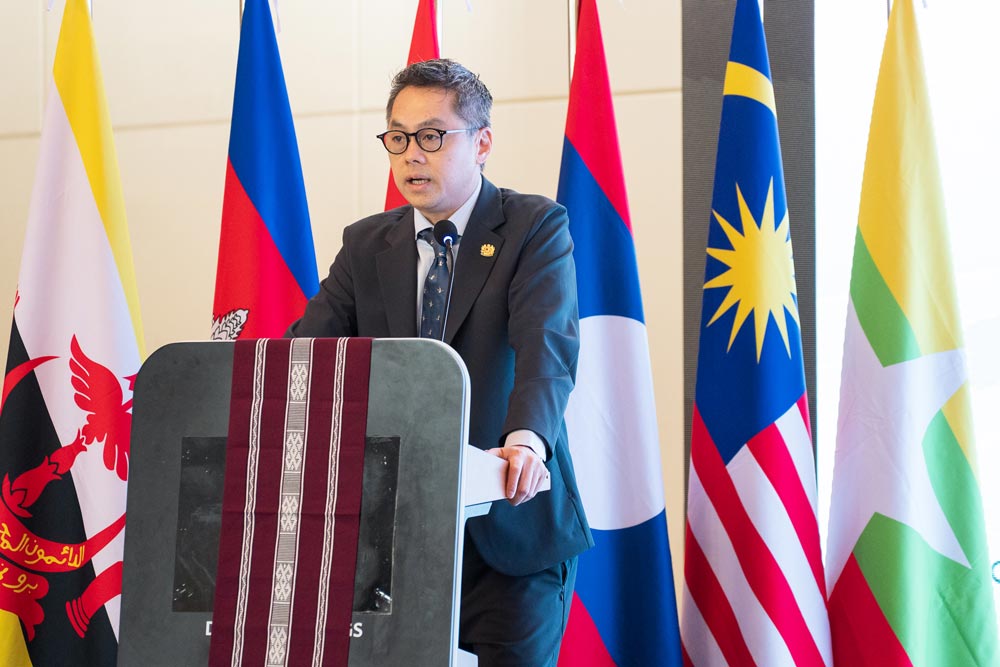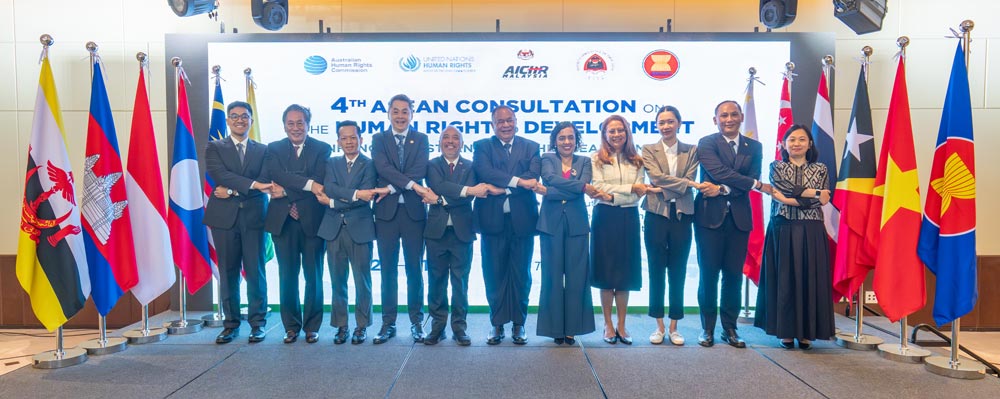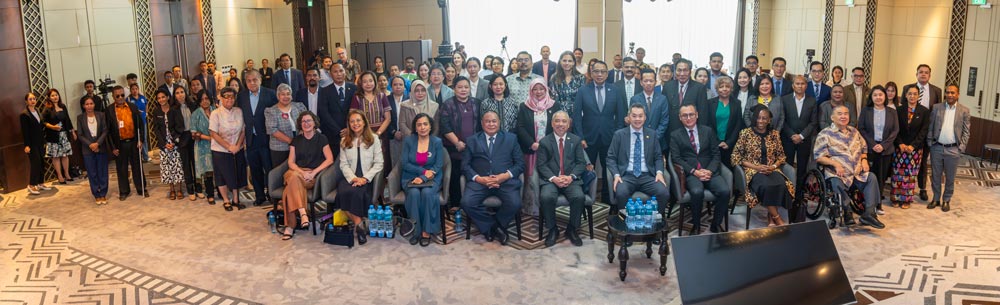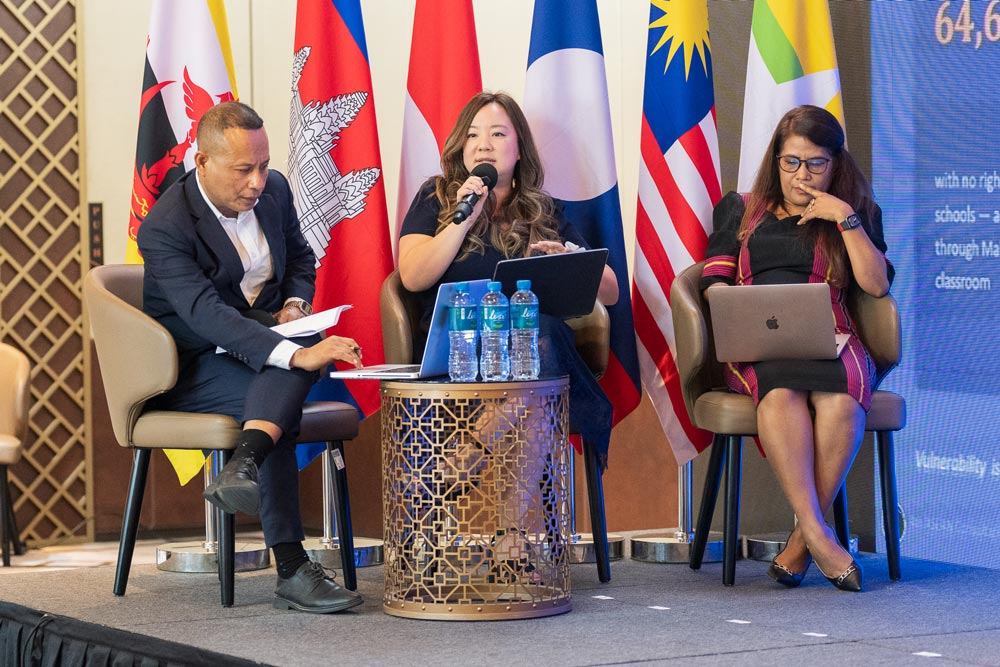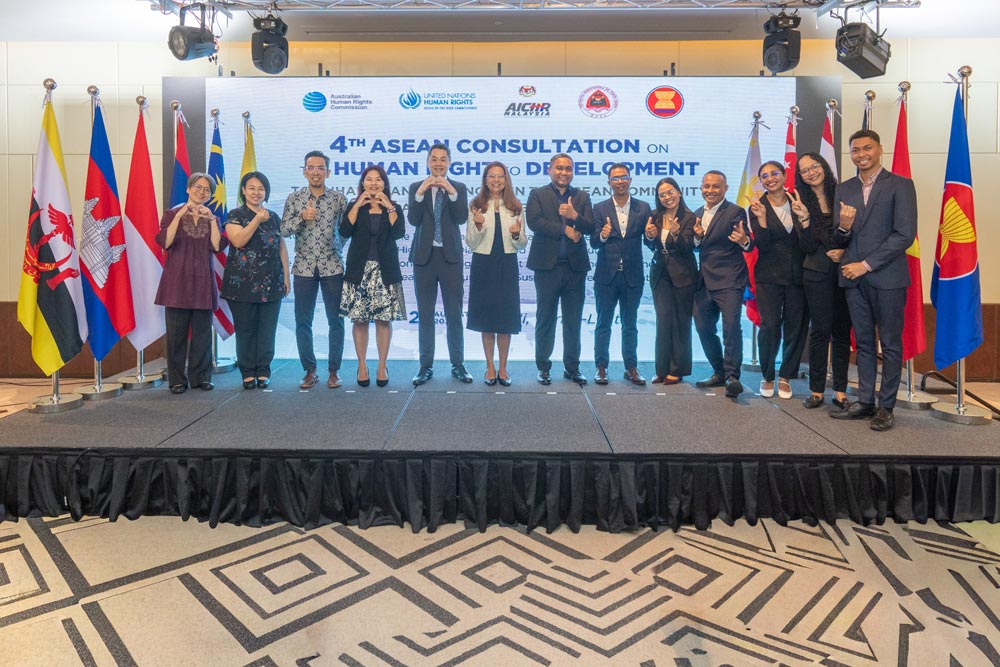

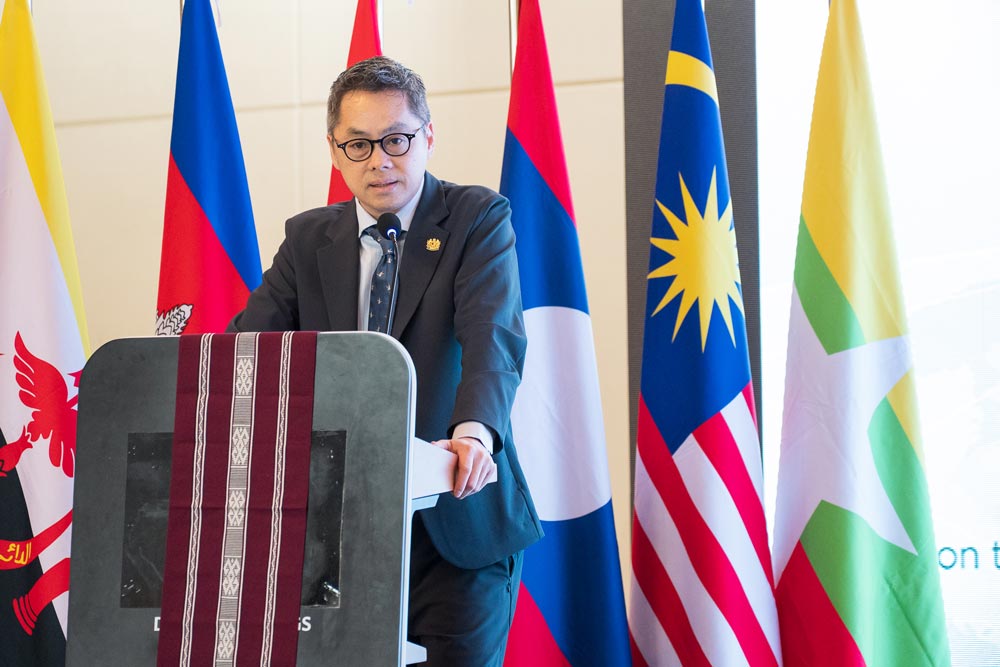
Excellency Bendito dos Santos Freitas, Minister of Foreign Affairs and Cooperation of Timor-Leste,
Excellency Bolivar Bao, Alternate Representative of the Philippines to the ASEAN Intergovernmental Commission on Human Rights (AICHR), representing the AICHR Chair,
Excellency Milena Rangel, Vice-Minister for ASEAN Affairs of Timor-Leste,
Excellency Maria Helena Pires, Representative of Timor-Leste to AICHR,
Azril Abd Aziz, Deputy Director General, ASEAN Political Security Community Division (APSCD), ASEAN-Malaysia National Secretariat (AMNS), Ministry of Foreign Affairs of Malaysia,
Professor Surya Deva, United Nations Special Rapporteur on the Right to Development,
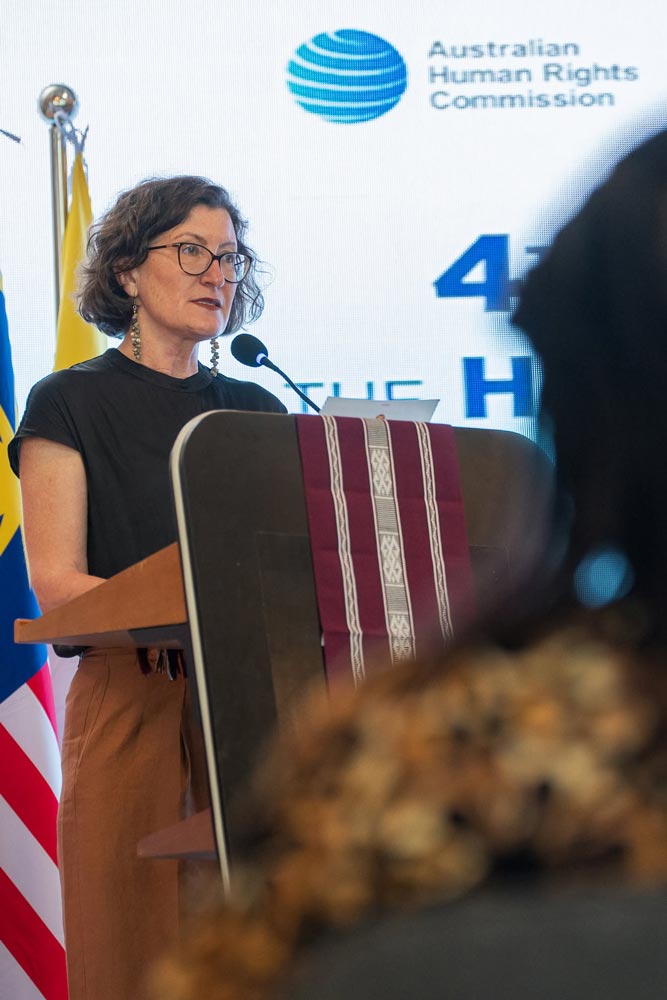
Leanne Smith, Chief Executive Officer, Australian Human Rights Commission (AHRC),
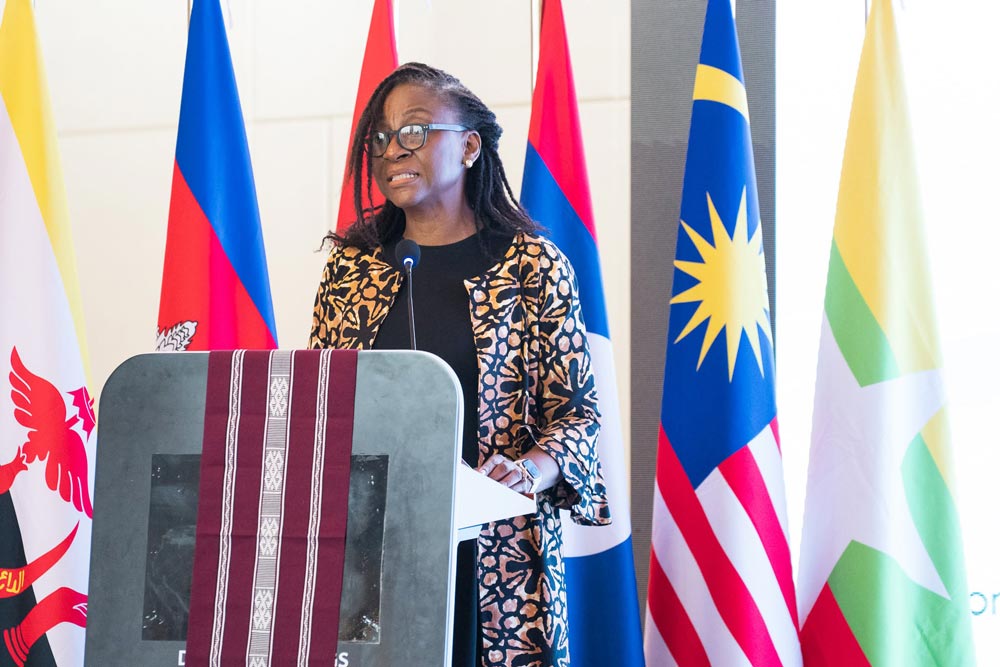
Olufunmilayo Abosede Balogun-Alexander, United Nations Resident Coordinator for Timor-Leste,
My colleagues, AICHR Representatives, representatives of ASEAN Member States, ASEAN Organs, Sectoral Bodies and Entities, distinguished experts, civil society partners, and friends,
Bom dia ba hotu-hotu. Selamat pagi.
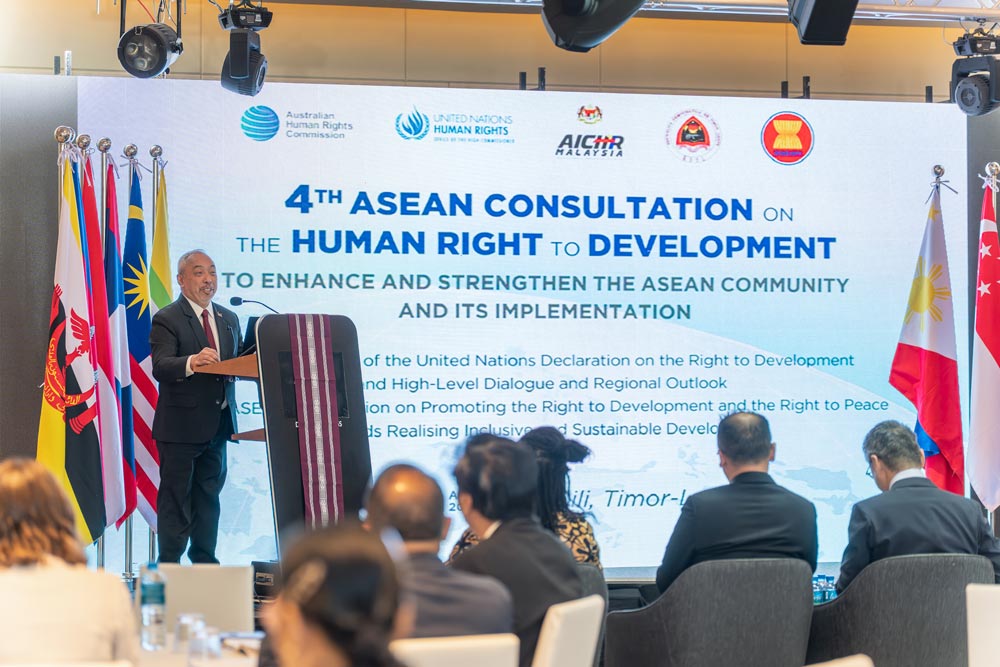
On behalf of Malaysia, I am honoured to join Timor-Leste in co-leading and welcoming you to the 4th ASEAN Consultation on the Human Right to Development to Enhance and Strengthen the ASEAN Community and Its Implementation, here in Dili — a city that today, for the first time, hosts an AICHR programme. Timor-Leste was admitted as the 11th ASEAN Member State in 2025. It was in fact the priority of my Prime Minister, Dato’ Seri Anwar Ibrahim, to ensure that Timor-Leste’s admission into ASEAN would be realised during Malaysia’s chairship. Dili is a fitting and meaningful venue for this event, and we are deeply grateful for Timor-Leste’s warm hospitality and steadfast partnership in bringing this consultation to life.
The significance of convening this meeting here in Dili cannot be overstated. This meeting falls in the year when we mark the 40th anniversary of the United Nations Declaration on the Right to Development that was adopted in 1986. Yesterday, I was at the Timorese Resistance Archive and Museum for the second time. It reminded me of your country’s struggle for independence from both Portuguese colonial rule and Indonesian military occupation. Poignantly, the history of Timor-Leste is inseparable from the struggle for self-determination and right to development. Your journey to independence, first from colonial rule and then through military occupation, and your transition to stability were marked by the devastating consequences of conflict, violence, and famine.
The human cost of conflict remains inestimable and many of its harms irreparable. Its impact on the enjoyment of human rights and development of the country has been long-lasting and pervasive. Thousands of lives were lost, infrastructure was destroyed, and there were widespread consequences for the economic and social development of your people. Mass displacement, enduring collective trauma, entrenched socio-economic disparities, boys and girls across generations affected by limited access to education, healthcare, and nutrition — these are just some of the lasting legacies of that turbulent period.
I state this to ground our discussions in humanity, in fortitude and in the realities of human-made conflict and why the human rights struggle is so important. From the hardships of colonialism and violence, a resilient movement emerged, driven by an unwavering commitment to freedom, unity, and human dignity and rights. Through the courage of your people and the vision of your leaders, Timor-Leste has transformed your worthy aspirations into the reality of a sovereign nation.
Few places offer a more compelling example of what can be achieved in a relatively short period of time, since the end of the conflict — through peace, determination, and inclusive nation-building. It was not an easy journey.
The transition period required a multifaceted approach to a range of challenges, encompassing redevelopment and the shaping of new democratic institutions, while also navigating a difficult national reconciliation process. Development and economic empowerment had to progress together with protecting civil and political rights, building solid state institutions, and promoting people’s participation. The stability and progress that Timor-Leste has attained stand as a testament to the transformative power of the values and rights that guided its vision.
Above all — and to me — it was a struggle to advance the right to development and the right to peace. There could be no better setting for us to reconvene and consider the next steps to advance our shared vision for the realisation of the complementary rights to development and to peace, as recognised in the ASEAN Human Rights Declaration (AHRD) and other regional instruments. Timor-Leste’s experience shows us unequivocally that peace and development are not merely aspirations. They are mutually reinforcing rights that, when realised together, provide the foundation for nation-building. It is incumbent upon us all to protect these rights, in our own state capacity and as part of our regional cooperation plans. Not doing so comes at a great cost for us all.
This is precisely why we made the protection of the rights to development and peace a priority for the work of the AICHR. Almost exactly a year ago, on 21 and 22 August 2025, AICHR convened the 3rd AICHR Consultation on the Human Right to Development to Enhance the ASEAN Community: Intersection of Business and Human Rights, Environment and Climate Change in Kuala Lumpur.
Two months after that consultation, ASEAN Leaders adopted the ASEAN Declaration on Promoting the Right to Development and the Right to Peace Towards Realising Inclusive and Sustainable Development (ADDP) at the 47th ASEAN Summit on 26 October 2025 — a document Malaysia led at AICHR as the ASEAN and AICHR Chair. It reaffirmed the right to development and the right to peace as inalienable and interlinked rights. Having secured that political commitment, our task now is to operationalise it. That is what brings us all here to Dili today.
This meeting is the fourth in a continuum of work that AICHR has led since 2019 on the right to development and the right to peace, moving from conceptual grounding to practical implementation across the political-security, economic, and socio-cultural pillars of the ASEAN Community.
Our mandate does not exist in a vacuum, but is firmly rooted in the region’s human rights architecture. The AHRD has served as a compass for ASEAN in its effort to build a rules-based regional community founded on the common values of human rights, democracy, and the rule of law. Despite the political and cultural diversity among Member States, ASEAN’s ability to agree on such a declaration speaks volumes of the countries’ will to respect, protect, and uphold the principles that undergird human rights. Promoting and protecting human rights is always a work in progress, and the AHRD requires continuous contextual interpretation and elaboration for the rights to be realised effectively. The ADDP does just that.
We cannot treat development as purely an economic project. The right to development firmly links together four separate baskets — political, economic, social, and cultural development — as one right. A person’s ability to participate meaningfully in decisions that shape their community is diminished if their economic rights go unrealised; their economic contribution is hollow if they remain excluded from the decisions that shape it; and neither participation nor contribution means anything unless the benefits of development are actually enjoyed — equitably and sustainably — by everyone. You, the people of Timor-Leste, would not have succeeded in your struggle had you not also exercised your civil and political rights.
In this sense, the right to development is closer to being a right that holds the others together. It draws together our more familiar rights to health, education, and food, and it is why the AHRD itself ties the realisation of development to international peace and security — the same linkage ASEAN made explicit through the ADDP’s pairing of the right to development with the right to peace.
I ask that we use these two days to be present, to listen, and to genuinely learn from one another’s experiences and good practices, because the right to development and the right to peace only become real when they are pursued as a shared effort.
I thank my friend, Excellency Maria Helena Pires, and AICHR Timor-Leste for co-hosting this consultation with us, and Excellency Honourable Minister Bendito dos Santos Freitas for honouring us with his presence this morning.
This programme is supported by the Governments of Malaysia, Timor-Leste, and Australia, the Australian Human Rights Commission (AHRC), the Office of the United Nations High Commissioner for Human Rights (OHCHR), and ASEAN Member States through the ASEAN-AICHR Fund.
My appreciation also goes to the organising team — Umavathni Vathanaganthan, Dr Andika Wahab, Valen Khor, Toh Nyon Nyin, Julio Barros, and Jacinto Amaral — for all their hard work in pulling this off. We made it at last, and delivered!
I look forward to two days of candid exchanges, and to leaving Dili with outcomes and outputs that genuinely reflect our region’s shared commitment to advancing the ADDP and the rights to development and peace effectively.
Obrigadu barak. Salam perjuangan untuk hak asasi.
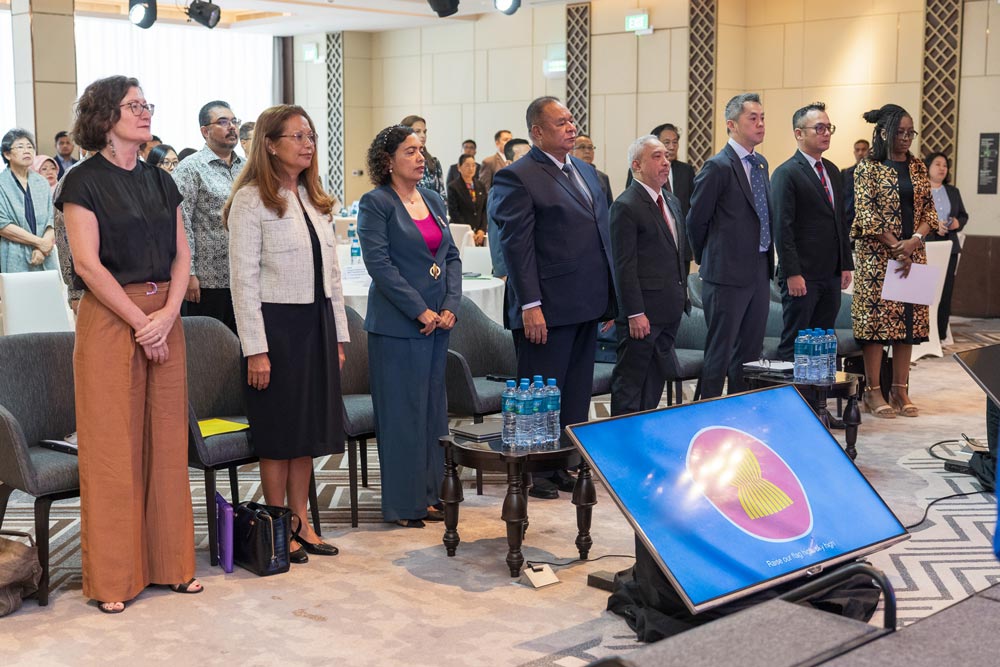
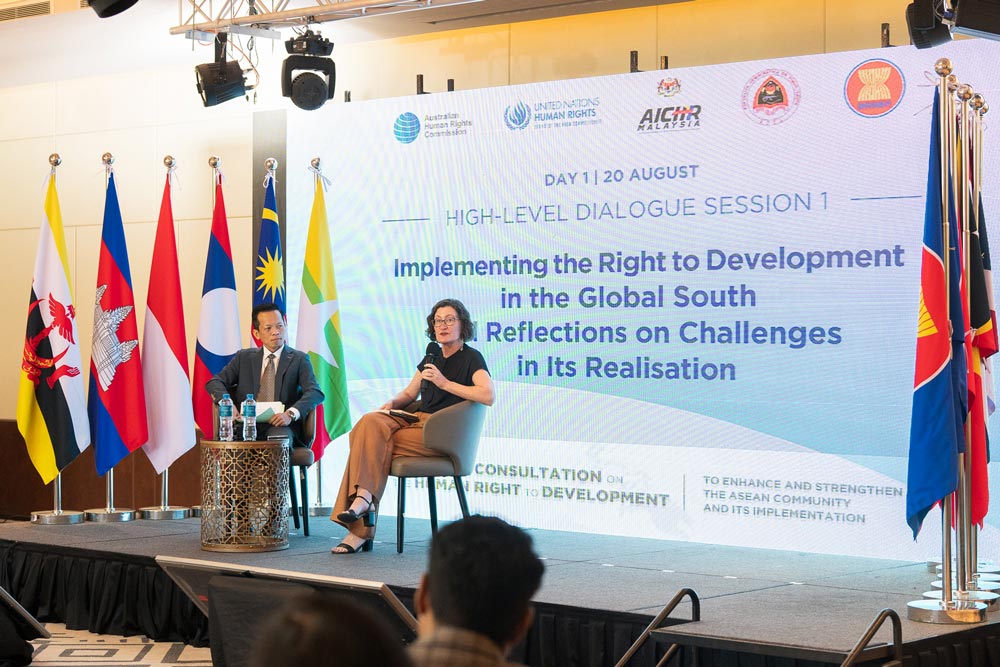
These welcome remarks were delivered on 20 July 2026 at the 4th ASEAN Consultation on the Human Right to Development to Enhance and Strengthen the ASEAN Community and Its Implementation, held from 20 to 21 August 2026 in Dili, Timor-Leste. The theme of the Consultation was ‘40th Anniversary of the United Nations Declaration on the Right to Development and High-Level Dialogue and Regional Outlook on the ASEAN Declaration on Promoting the Right to Development and the Right to Peace Towards Realising Inclusive and Sustainable Development’.
Read the press release on the consultation here. Click here for more photos from the consultation, and here to watch a video.