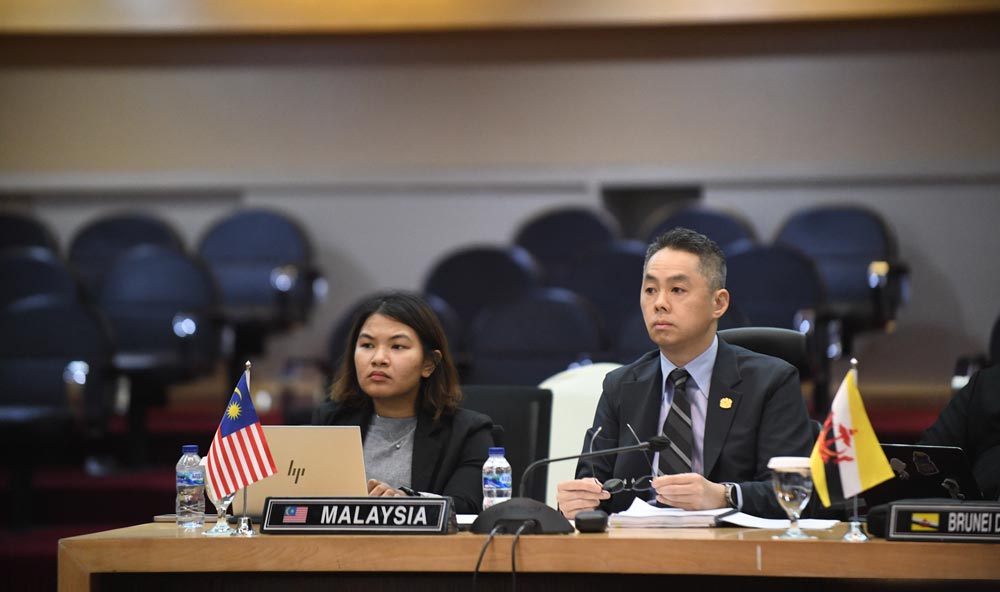

Thank you, Chair.
This is Malaysia’s intervention on this agenda item.
1. Refugee rights. Malaysia is not a signatory to the Convention relating to the Status of Refugees 1951. Yet, we are home to 187,012 registered asylum-seekers and refugees as of March 2024. This number does not include unregistered persons.
The Malaysian government, in collaboration with the United Nations High Commissioner for Refugees (UNHCR), recognises the rights of asylum-seekers and refugees in this way: They are not prosecuted for immigration offences even though they have entered without valid or legal documents. They are also not deported back to their home countries, where there is still a risk to their lives and liberty.
Many of these refugees are also supported by our governmental and non-governmental organisations in terms of healthcare, education and the provision of basic living necessities.
2. Why does Malaysia raise this issue? For this reason: Member states of the Association of Southeast Asian Nations (ASEAN) must collectively share responsibility for asylum-seekers and refugees in our region and not only leave the issue on the shoulders of a few countries. More importantly, we need to eliminate the root causes that cause refugees to flee their countries. Some of these factors include forced displacement, conflict, and legal, cultural and structural violence inflicted on them.
3. The problem is acute for a country like Malaysia. Given the severity of the ongoing conflict in Myanmar, ASEAN realised the Five-Point Consensus (5PC) in 2021 that called for an end to the violence and the start of constructive dialogue between the relevant parties. Of all the registered asylum-seekers and refugees hosted in Malaysia, as mentioned above, 164,309 of them are from Myanmar, representing 87.86%.
The world is looking to ASEAN to solve the Myanmar issue and implement the 5PC effectively. Despite the commendable efforts of the ASEAN envoys and other actors working to ensure that the 5PC is followed – which are welcomed – ASEAN is still unable to manage the situation credibly. In this sense, what is essential is not only for humanitarian assistance but also human rights and accountability measures as part of ASEAN’s human rights diplomacy.
4. On human rights, AICHR can play its role. We must take a proactive role to ensure that the 5PC is respected. Otherwise, the credibility and reputation of AICHR and ASEAN will be detrimentally affected and undermined.
5. Second, Malaysia is not a signatory to the International Covenant on Civil and Political Rights 1966 (ICCPR). Nevertheless, on the death penalty, Malaysia had in 2023 adopted two new laws: Abolition of Mandatory Death Penalty Act 2023 (that came into force on 4 July 2023) and Revision of Sentence of Death and Imprisonment for Natural Life (Temporary Jurisdiction of The Federal Court) Act 2023 (that came into force on 12 September 2023).
The former law repeals the mandatory death penalty and introduces sentencing discretion for all offences for which it was applicable. Crucially, the law not only abolished the mandatory death penalty but also completely removed the death penalty as a punishment for seven offences. It also abolished imprisonment for natural life. A process for resentencing those on death row and imprisoned to natural life is now being undertaken by the Federal Court.
6. More than 1,000 prisoners convicted by the High Court of capital offences have the possibility of being sentenced to an alternative punishment of imprisonment between 30 and 40 years and with whipping, or of having their existing death sentence commuted as part of their ordinary appeals before the Court of Appeal or Federal Court.
To date, more than 300 death penalty cases and 75 natural life cases have been brought to the Federal Court for resentencing. Discussions are ongoing on steps moving forward regarding the abolition of the death penalty after these developments.
7. Third is on business and human rights. The Malaysian government has committed itself to formulating a national action plan on business and human rights. To realise this initiative, a national baseline assessment of compliance by the state and companies with the United Nations Guiding Principles on Business and Human Rights has been completed. The assessment started in 2022 and concluded in 2023, with numerous recommendations for consideration. The next step is to gather views from the relevant stakeholders to draft the action plan to be launched this year. For the plan, the government will focus on three priority areas: the environment, governance and labour.
8. Relatedly, Malaysia’s Securities Commission and Bursa Malaysia have made it mandatory for directors of public listed companies (PLCs) on the stock exchange to undergo training on environmental, social and governance (ESG), or what is often referred to as “sustainability”, issues including on human rights matters. The Mandatory Accreditation Programme (MAP) Part II: Leading for Impact (LIP), as it is known, provides guidance aimed to strengthen the ability of boards to address sustainability considerations effectively. Sustainability covers human rights matters framed as labour practices (with the emphasis on the rights of migrant workers and to eliminate forced labour), diversity, occupational health and safety, data privacy and security, anti-corruption, environmental impact and supply chain management.
This is a significant step to strengthen the commitment of the government and corporate sector in improving their ESG practices among the boards of directors.
9. The World Benchmarking Alliance (WBA) had recently assessed 1,600 of the largest and most influential companies globally on their core social indicators (CSI). 83 of these companies are headquartered in Southeast Asia. These companies include players from multiple industry sectors, among others, telecommunications, banking, mining, retail, food, agriculture, oil and gas and transport.
Sadly, the figures of companies in Southeast Asia disclosing processes to identify their human rights risks and impacts are low: 17.6%. Only 24% of companies disclose their commitment to respecting the human rights that the International Labour Organization (ILO) has declared to be part of fundamental rights at work. Only 1 of 85 companies in the region disclose the results of their human rights assessments.
Given these figures, Malaysia urges AICHR to continue its push to further the business and human rights agenda not only with states but also among non-state actors.
Thank you, Chair.
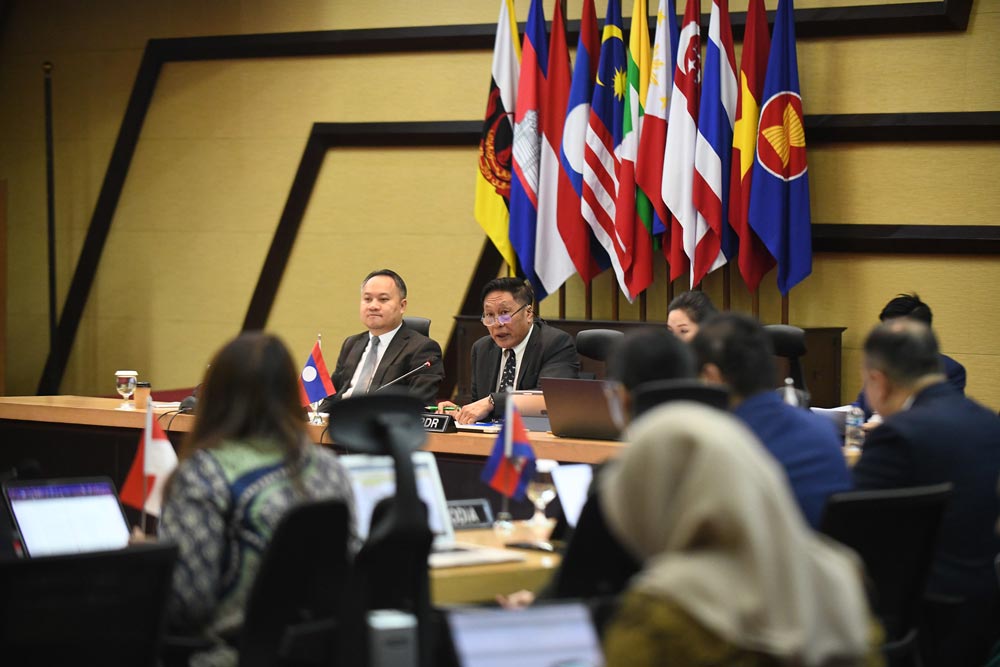
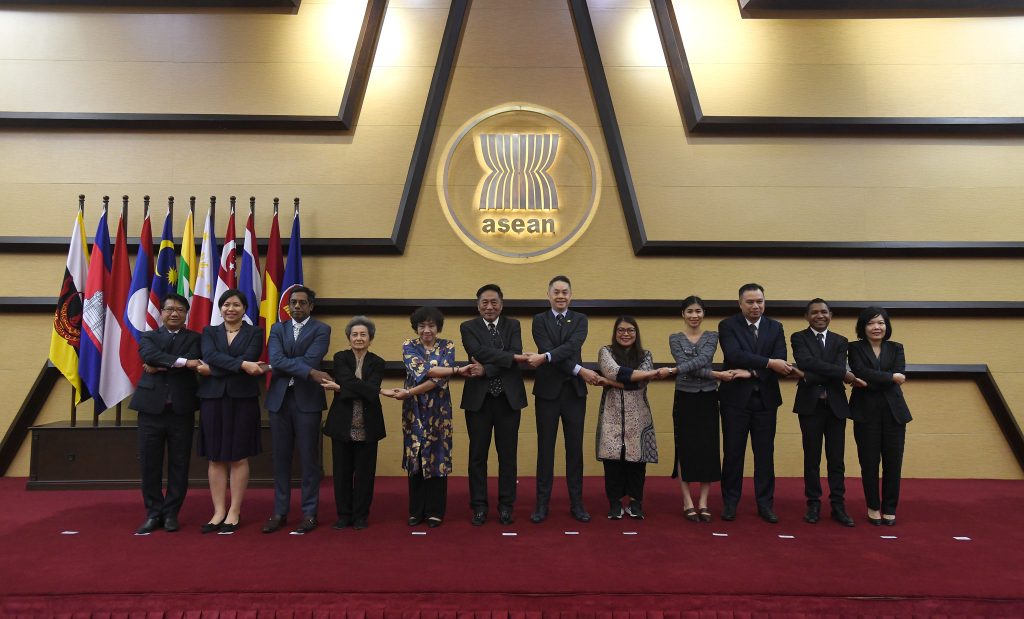
This statement was delivered to the ASEAN Intergovernmental Commission on Human Rights (AICHR) on Agenda Item No. 6.1 at the 39th AICHR meeting held in Jakarta, Indonesia from 20 to 22 May 2024. The press release of the meeting can be accessed here, archived here.