
Good morning, colleagues and friends.
The ASEAN Human Rights Declaration (AHRD) was adopted in 2012. As we approach its fifteenth year, the question is not what the Declaration says, but what it does for the people of ASEAN.
This session looks at two practical entry points through which the AHRD reaches people today. The first is what AICHR says together. The second is what the public tells AICHR. Through these two entry points, the AHRD becomes protection in practice.
The first is AICHR acting as a collective, speaking with one voice establishing agreed normative human rights positions. Our common positions take three forms: press releases, statements and notes. Each one is agreed by consensus of all Representatives. This concerted practice started in 2025 when, as Chair, I introduced a new standing agenda item at AICHR meetings pursuant to paragraph 4.11 of the AICHR Terms of Reference, which is to “develop common approaches and positions on human rights matters of interest to ASEAN”.
Over 2025 and 2026, we issued more than ten such texts. All of them are available on AICHR’s publications page.
Across these common positions, AICHR has spoken for at least six groups of ASEAN peoples.
1) We spoke for victims of scams and trafficking, whom we recognised as rights-holders entitled to redress, distinct from perpetrators and not to be punished for offences tied to their trafficking. We spoke for migrant workers, calling for responsible and non-discriminatory business, an end to excessive recruitment fees, and accessible grievance and remedy.
2) We spoke for women and girls, and for persons with disabilities. For women and girls, we pressed for gender-responsive risk assessments, remedy for business-related harm, equal pay and safe workplaces.
3) For persons with disabilities, we sought to strengthen their rights beyond the ASEAN Enabling Masterplan 2025: Mainstreaming the Rights of Persons with Disabilities, including the right to a healthy environment.
4) We spoke for communities affected by transboundary haze, calling for protection of children and older persons, access to justice, stronger laws, and environmental due diligence by business.
5) In our April 2025 press release on the earthquakes, we spoke for disaster-affected communities, calling for aid to be distributed equitably and without discrimination, for unobstructed humanitarian access, and for women, children, older persons and persons with disabilities to be prioritised in medical care.
6) And we spoke for people affected by conflict, affirming human rights as a tool to prevent conflict, to tackle inequality and exclusion, and to ensure the participation of women and youth.
These are supported by Article 4 of the AHRD, which states that the rights of women, children, the elderly, persons with disabilities, migrant workers, and vulnerable and marginalised groups are an inalienable, integral and indivisible part of human rights and fundamental freedoms.
The second entry point is how we respond to issues raised with us. This is civil society and the public speaking to AICHR. Anyone may write to us at [email protected]. Those communications are handled under the AICHR Operational Guidelines to External Communications Received, which we adopted in 2025.
From 2022 to 15 July 2026, AICHR received more than 110 communications. Going back to 2010, AICHR has received more than 130 communications.
Look at the last two reporting years. From July 2024 to June 2025, we received 18 communications. From July 2025 to June 2026, we received 60 correspondences. That is more than three times as many in a single year.
Who writes to us? The themes are consistent. Groups and people write on behalf of women, children, persons with disabilities, refugees, asylum-seekers, migrant workers, minority and ethnic communities, and Indigenous Peoples. They also write for victims of trafficking and conflict, and for communities living under transboundary environmental and economic pressures. They raise racial discrimination, access to justice, judicial harassment and freedom of information, and the situation in Myanmar. They raise labour rights, housing, environmental rights, and business and human rights. They raise deportation, forced displacement, and statelessness. Other communications concern human rights defenders, freedom of assembly and association, arbitrary detention, torture, enforced disappearances, armed conflict, and atrocities. They carry the long-standing grievances of historically targeted groups, and their demand for truth, justice and reparation. We have also received complaints regarding the border conflict between Thailand and Cambodia. From these communications, and from our work to respond to them and gather information, one lesson stands out: human rights protection is strongest where civil society and national human rights institutions are active, and this motivates us to do more and to support the work of human rights advocates.
Where does a complaint go once it reaches us? The routing is simple. If a communication is about one country, it goes to that country’s AICHR Representative, who may report back to AICHR and to the parties involved. If it is about the region as a whole, it goes to all Representatives.
This system did not appear overnight. In 2018, on behalf of Malaysia, I proposed guidelines for a communications mechanism. Apart from an administrative decision that the ASEAN Secretariat would acknowledge receipt of communications in reply to senders, the proposal was rejected. A year later, the issue was brought up again. AICHR Representatives agreed that complaints be directed to the Representatives of the countries concerned, for follow-up action at their discretion. The ASEAN Secretariat would record and report at each AICHR meeting the communications received and any follow-up action. In 2025, AICHR adopted the current Operational Guidelines. This communications mechanism still needs improvement. AICHR’s work plan to 2030 now carries action lines on this.
It has taken more than seven years to move from an informal mechanism to written guidelines and a commitment in our work plan. The progress has been slow, but each step is now on paper, and each one can be built on.
My personal observations on how this nascent mechanism could work are as follows. After a communication is received, further information may be sought on the issue, noting that communications contain only allegations that need to be verified. Gathering information will require engagement with domestic authorities, national human rights institutions, and other stakeholders. The sender of the communication should also be heard. Views can be shared by experts and civil society, and where resources permit, regional consultations can be held for a fair hearing. A report with recommendations can then be made for AICHR to consider. Where necessary, referrals can be made to national human rights institutions and other ASEAN sectoral bodies at the same time to exchange views and updates on the particular human rights case under consideration. Civil society should also be able to comment on the AICHR report. This is consistent with current practice, in which civil society organisations actively participate in AICHR events, including the flagship annual ASEAN Human Rights Dialogue.
AICHR’s communications mechanism can be used to alert ASEAN to recurring thematic issues being raised in the region. A regional outlook or trends report can be published as an ASEAN-owned and ASEAN-led record of the region’s progress and challenges on human rights, and a regional overview of ASEAN’s efforts and progress. Such a report would also show how AICHR has approached and interpreted the AHRD in practice.
There is still much to do, and we should not relent. Human rights advocates need to be principled yet perpetual optimists, as I was once told by my seniors.
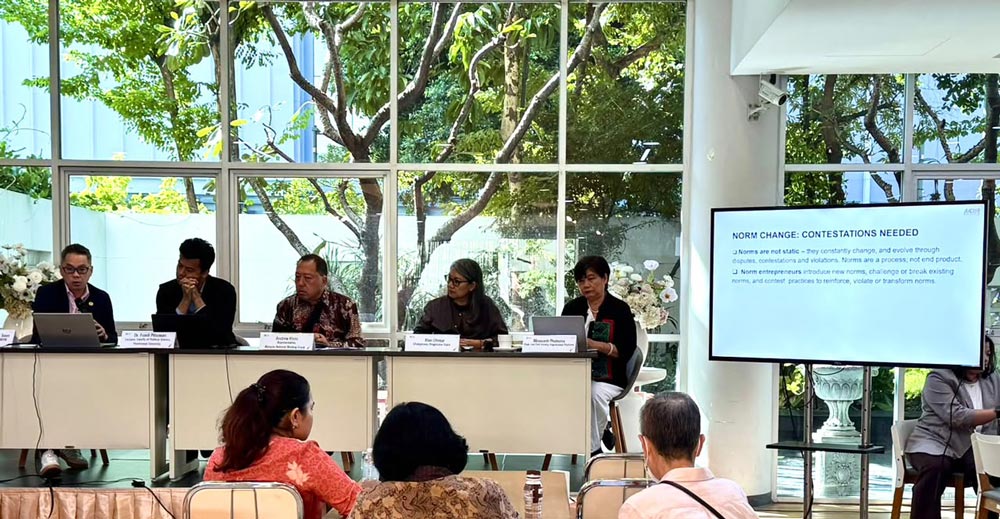
Before I end, a word on how norms change. Norms are not static. They evolve through disputes, contestation and even violation. A norm must be seen as a process, not an end product. Norm entrepreneurs introduce new norms, challenge existing ones, and contest practices until those practices are reinforced or transformed. Over time, norms are institutionalised in legal documents and organisations. And real-time events can speed that journey up or slow it down.
Over the years, I have noticed how ASEAN has had to deal with the recurring dilemma of Myanmar: from calling for the release of Aung San Suu Kyi, to condemning the crackdown on the Saffron Revolution, to the genocide against the Rohingya, and now the military coup and civil war. For the most part, Myanmar has been the backdrop to many of the human rights challenges facing AICHR, and to its opportunities for norm change.
Wayne Sandholtz and Kendall Stiles describe norm change as a cycle. Rules guide what actors do. Those actions trigger disputes. The arguments that follow modify the rules, and the modified rules alter the rule structure. Then the cycle begins again, with each round shaped by earlier precedents.
We can see this cycle at work when norm entrepreneurs within AICHR push the Commission to take normative human rights positions and to seek information from governments on human rights issues. In 2021, for example, after the coup d’état in Myanmar, one AICHR Representative sought to raise the coup and express concern. There was strong pushback. After much diplomatic wrangling, AICHR agreed to a new agenda item titled “Recent Developments in ASEAN”. For the first time, it gave AICHR a standing space to discuss what was happening on the ground. Then, in 2023, came the ASEAN Human Rights Dialogue, which formalised years of dialogue on human rights into something akin to a “mini-Universal Periodic Review”. Both arose from disputes over the form and manner in which such discussions should take place.
The lesson in ASEAN regarding institutional and norm change is to “practise first and institutionalise later”. Every step I have described today began as a practice before it was written down. The recent developments agenda item, the common positions and the communications mechanism all started this way. So norm entrepreneurs have learnt to be patient, but to keep pressing, and to practise, practise, practise.
Fifteen years ago, the AHRD was criticised as mere words on paper. Today, it is cited in our common positions and invoked in letters from civil society and the public, and it is now supported by a formal communications procedure.
Thank you.
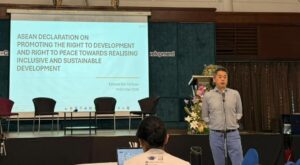
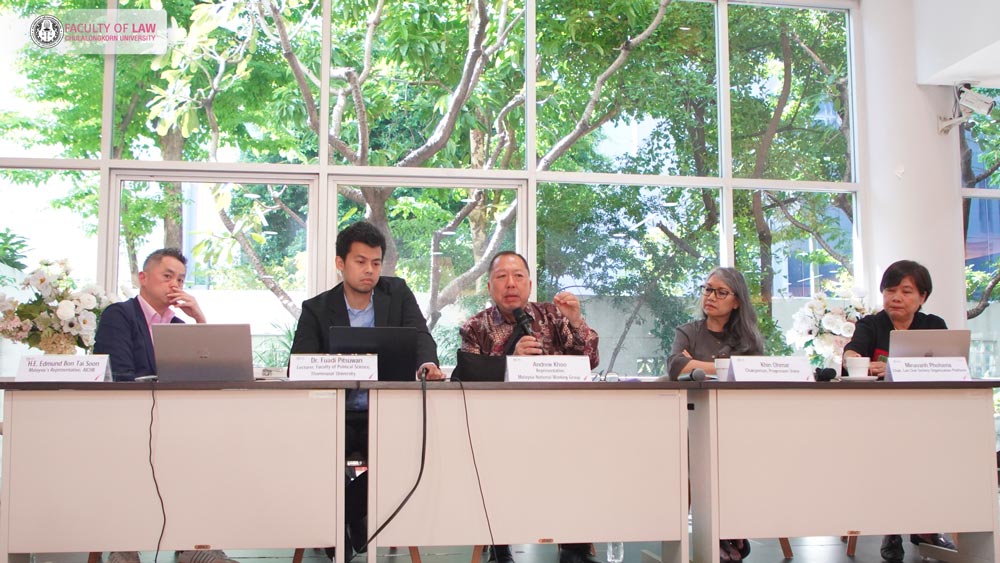
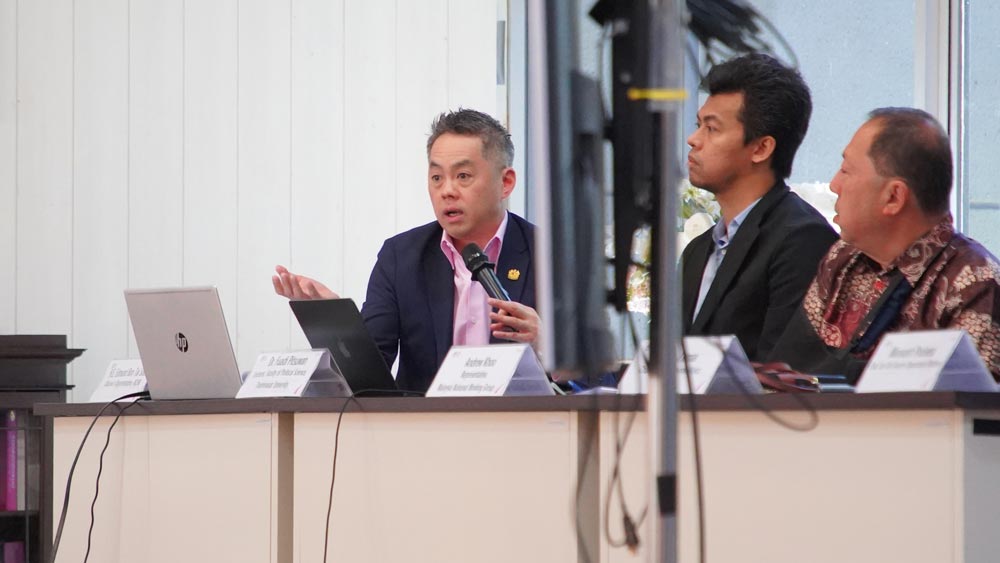
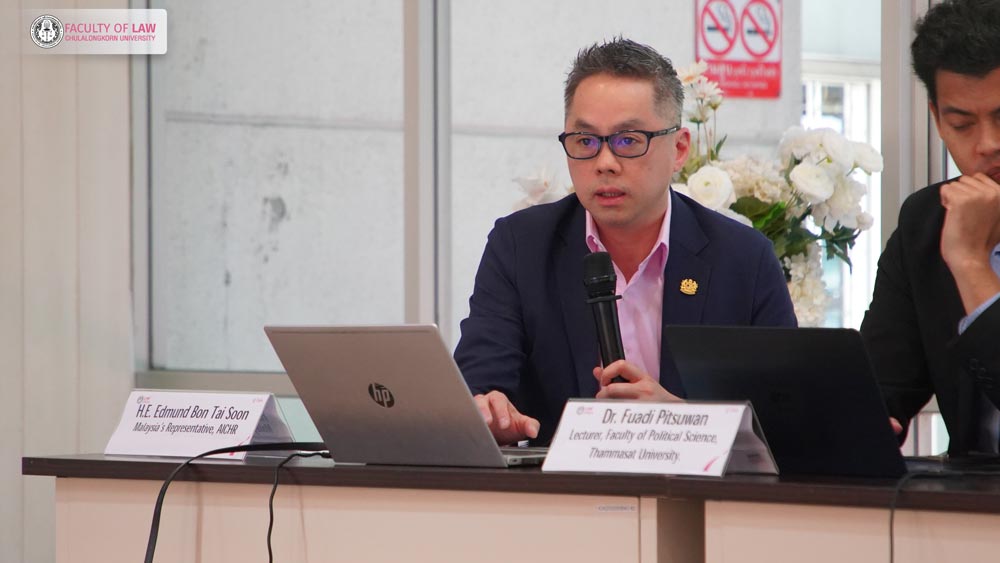
The speaking notes above were prepared for the remarks delivered by Edmund Bon on 10 November 2026 at the “Towards 15 Years of the ASEAN Human Rights Declaration: Assessing Its Impact and Advancing Implementation” forum held on 9 and 10 November 2026 in Bangkok, Thailand.