By Dr Nor Azura A. Rahman | New Straits Times
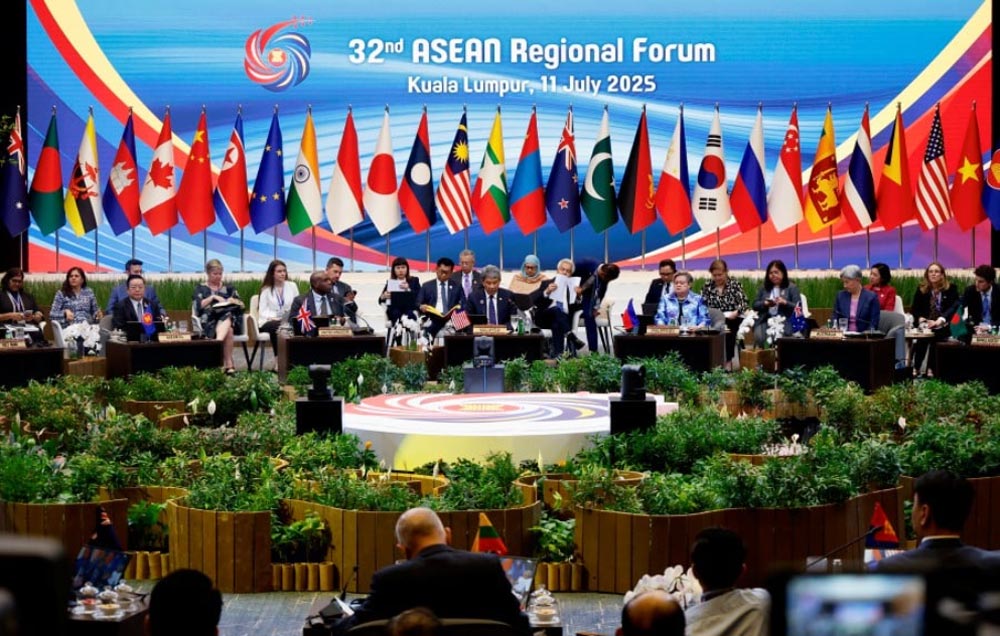
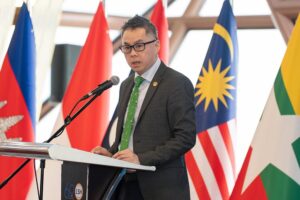
The ASEAN Foreign Ministers’ Interface with the ASEAN Intergovernmental Commission on Human Rights (AICHR), held on July 8 in Kuala Lumpur, has rekindled regional commitment to human rights.
The dialogue, coinciding with Malaysia’s 2025 ASEAN Chairmanship, underscored not only ASEAN’s evolving human rights architecture but also the mounting challenges that have long plagued AICHR’s legitimacy and effectiveness.
It was, in every sense, a timely reckoning with the future of rights in Southeast Asia.
THE PARADOX OF PROGRESS: AICHR’S ENDURING DILEMMA
Established in 2009, AICHR was envisioned as ASEAN’s cornerstone human rights body. Yet, 16 years on, critics often regard it as toothless — unable to independently investigate violations or name and shame states.
Its consensus-based structure, rooted in ASEAN’s principle of non-interference, has frequently neutralised attempts at robust interventions in crises, notably Myanmar’s ongoing turmoil.
The balancing act between respecting national sovereignty and promoting universal human rights has left AICHR trapped in a diplomatic paradox.
The annual report of AICHR for 2025, submitted during this Interface, openly acknowledged some of these systemic limits.
AICHR has made meaningful progress in advocacy, dialogue, and programmatic engagement. But the absence of enforcement mechanisms and its inability to act on individual complaints has raised legitimate concerns about its credibility and responsiveness.
Under the theme “Inclusivity and Sustainability”, Foreign Minister Datuk Seri Mohamad Hasan set the tone in his opening remarks: “ASEAN’s future must be built upon a framework that is inclusive, sustainable, and forward-looking—a framework that places the people of ASEAN at its very heart.”
He reaffirmed that human rights are indispensable to realising ASEAN Vision 2045: “Our aspirations for a people-centred ASEAN will only be meaningful if we first ensure the rights and dignity of our people.”
Malaysia’s leadership has been central to catalysing two significant human rights declarations currently being developed by AICHR, ASEAN Declaration on the Right to a Safe, Clean, Healthy, and Sustainable Environment and the Declaration on Promoting the Right to Development and Peace.
Spearheaded by Malaysia, this landmark ASEAN Declaration on the Right to a Safe, Clean, Healthy, and Sustainable Environment responds directly to the escalating climate crisis.
As emphasised by Malaysia’s Representative to AICHR, Edmund Bon: “Climate change in our region is very serious. There are a lot of displaced persons, a lot of climate refugees. This declaration will give people in ASEAN a basis to claim their environmental rights.”
The draft includes core principles such as public participation in environmental decision-making, access to justice for pollution victims, and freedom of information, integrating human rights with ecological governance.
Malaysia’s pivotal role in this initiative aligns with Article 28(f) of the ASEAN Human Rights Declaration (AHRD), marking a bold step to embed environmental rights into the region’s legal framework.
The second declaration, the Declaration on Promoting the Right to Development and Peace, champions inclusive and people-centred development, not merely economic growth.
As Bon explains: “This right is already in the AHRD, but now we’re expanding it into a full declaration. It’s about political, economic, social, and cultural rights—development that uplifts all.”
It is a deeply ASEAN approach, contextualising rights through a developmental lens rather than merely replicating Western liberal paradigms.
ASEAN is thus articulating a hybrid human rights framework — rooted in local traditions, but also responsive to global imperatives.
The Interface also discussed AICHR’s 2025 Annual Report, which documented 16 programmes between July 2024 and June this year, tackling issues from digital disinformation to trafficking, torture prevention and migration management.
Yet gaps remain. Indonesian Foreign Minister Sugiono, in his intervention, echoed regional calls for AICHR to move from “commitment to tangible action”: “AICHR must be more responsive to urgent human rights issues and ensure its programs directly impact the lives of vulnerable groups.”
To that end, the proposed establishment of a structured ASEAN conflict response framework — championed by Bon — seeks to institutionalise ASEAN’s crisis management capacity, currently marred by ad hocism, especially evident in the Myanmar context.
MALAYSIA’S VISION: OWNERSHIP, NOT IMPOSITION
Mohamad Hasan’s stressing that ASEAN’s human rights initiatives must remain “ASEAN-led and ASEAN-owned” is also a recurring refrain in the face of accusations of Western conditionality.
“They should reflect our shared values and norms and must be grounded in the ASEAN Charter and the ASEAN Human Rights Declaration,” he said.
This underscores a crucial insight: human rights in ASEAN must evolve within a hybrid framework, where the universal and the regional coexist.
It is in this light that the declarations championed by Malaysia signal a renewed attempt to bridge the gap between global ideals and Southeast Asian realities.
The 2025 Interface may well be remembered as a turning point, where AICHR either evolves into a meaningful regional mechanism or risks further irrelevance.
With Malaysia’s leadership, the development of these two declarations offers a glimpse of what principled pragmatism can achieve in ASEAN’s human rights journey.
But declarations alone are not enough. AICHR’s future hinges on its willingness to adopt institutional reforms, expand its mandate and embrace transparent engagement with all stakeholders.
Only then can ASEAN truly deliver on its promise: a just, equitable, and people-centred community.