
By Alexandria Virginski | Just Security
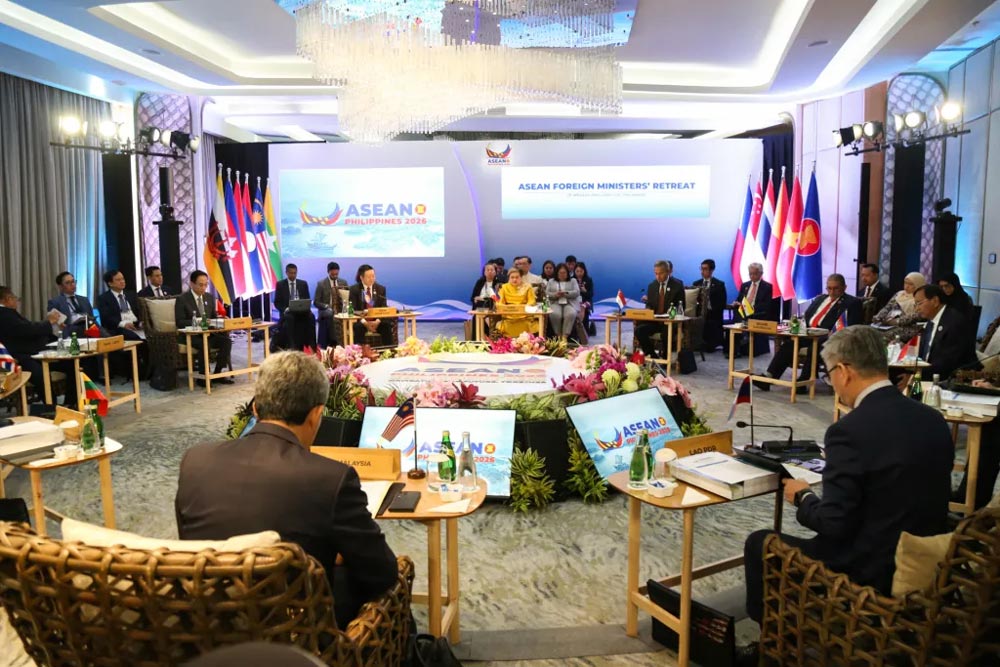
The establishment of the ASEAN Intergovernmental Commission on Human Rights (AICHR) in 2009 marked a significant milestone in Southeast Asia’s engagement with human rights discourse. As the Association of Southeast Asian Nations’ (ASEAN) principal human rights body, AICHR was envisioned as a mechanism to promote and protect human rights across a diverse region characterized by varying political systems, legal traditions, and levels of democratic governance. While AICHR has succeeded in creating a regional platform for dialogue and norm-setting, its reliance on non-binding procedures has substantially limited its effectiveness in delivering meaningful protection.
Institutional Design and Mandate of AICHR
AICHR was created within the broader context of ASEAN’s commitment to regional cooperation, sovereignty, and non-interference. Its Terms of Reference emphasize the promotion of human rights grounded in mutual respect for national and regional particularities, reflecting ASEAN’s longstanding preference for consensus-based decision-making and respect for State sovereignty. For instance, unlike regional human rights bodies designed to act as accountability mechanisms, AICHR’s Terms of Reference do not vest it with investigative powers, an individual complaint mechanism, or the authority to issue binding decisions. Its mandate focuses on capacity-building, education, dialogue, and the implementation of human rights declarations (see para. 10 of the 2025 ASEAN declaration), rather than adjudication or enforcement mechanisms. While these functions are not insignificant, they fall short of addressing the urgent needs of victims seeking redress for human rights violations.
The tension between sovereignty and human rights enforcement is at the center of AICHR’s challenges. ASEAN’s principle of non-interference has historically facilitated regional stability, but it also constrains collective responses to human rights abuses. ASEAN’s responses tend to emphasize back-door foreign policy negotiation and norm setting rather than jurisprudential avenues, even when violations are well-documented. This cautious approach limits AICHR’s ability to function ex ante as a credible deterrent and illustrates its non-suitability ex post as a mechanism for accountability.
Two contemporary issue areas illustrate these limitations, as elaborated below: the persecution of Rohingya minorities by Myanmar authorities in the Rakhine State, and the exploitation and trafficking of migrant workers in cross-border “fraud factory” schemes across Cambodia, Myanmar, Laos, Thailand, and the Philippines.
Persecution of the Rohingya in Myanmar
The Rohingya Muslim minority in Myanmar’s Rakhine State has faced decades of systematic discrimination, culminating in widespread violence and forced displacement that many argue rises to the level of genocide. The conflict culminated in 2017 when the Myanmar military conducted its so called “clearance operations” which drove thousands of Rohingya into neighboring Bangladesh. Reports detail the horror the Rohingya people have faced including killings, torture, and rape. While the crisis has triggered unprecedented international legal responses — including proceedings before the International Criminal Court, the International Court of Justice, and the pursuit of universal jurisdiction by States such as Argentina — ASEAN’s primary human rights body has remained largely sidelined. In the absence of binding regional mechanisms, ASEAN member States have turned to diplomacy, humanitarian assistance, and consensus-based engagement. Nevertheless, some member States such as Malaysia and Indonesia have, with time, taken a more vocal stance in their condemnation of the atrocities. While these efforts signal recognition of a major humanitarian crisis affecting the region, they fall short of enforcement and underscore how ASEAN’s institutional design continues to prioritize member State sovereignty over human rights, despite its stated commitment to promoting the welfare of its peoples.
Cross-Border Fraud Factory Schemes
Labor exploitation also continues to affect the ASEAN region, reflecting entrenched inequalities and systemic vulnerabilities. One of the most notorious complaints to surface at the AICHR was filed by the Global Alliance against Traffic in Women, Tenaganita Malaysia, and Migrant Care Indonesia in 2023. The complaint reports activity dating back to 2019 that involves a multi-country fraud factory scheme involving Cambodia, Myanmar, Laos, Thailand, and the Philippines in which victims were tricked through false advertising schemes into traveling to the region. Upon their arrival, they were met by men who kidnapped them and held them for ransom at hotels or casinos guarded by armed security guards and fenced in with barbed wire. Those whose families were unable to afford the ransom upwards of $19,000 USD or 80,000 Malaysian ringgit per person, reported being coerced into online activity ranging from cryptocurrency fraud and money laundering to “love scams” and working in illegal gambling schemes. Victims who did not carry out these activities stated they were subjected to acts of torture including beatings, electrocution, and starvation. Despite the transnational nature of these abuses, regional responses have been fragmented and State-centric. AICHR has largely deferred to national anti-trafficking frameworks and law enforcement cooperation, rather than asserting a regional human rights response grounded in victim protection and accountability. AICHR’s reluctance to confront member States over systemic labor and migrant exploitation, despite evidence to the contrary, demonstrates the need to create binding rules that States are required to follow.
Comparative Regional Human Rights Mechanisms
A comparative analysis with regional human rights systems that have established actual courts (which the AICHR has not) highlights both the potential and the limitations of AICHR’s current mandate. The Inter-American Commission on Human Rights (IACHR), operates as a quasi-judicial body under the Organization of American States (OAS) and the American Convention on Human Rights, receiving individual petitions, conducting investigations, and issuing recommendations to member states. IACHR also serves as the principal gateway to the Inter-American Court of Human Rights, as only the Commission or a State Party may submit cases to the Court for binding adjudication under the American Convention on Human Rights, subject to jurisdictional requirements. While the Commission’s decisions are not themselves legally binding, its petition system and referral power create an institutionalized pathway from complaint to enforceable judgment.
A comparable structure exists in the African system, where the African Commission on Human and Peoples’ Rights (ACHPR) operates alongside the African Court on Human and Peoples’ Rights under the African Union. ACHPR receives individual communications, undertakes fact-finding activities, and may refer cases to the Court, particularly where States have accepted the Court’s jurisdiction through optional declarations. This two-tiered arrangement combines a non-judicial complaints mechanism with a judicial body capable of issuing binding decisions, while preserving State sovereignty through consent-based jurisdiction and procedural admissibility requirements. State obligations to comply with the Court’s judgments do not amount to a surrender of sovereignty; rather, they represent a voluntary exercise of sovereign authority, whereby States define the scope of external review by choosing whether and how to accept jurisdiction.
Both the Inter-American and African systems have faced significant pitfalls. For example, the Inter-American Court often experiences delays in case resolution, as seen in González et al. (“Cotton Field”) v. Mexico, where justice for victims of femicide took over a decade, and inconsistent compliance, with some States slow or reluctant to implement reparations or systemic reforms ordered by the court. Similarly, the African Court struggles with limited jurisdiction due to optional State ratification — for example, only a fraction of African Union member States accept individual petitions — and a lack of enforcement mechanisms, which has weakened the impact of rulings such as Social and Economic Rights Action Center (SERAC), et al., v. Nigeria, where the Nigerian government was accused of corrupt practices leading to oil pollution on land indigenous to the Ogoni peoples and where the government subsequently delayed implementation of key remedies, notably mandated oil cleanups.
By contrast, AICHR currently lacks both an individual petition mechanism and a judicial counterpart capable of issuing binding rulings. While AICHR shares certain features with the Inter-American and African Commissions — such as a mandate emphasizing promotion, dialogue, and consultation — it does not have investigatory authority or a formalized pathway for individual complaints to progress toward adjudication. Looking forward, proposals for legally binding human rights instruments, including those advanced by AICHR Chair Edmund Bon, suggest that ASEAN could develop stronger enforcement mechanisms by 2030. Such mechanisms could begin with incremental accountability measures before considering more drastic steps, such as creating a court. While a judicial body would be one route to encourage compliance — and could be possible in the long term — it may be too ambitious for the region’s five-year plan given the current political context. But an incremental approach that provides AICHR with additional binding authorities could allow ASEAN to strengthen human rights enforcement while remaining consistent with its principles of consensus, non-interference, and respect for State sovereignty.
The Future of ASEAN
Edmund Bon’s proposal for a more assertive AICHR with binding procedures reflects growing regional recognition of the limitations inherent in ASEAN’s current non-binding, politically driven human rights framework. His call for legally binding regional instruments responds directly to the acknowledged absence of enforceable ASEAN agreements, reinforcing critiques of the fragility of “soft-law” mechanisms. By drawing on lessons from the Inter-American and African systems, ASEAN could adopt binding obligations to fill persistent protection gaps to strengthen compliance and accountability, and, in the long term, avoid the pitfalls experienced by these other systems should there eventually be sufficient conditions in place to build a regional court. In the immediate term, this could include the establishment of mandatory reporting requirements such as peer review mechanisms, conditioning States’ participation in ASEAN ministerial or sectoral meetings (e.g., regarding their fulfillment of human rights obligations), or targeted limitations on participation in summits and dialogues for States that are out of compliance. These approaches would allow ASEAN to balance politics with enforcement. Such measures would enable the region to address serious human rights violations — such as torture, forced disappearances, and restrictions on freedoms of expression — while maintaining political consensus, ultimately strengthening ASEAN’s human rights record in an incremental but nonetheless profound step forward.
Source: https://www.justsecurity.org/131722/limitations-aichrs-procedures-change-2030/. Archived at https://perma.cc/3AVZ-5E43