
By S. Vinothaa | Malaysiakini
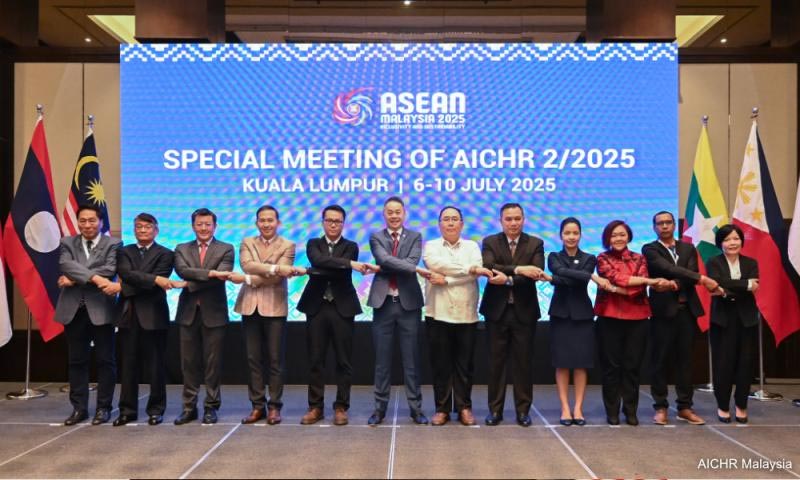
The ASEAN Intergovernmental Commission on Human Rights (AICHR) is overhauling its approach to human rights protection in Southeast Asia.
It is launching a five-year plan that could significantly change the way rights complaints are handled and who gets protected.
For the first time in its history, AICHR is poised to institutionalise a formal mechanism to receive, respond to, and follow up on human rights complaints.
This represents a shift from previously informal and opaque processes, said Malaysia’s Representative and current Chair of AICHR, Edmund Bon, to Malaysiakini.
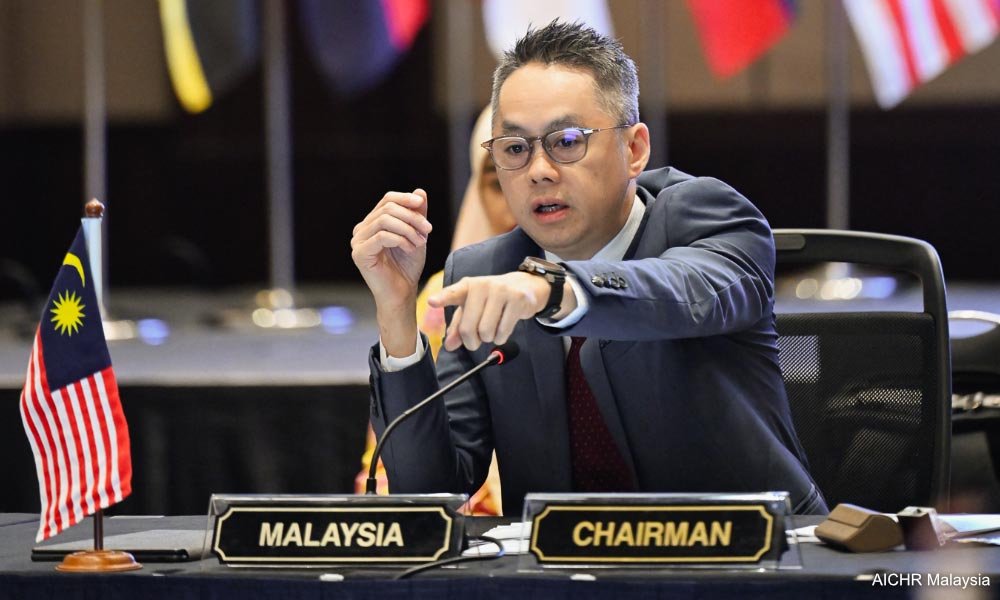
“Previously, complaints came in, but there was no public-facing procedure, and follow-up was inconsistent.
“AICHR only recently began formally responding to external stakeholders,” he said.
While the plan is still being finalised for implementation in 2026, some of its effects are already taking shape.
“During Malaysia’s chairship, we responded to the United Nations on environmental rights and to FORUM-Asia on the right to peaceful assembly.
Last month, human rights watchdog FORUM-Asia welcomed AICHR Malaysia’s formal response to the judicial harassment of two local activists, Sevan Doraisamy and Azura Nasron.
AICHR’s engagement with national agencies led to cases against the activists being dropped, classified as “No Further Action” (NFA).
Responding, Bon said: “It shows AICHR can respond meaningfully, decisively and effectively.”
He described it as an example of how regional human rights diplomacy can influence domestic decision-making.
Bon said this highlighted the importance of aligning national laws with regional human rights norms, particularly on freedom of expression and peaceful assembly.
“We’ve now committed to looking at a common and formal approach that includes referrals and responses.
“That’s a huge leap from where we started,” he said.
Extending protection to journos, whistleblowers
Since 2010, the 10-member AICHR, which has representatives from each ASEAN nation, has operated informally in responding to grievances.
This later evolved into a semi-structured “grievance communication mechanism” in 2019.
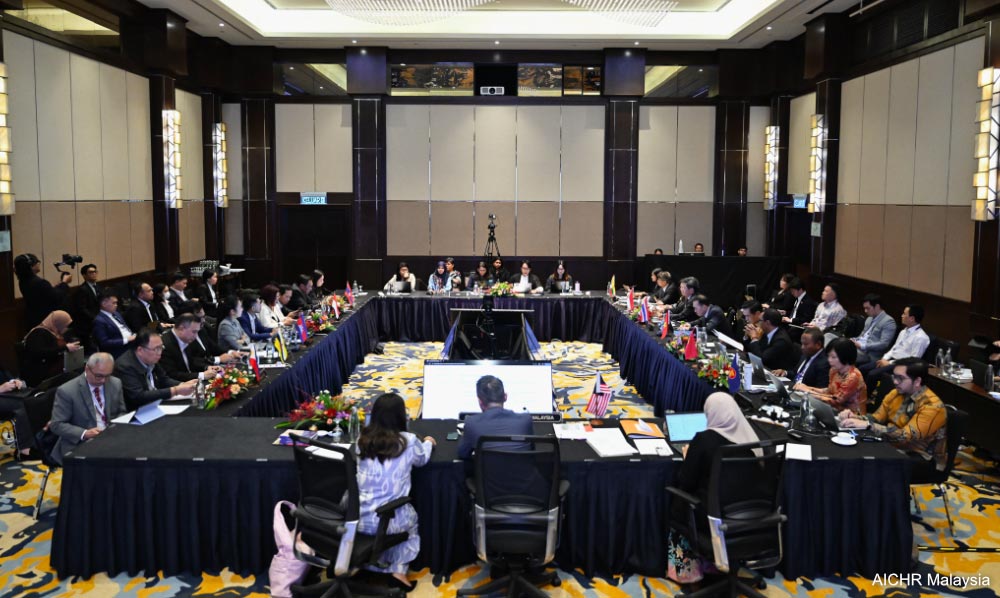
While that system received “a lot of complaints”, it lacked teeth, said Bon.
The new work plan for 2026–2030 introduces another major change: recognising the need to protect human rights defenders, including investigative journalists — a first for ASEAN.
“For AICHR Malaysia, this progressive shift will include journalists, especially those exposing abuses or corruption, to be included under the protection mechanisms of AICHR.
“The significance of this recognition cannot be overstated,” he said.
He acknowledged that the term “human rights defenders” remains politically sensitive in some ASEAN countries.
Therefore, he said the work plan included language to: “Strengthen protection for people who promote and protect human rights in ASEAN, where appropriate.”
This, Bon noted, opens the door for civil society actors, including journalists and whistleblowers, to receive formal acknowledgement and protection.
ASEAN-level engagement with UN
Another sign of AICHR’s increasing assertiveness is its recent formal responses to UN special rapporteurs, particularly on the draft “ASEAN Declaration on the Right to a Safe, Clean, Healthy, and Sustainable Environment”.
“This is a big deal. It reflects a willingness to institutionalise engagement with international mechanisms, something ASEAN has historically been shy to do for various reasons.
“I say that ASEAN should not be shy about human rights and must assert our position as a regional leader,” Bon stressed.
The 2026–2030 work plan also proposes a landmark initiative: an ASEAN Human Rights Report — the first of its kind.
He said the report will offer a comprehensive overview of the region’s human rights landscape and provide information on ASEAN’s progress and challenges.
Bon said other initiatives include thematic studies on emerging risks such as online harms, transnational crime, and digital surveillance.
It will delve into the right to freedom of opinion and expression, particularly amid growing threats to speech online.
“This is a bold, forward-looking plan, designed to guide ASEAN’s human rights agenda for the next two decades.
“It explores issues we’ve never dared to take on before.
“It aligns closely with ASEAN’s 2045 Vision and brings human rights closer to the daily lives of people in the region,” Bon said.
Will ASEAN walk the talk?
Critics have long accused AICHR of being toothless, citing its consensus-based structure and lack of enforcement power.
However, Bon insists that political will was growing, especially among younger ASEAN diplomats and technocrats.
“This is not just Malaysia’s effort. It reflects a regional shift.
“There’s a recognition that rights violations cannot be swept under the rug anymore,” he said.
While implementation remains a challenge, especially in countries with limited civic space, the latest developments signal a potential turning point for human rights protections in ASEAN, Bon added.