By International Organization for Migration
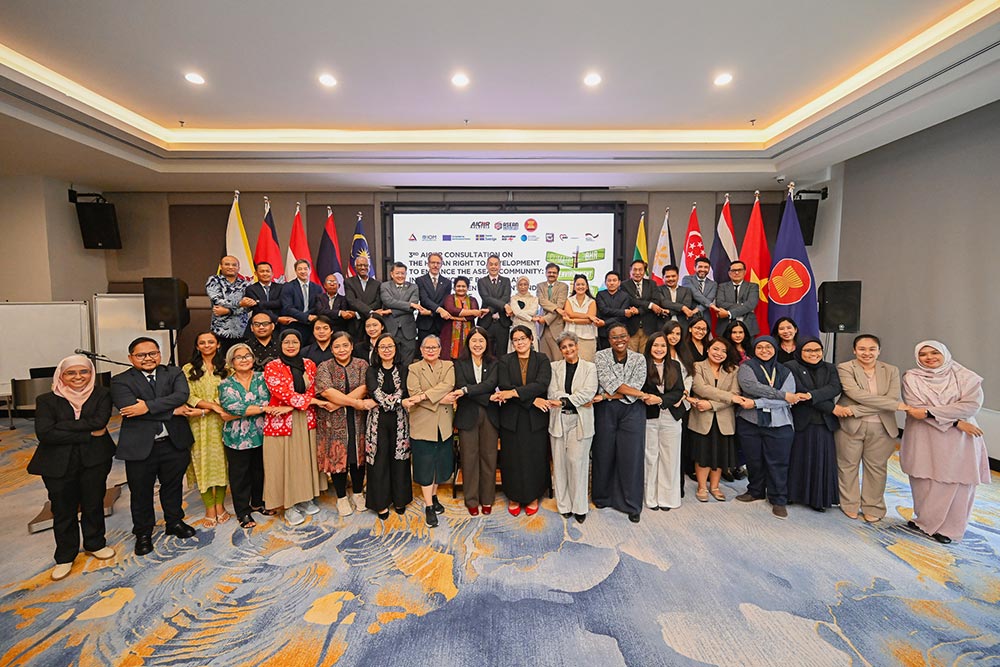
On 21–22 August 2025, Malaysia hosted the third ASEAN Intergovernmental Commission on Human Rights (AICHR) Consultation on the Human Right to Development, focusing on the intersection of business, human rights, environment, and climate change.
The consultation, supported by the International Organization for Migration (IOM), the Human Rights Commission of Malaysia (SUHAKAM), the Australian Human Rights Commission (AHRC), and Migrant Forum in Asia (MFA), brought together stakeholders including government representatives, private sector actors, academics, civil society organizations, and international partners to unpack the intersection between migration, business and human rights, environment and climate change.
The nexus between migration, business and human rights, and climate change is particularly pertinent in the context of the right to development, especially as labour mobility continues to grow within Southeast Asia. These intersections remain high on the ASEAN agenda and aligns with the ASEAN 2045: Our Shared Future, which reiterates ASEAN’s commitment to uphold human rights and fundamental freedoms, while recognizing the need to address challenges such as climate change and migration.
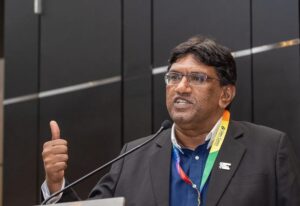
AICHR Chair and Representative of Malaysia to AICHR, Edmund Bon Tai Soon, emphasized the importance of addressing challenges in today’s development context arising from climate change and human mobility, and their effects, particularly on marginalized communities, including migrant workers. “We must ensure the voices of those made vulnerable and marginalised are heard and placed at the centre of our efforts. We need to strengthen bodies and mechanisms to be more decisive, responsive and timely as well as future-ready in addressing global and regional challenges as envisioned in the ASEAN 2045,” he said.
IOM echoed this call in its welcoming remarks delivered by Mattias Carlson, Programme Coordinator in Malaysia, highlighting IOM’s longstanding work in the region under the Migration, Business and Human Rights (MBHR) programme in Asia. “In ASEAN, migration and business are closely intertwined, and IOM is pleased to contribute to this important dialogue to advance the agenda on identifying inclusive, forward-looking, and rights-based responses and solutions to challenges at the intersection of business and human rights and climate change.”
IOM further emphasized the links between climate change, labour migration, and human rights, underscoring that vulnerable communities across ASEAN are already experiencing displacement, livelihood loss and heightened protection risks due to environmental degradation and climate-related disasters. IOM stressed the roles of government and the private sector in ensuring a just transition for migrant workers, noting that integrating migration into climate action strategies can strengthen resilience and safeguard development gains. Christopher Richter, IOM’s Regional Migration, Environment and Climate Change Specialist, elaborated, “While labour migration has the potential to be leveraged as a catalyst for the just transition, the exacerbated risks of exploitation of migrant workers across climate-affected migration corridors must also be acknowledged and addressed.”
The consultation reinforced the importance of a holistic approach where business and human rights frameworks intersect with environmental sustainability and climate resilience. In alignment with Malaysia’s ASEAN Chair theme this year, “Inclusivity and Sustainability”, the third consultation aims to shape AICHR’s common position on the human right to development and to mainstream related issues across ASEAN.
AICHR is currently deliberating on Malaysia’s proposed ASEAN Declaration on Promoting the Right to Development and Peace Towards Realising Inclusive and Sustainable Development after consulting ASEAN bodies and stakeholders.
Through its support, IOM reaffirmed its commitment to ASEAN and its partners in achieving concrete outcomes to address the multifaceted challenges of climate change and human mobility. This includes strengthening policy frameworks, improved coordination mechanisms, and building inclusive partnerships that prioritize the well-being and agency of people on the move — ensuring that no one is left behind in the region’s pursuit of sustainable development.
This initiative was supported by IOM through its Migration, Business and Human Rights Programme in Asia, funded by the European Union (EU) and the Government of Sweden.
Source: https://mbhr.iom.int/en/news/malaysia-hosts-asean-consultation-human-rights-development-focusing-business-and-climate. Archived at https://perma.cc/43JF-U5SY