By Hafiz Yatim | The Edge Malaysia
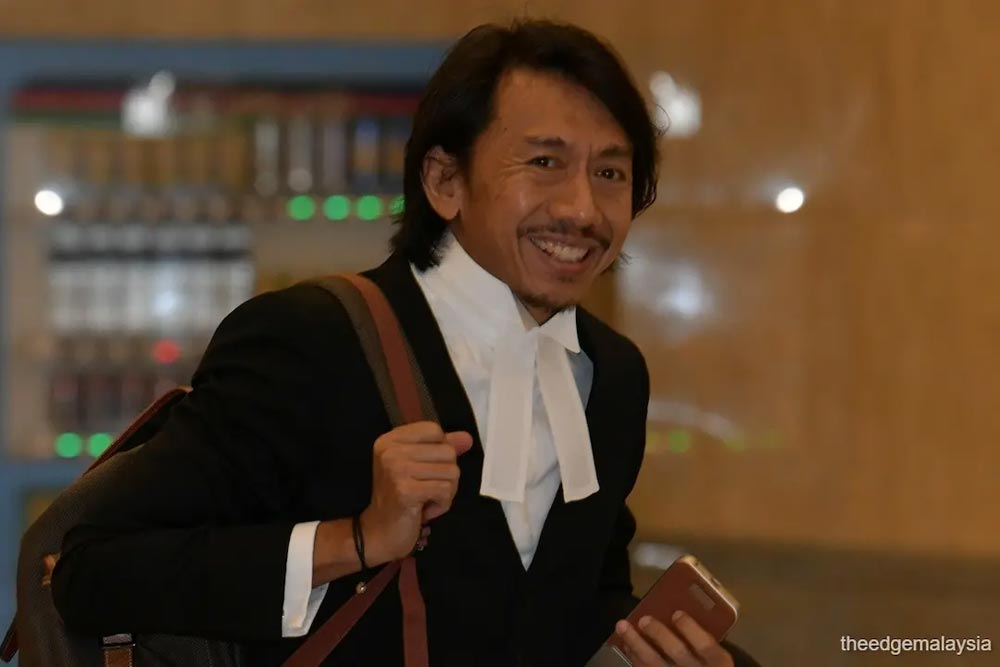
Former army doctor Dr R. Kunaseegaran’s defence lawyer told a three-member Federal Court bench that Kunaseegaran could not have played any role in the murder of deputy public prosecutor Datuk Kevin Morais, as Kunaseegaran was not physically present in a meeting to discuss Morais’ abduction that led to his murder.
Lawyer Datuk N. Sivananthan told the court this on Wednesday, at the final appeal over the conviction and death sentence of the six persons accused of abducting and killing Morais.
Kunaseegaran, the first accused, was charged with abetting the murder of Morais, where he is alleged to have a common intention with the other five also accused of the murder.
However, Sivananthan told the bench, led by Chief Justice Tun Tengku Maimun Tuan Mat, that evidence in the trial showed that there was no common intention between Kunaseegaran and the five others to commit the crime, as Kunaseegaran does not know all of them, except for S. Ravi Chandran.
Sivananthan further said that Kunaseegaran was never at the crime scene (the place where the accident with Morais occurred), at the workshop (where Morais was temporarily placed), or involved in putting the deceased in the barrel with cement.
“There were no links to such acts from start to finish with Kunaseegaran. The trial judge alleges there was a motive, but that does not equate to an offence.
“My client does not have a personal issue with the deceased,” he said.
This was despite the fact that Morais had previously charged Kunaseegaran with graft at the Shah Alam court, and Kunaseegaran was facing trial there.
Sivananthan said there was no evidence that Kunaseegaran had given purported instructions to Ravi Chandran to commit the crime, as phone records showed calls between them only occurred before Morais’ abduction.
Kunaseegaran was charged with abetting Ravi Chandran, R. Dinishwaran, A.K. Thinesh Kumar, M. Vishwanath and S. Nimalan to commit Morais’ murder, somewhere along the way from Jalan Dutamas Raya in Kuala Lumpur to Jalan USJ 1/6D, Subang Jaya, Selangor, between 7am and 8pm, on Sept 4, 2015.
At the High Court, all of them were found guilty of the murder and sentenced to death. Their conviction and sentence for the gruesome murder were upheld by the Court of Appeal last year.
Sivananthan also said the trial judge had also erred in making an adverse inference on evidence that was revealed in the trial — that a picture of Morais’ burnt car was sent to Kunaseegaran by his lawyer denotes that Kunaseegaran had a motive — and based on this, the judge convicted him.
Sivananthan said that the trial judge and court had erred in accepting as a gospel truth the testimony of formerly-co-accused-turned-prosecution-witness G. Gunasekaran, the prosecution’s 54th witness, regarding Kunaseegaran’s relationship with Ravi Chandran, which was used to implicate the former army doctor.
Gunasekaran, who was initially charged with murdering Morais, had the case against him withdrawn by the prosecution after he pleaded guilty at the Sessions Court to concealing Morais’ body and disposing of the number plate of Morais’ car. For the concealing and disposing, Gunasekaran was sentenced to two years’ jail.
Sivananthan said the court had erred in calling a prima facie case on Kunaseegaran and calling him to enter his defence, and his non-links to the crime warrant an acquittal.
How was Ravi Chandran involved in the murder?
Counsel Kitson Foong for Ravi Chandran said it was not in dispute that his client had met the others on the morning of Sept 4, 2015, at a restaurant to discuss purportedly retrieving money, and the plan.
However, Foong said there was no evidence as to how all these events — the accident, abduction, and murder — occurred.
The testimony by forensic investigators showed that Morais died of asphyxiation or suffocation, but as to how that occurred is not known.
Foong said the High Court and Court of Appeal judges had erred in law in corroborating evidence of the accomplices, as much of it relied on Gunasekaran’s evidence.
It was proven in court that Ravi Chandran and Gunasekaran were responsible for pouring cement into the barrel in which Morais’ body was placed.
“There was only evidence of the abduction, but the manner as to how Morais died is not known. In addition, forensic evidence does not show at all — the purported calls pre-murder and post-murder with Kunaseegaran — to suggest any link (that Kunaseegaran was involved in the plot to kill Morais),” Foong said.
Others deny role played in the murder
Lawyer Y. Sheelan Samuagam for Dinishwaran said the prosecution relied on prosecution evidence to implicate his client, as Dinishwaran was only involved in the accident that led to Morais being abducted.
He said that Dinishwaran was not present in the purchase of the barrel or cement used to place Morais’ body, or had caused bodily harm to the deceased.
“At highest, it was abduction. There is no personal grudge against Morais, and further, Dinishwaran does not know Kunaseegaran. Hence, he would not know how instructions come on the matter,” Sheelan said, adding that Dinishwaran was just having breakfast at the restaurant with the others and was not involved in the discussion.
Sheelan said there was no DNA of the deceased found on Dinishwaran following his arrest.
Counsel Burhanudeen Abdul Wahid for Thinesh Kumar said his client was not aware as to what transpired and was merely at the restaurant to meet Ravi Chandran.
The lawyer said that Thinesh Kumar was asleep in one of the two cars used in Morais’ abduction.
“He was not involved with Morais’ death, and the court erred in calling for his defence,” Burhanudeen added.
Lawyer Afifuddin Hafifi for Vishwanath said that his client, while admitting that he was at the restaurant prior to the incident with the others, had denied that the crime was pre-arranged, as he does not know Kunaseegaran.
“There is no DNA, or his fingerprint of him entering Morais’ car, and after the accident he had gone back to a hotel and was not involved in any incident at the workshop,” Afifuddin said.
There was no role played by Vishwanath as he was never in the workshop, said Afifuddin.
Meanwhile, Amer Hamzah Arshad, who appeared with Joshua Tay for Nimalan, acknowledged that Nimalan was the one who drove the Triton four-wheel drive that was involved in Morais’ abduction.
The lawyer said that while Morais’ DNA was found on Nimalan, the chemist who testified in the trial had agreed that it could be as a result of contact with the deceased, but not necessarily any involvement.
Amer Hamzah said that at most, his client could be involved in the offence of abduction or hiding evidence with regards to hiding the car and a Touch ‘n Go card, but not murder.
Deputy public prosecutor Yusaini Amer Abdul Kader informed the bench, that also consists of Court of Appeal president Tan Sri Abang Iskandar Abang Hashim and Federal Court judge Datuk Rhodzariah Bujang, that the prosecution might need time to reply as there were different accounts from the defence and they would have to arrange their notes.
As a result, the bench fixed April 24 for continued submissions for the prosecution and reply.
Source: https://theedgemalaysia.com/node/747903
Editor’s note: Amer Hamzah Arshad, Joshua Tay, and Lee Yee Woei acted for S. Nimalan.