
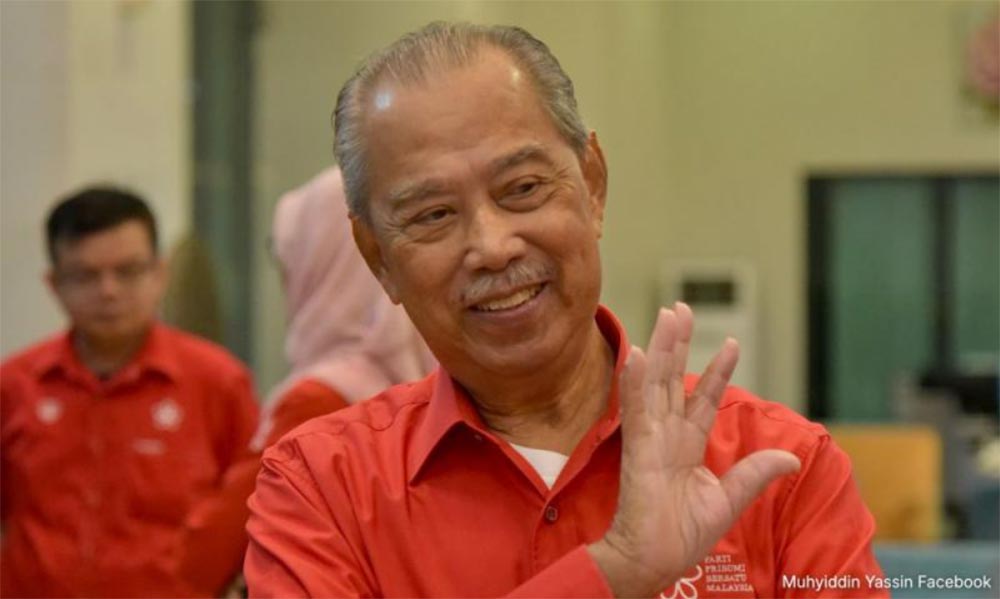
The Federal Court has declined to answer legal questions posed by Bersatu president Muhyiddin Yassin regarding his criminal charge under the Sedition Act 1948 and has remitted it back to the High Court for determination.
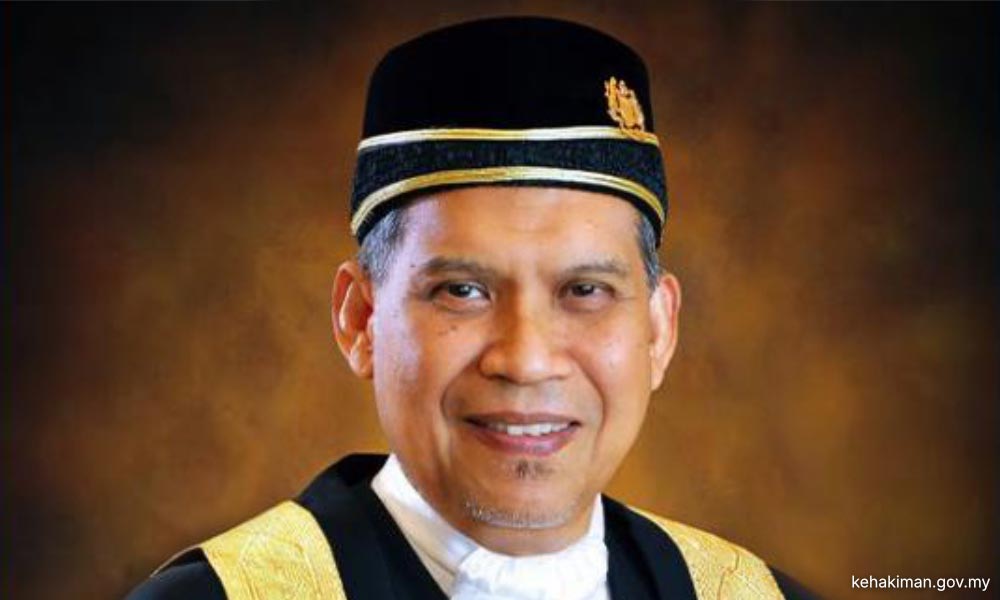
At the onset of the trial, the five-member panel chaired by Court of Appeal president Abu Bakar Jais had advised the parties to reconsider whether they want to proceed with the hearing or not.
This is because, Abu Bakar said, there would be no avenues left for appeal if any parties are aggravated by the Federal Court’s decision, should the case proceed, as the outcome would be final and binding for lower courts.
“If the Federal Court decides to answer the questions (and it) might not be favourable in the answer to the applicant, this does not benefit the accused.
“The question is, which is better for the accused? At this stage, does the High Court have to follow what the Federal Court has stated?
“(Or) is it better for the accused to let the High Court, without being bound by the Federal Court, to determine the questions?
“(If the High Court were to determine on the issues) then if either party is not satisfied (with the outcome) then there are two stages of appeal,” said Abu Bakar.
The questions posed by Muhyiddin in seeking the Federal Court’s declarations are related to the “intent” and lawful criticism outlined under Section 3(3) and Section 3(2) of the Sedition Act.
After a brief adjournment, the former prime minister’s lawyers, led by Amer Hamzah Arshad, informed the court that they had taken heed of the panel’s advice.
“We are grateful to my lord and the panel for the advice and guidance provided earlier.
“Having carefully considered that guidance, we have since taken instructions from our client.
“Accordingly, (we have) discussed with the prosecution and we can accept that whether (the questions on) intention can properly be raised remains a live issue, which falls to be determined by the High Court, Court of Appeal, and/or the Federal Court, should there be any appeals,” he said.
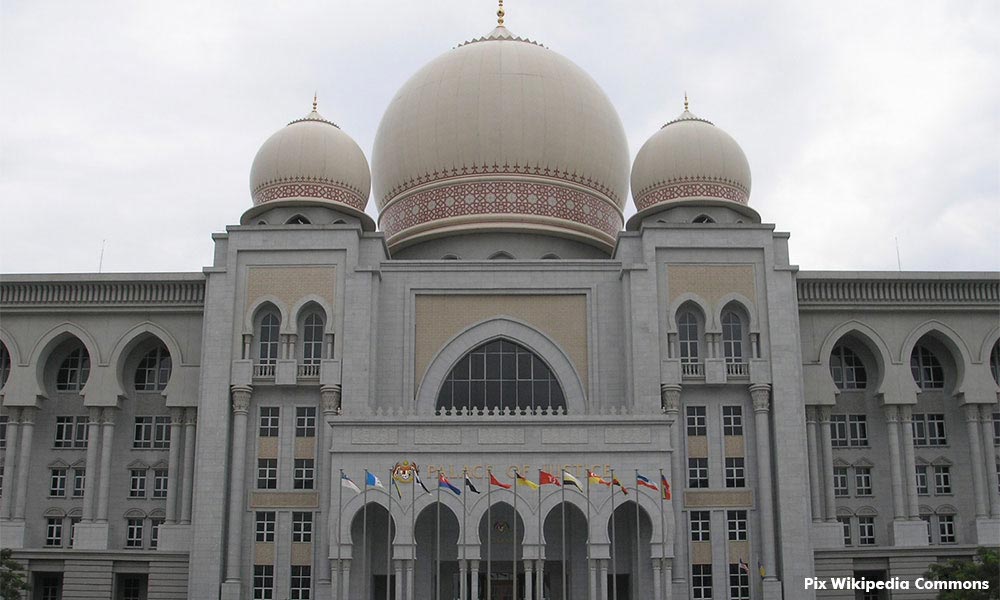
Following Amer’s response, Abu Bakar answered: “This court would decline to answer the questions posed at this stage. Therefore, this case before us is remitted back to the High Court for trial. (Any questions) would be raised in the High Court.”
Presiding with Abu Bakar today were Chief Judge of Malaya Hashim Hamzah, Federal Court judges Rhodzariah Bujang, Lee Swee Seng, and Nazlan Ghazali.
What happens now
Muhyiddin’s legal questions would now be referred to the High Court for determination during his trial.
“(The questions) will be raised during the course of the trial. In other words, we will present evidence that will help the court answer the questions; we can present evidence which we weren’t sure we could before.
“(The panel) also said we are not prevented from raising these questions (on intentions as the panel) gave no order of prevention from raising these matters in the courts below,” Muhyiddin’s lawyer, Chetan Jethwani, told Malaysiakini after the proceedings.

Chetan also confirmed that they would have a case management scheduled at the Kuala Lumpur High Court tomorrow to update the court on the Federal Court decision.
Apart from Amer and Chetan, lawyers Rosli Dahlan and Joshua Tay also appeared for Muhyiddin, while the prosecution was led by deputy public prosecutor Saiful Hazmi Saad, Ahmad Sazali Omar, and Nadia Izhar.
What did Muhyiddin ask?
Muhyiddin filed the application at the Kuala Lumpur High Court on April 4 last year, seeking to challenge the constitutionality of certain provisions of the Sedition Act 1948.
High Court judge Jamil Hussin granted him leave to proceed with his application on Aug 28 that same year, as the judge found that a Federal Court decision would expedite the resolution of the issues in dispute.
Among the provisions challenged by Muhyddin are Section 3(3), which he said constitutes an unreasonable restriction and conflicts with Article 10(1)(a) of the Federal Constitution.
Section 3(3) stipulates that an accused’s intention does not matter if his words or actions are deemed to have a “seditious tendency”.
He also challenged Section 3(2), read together with Section 3(3), which he claimed is unconstitutional for infringing a defendant’s right to a fair trial.
Section 3(2) specifically clarifies that it is not seditious to point out errors or defects in government, legislation, or the administration of justice, provided the intention is to obtain their correction.
Muhyiddin’s sedition charge
Muhyiddin was charged with one count under Section 4(1)(b) of the Sedition Act at the Gua Musang Sessions Court on Aug 27, 2024, over his remarks lamenting that the previous Yang di-Pertuan Agong did not call him to form the government after the 15th general election, despite him claiming to have the support of 115 MPs.
The provision carries a maximum fine of RM5,000, imprisonment of up to three years, or both.
The court then allowed Muhyiddin’s case to be transferred to the Kuala Lumpur High Court on Nov 27 that year, due to the complexity of legal issues such as the constitutional validity of certain provisions in the Sedition Act.