
By Tan Zhai Yun | The Edge Malaysia
During Malaysia’s chairmanship of ASEAN in 2025, two significant human rights declarations were adopted. One was the ASEAN declaration on promoting the right to development and the right to peace towards realising inclusive and sustainable development; the other was the ASEAN declaration on the right to a safe, clean, healthy and sustainable environment.
The former recognises environmental degradation — including from climate change and unsustainable development — as some of the most pressing and serious threats to the ability of present and future generations to enjoy human rights, among other things.
The latter, which is an environmental rights declaration, calls for the implementation of environmental law and multilateral environmental agreements, ensuring equal and effective protection against discrimination and human rights violations, and strongly encourages the private sector to respect and promote these rights.
The passage of these declarations was possible because Malaysia was clear on its priorities and deliverables, says Edmund Bon, chair and representative of Malaysia for the ASEAN Intergovernmental Commission on Human Rights (AICHR).
“Second, we wanted more mandates for AICHR after our 2012 ASEAN Human Rights Declaration. We have worked on over 40 thematic issues with more than 150 programmes over 15 years and we needed to deepen our cooperation on specific challenges facing the region: environment and climate change, and unsustainable development,” he tells ESG.
The path towards the adoption of these declarations was long and challenging. Preparation for the environmental rights declaration, for instance, began in 2022. It was lauded for using the word “safe”, which remains a contested term in the United Nations, says Bon. There were disagreements on the term “indigenous communities” in the declaration, because ASEAN member states had different policies and definitions.
“What we have today is a result of very heavy negotiations and contestations in the negotiation process . . . We have governments, civil society, groups including youth and indigenous communities in the process. This was the first time the AICHR had such a modality, and the working group was very diverse,” said Bon at a briefing organised by AICHR and Greenpeace in November.
While the declaration was welcomed by Greenpeace, the challenge is in the implementation. This was the response given by Greenpeace Southeast Asia following the adoption of the declaration.
The non-governmental organisation (NGO) said the declaration is incomplete as it lacks clear obligations, measurable targets and enforcement mechanisms, and omits corporate responsibility to uphold people’s environmental rights and address the transboundary nature of the region’s environmental challenges. At the briefing, there were also questions about the legally non-binding nature of the declaration.
In response, Bon says a regional plan of action (RPA) is being developed, and the declaration mandates AICHR to follow up with implementation. Unlike the European Union, ASEAN comprises independent member states with different laws. Thus, imposing a legally binding policy would be difficult.
“Much will depend on the RPA, and we hope to do it differently and more creatively this time. We need more buy-in from other ASEAN sectoral bodies like the environmental and economic bodies at national levels, to ensure we can be effective in realising the declaration,” says Bon.
Greenpeace has called for the RPA process to be transparent, inclusive and well resourced, and to uphold the free, prior and informed consent (FPIC) process while recognising the rights of indigenous peoples and local communities.
“AICHR, I can say, convenes dialogues at both a high level and working level. These dialogues bring together important stakeholders and provide a platform for highlighting the challenges. It is a way for impacted communities to communicate these business-related negative harms, and can result in expert recommendations and the sharing of data to prevent and mitigate the harms,” says Bon.
He adds that the AICHR has taken a more assertive role this year with its views on online scams and migration.
“I see more uptake on the thematic issues of the declaration in 2026. We need to also provide more reporting space, and ASEAN meetings can provide the channels for that. Data-driven initiatives to realise the declaration are important.”
How will these new Declarations make a difference?
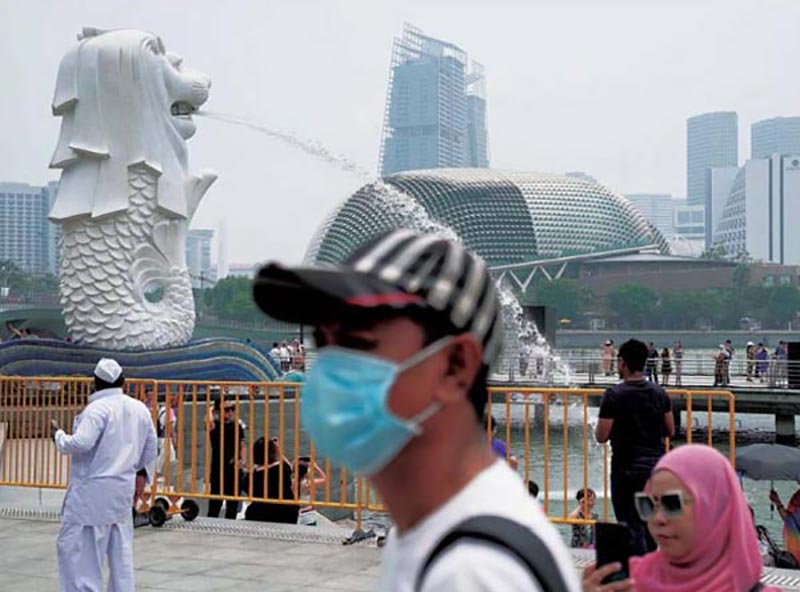
A big environmental rights issue in the region is transboundary haze. Despite the ASEAN agreement to address it, this has not ended the haze crisis. Only Singapore has enacted a domestic transboundary haze regulation, but practically, it is difficult to prosecute companies outside of the country.
“AICHR, as an overarching body, monitors progress through quiet diplomacy and, where necessary, proactive methods. But we do not have the hands and feet to do the implementation. We rely on other sectors,” says Bon.
The ASEAN Senior Officials on Environment, for instance, is implementing the agreement to address transboundary haze, which has improved relative to the past, he adds.
To make full use of the declaration, Bon encourages NGOs to push this agenda in their own countries, work with their human rights representatives and ask their governments to take action.
On the other hand, he hopes that the declaration can be used by developing countries to improve their trade and bargaining positions. This is as countries like the US and those in the European Union have imposed human rights-related standards on their suppliers and, in some cases, imposed bans on imports due to allegations of human rights violations.
To negotiate from a stronger position, Bon believes that the region must work together to address business and human rights issues, and implement their standards, ensuring they do not fall behind the international ones.
“Why do we only allow our trading partners to use human rights against us? Why can’t we use human rights to push our demands in trade? I think ASEAN is too timid when it comes to human rights. The declarations allow us to say, for example, that developing nations need to be supported more as our governments have increasing obligations now on human rights, particularly the right to a safe and healthy environment,” says Bon.
“We have also not integrated the human right to development sufficiently in trade. With the ASEAN declaration on the right to sustainable development, it is a clear opportunity to be smart and strategic in our approaches. Embedding human rights [in our trade policies] is an imperative if we want to leap ahead.”
In Malaysia, Bon suggests recognising the right to a safe, healthy and sustainable environment as a constitutional right, and implementing policies such as mandating FPIC as part of project proposals or environmental impact assessments, “where there is a modality where if it’s not followed, indigenous groups can go to court”, he says.
“FPIC also requires that we map the lands of our Orang Asli and Orang Asal, where the boundaries are clearly demarcated.”
Bon also recommends activating the National Action Plan on Business and Human Rights, which was released this year, to protect defenders of human rights and introduce effective grievance mechanisms.
This article first appeared in The Edge Malaysia Weekly on December 29, 2025 – January 4, 2026