
By Free Malaysia Today
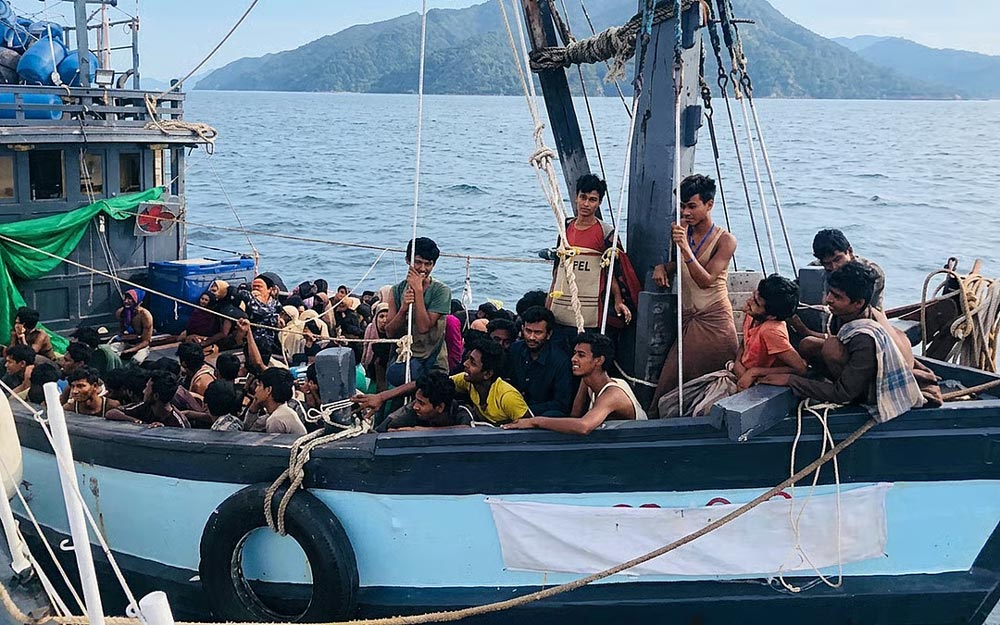
The ASEAN Intergovernmental Commission on Human Rights (AICHR) says ASEAN’s non-interference policy has led to a general unwillingness among its member states to collectively address forced migration from a human rights perspective.
Using a 2023 study titled “Migration management for the most vulnerable groups within ASEAN”, it listed several concerns in a statement yesterday regarding labour migration management and its relationship with forced migration.
One particular issue listed was a lack of uniformity in member states’ migration policies, which it said stemmed from ASEAN’s non-interference policy via the 1976 Treaty of Amity and Cooperation in Southeast Asia, which discouraged external action from member states.
“ASEAN’s emphasis on sovereignty and non-interference has historically led to a reluctance to address migration issues collectively and substantively from a human rights perspective,” it said.
AICHR also said efforts to address the problem had been fragmented, in part because most states are not signatories to the 1951 Refugee Convention, meaning that protection is not provided under a binding legal framework.
“Without national consistency or a regional protection architecture, the burden falls disproportionately on frontline states and civil society organisations that often operate with minimal resources and without formal recognition,” it said.
Malaysia, for instance, is not a signatory to the convention. However, it hosted the largest number of refugees and asylum seekers in 2025, according to data from the United Nations High Commissioner for Refugees.
It was also found that 90% of the registered refugee population in Malaysia this year were refugees and asylum seekers from ASEAN member state Myanmar.
However, AICHR acknowledged that member states were making efforts to establish human rights-based approaches to migration management, taking the progress as indication of discussions about greater active participation among the states.
“Inclusive migration policies underpinned by human rights-based principles and a strong evidence base are what will enable the region to ensure the protection and promotion of the rights of all migrants – including those whose displacement places them in the most vulnerable of circumstances,” it said.
As an example, AICHR highlighted Malaysia’s refugee registration (DPP) document, which allows refugees who were in the country before Jan 1, 2023 to access select employment opportunities while being monitored by the government, as the home ministry plans for their future resettlement in their country of origin or to third nations.
The home ministry defended the decision to allow DPP-registered refugees to work, saying it would boost their resettlement prospects by improving their skills and credentials while reducing new intakes of migrant workers.
The AICHR Briefing Note on Forced Migration in ASEAN is available here.